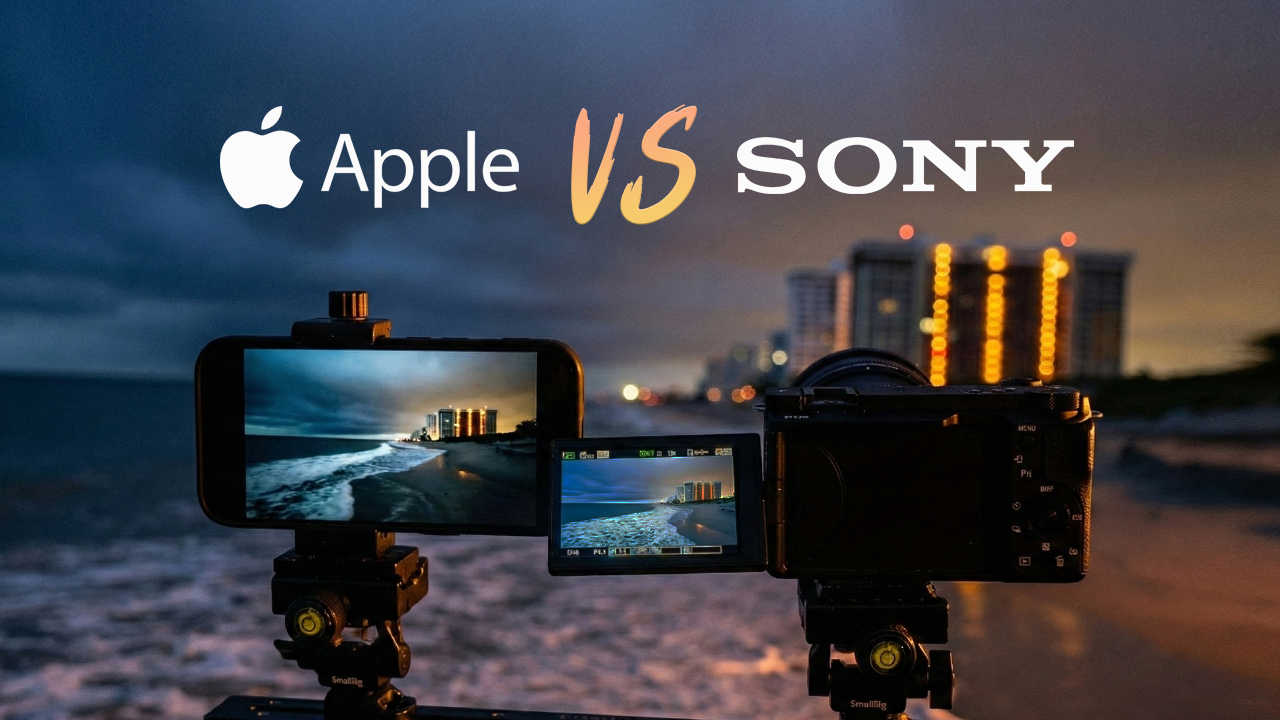
Sony ZV-E10 II vs. iPhone 17 Pro: Why the Best Vlogging Camera Isn't a Phone
Dec 16, 2025Get the full story watching the video above ⬆️
Purchase:
iPhone 17 Pro (affiliate) - https://geni.us/0xzQAGv
Sony Sony ZV-E10 ll - https://geni.us/WbD54H8 or https://geni.us/qzFy
Introduction: The Ultimate Creator's Dilemma
Joe with the Film Alliance here. Every year, the line between a smartphone and a professional creative tool gets blurrier, and with the new iPhone 17 Pro, it’s practically invisible. Apple has packed a technological marvel into our pockets, a device that can shoot, edit, and upload stunning content with incredible ease. It’s a game-changer, no question.
This raises the ultimate dilemma for every creator, from aspiring YouTubers to seasoned filmmakers: is the all-in-one convenience of a super-phone enough? Or does a dedicated camera, built from the ground up for a single purpose, still hold the key to better content? The goal of this post is to break down the real-world differences between the iPhone 17 Pro and the new Sony ZV-E10 II to help you make an informed choice for your creative journey.
1. The Pocket Powerhouse: Why the iPhone 17 Pro is So Tempting
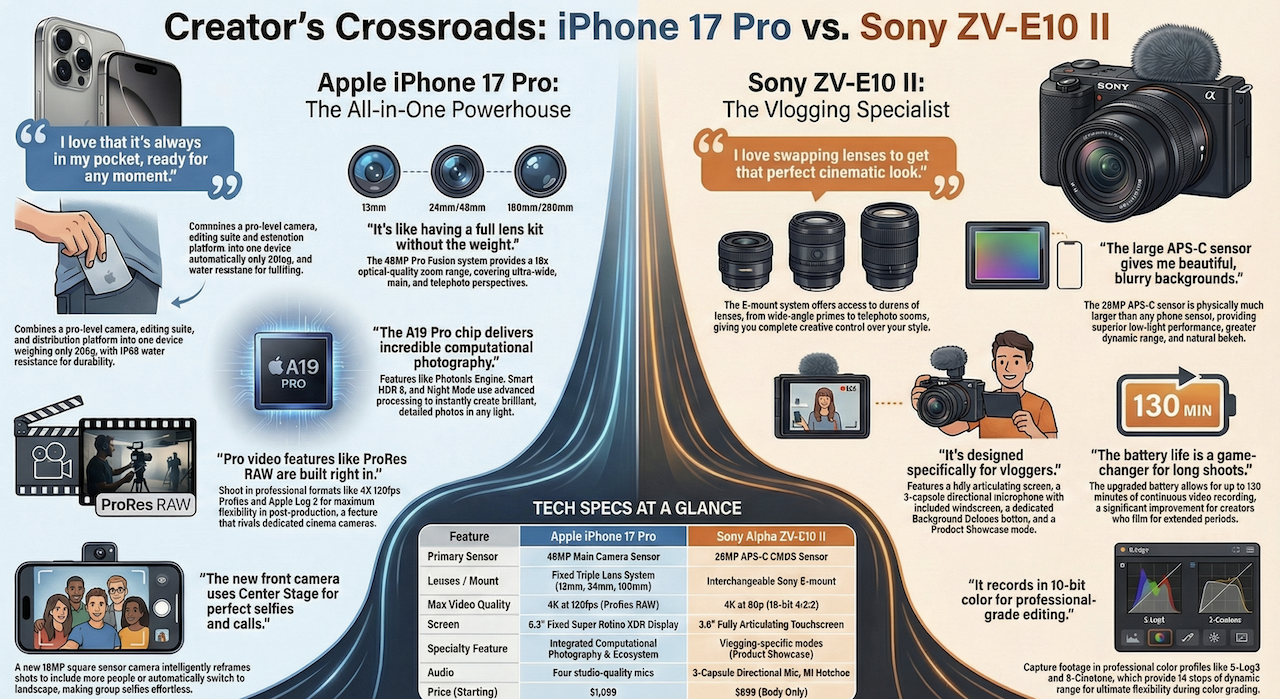
To be clear, the iPhone 17 Pro is an astonishing piece of engineering. Its primary appeal is undeniable: it’s a complete production studio that lives in your pocket. The seamless ecosystem for shooting, editing, and sharing directly to your platform of choice is a workflow that dedicated cameras simply cannot match.
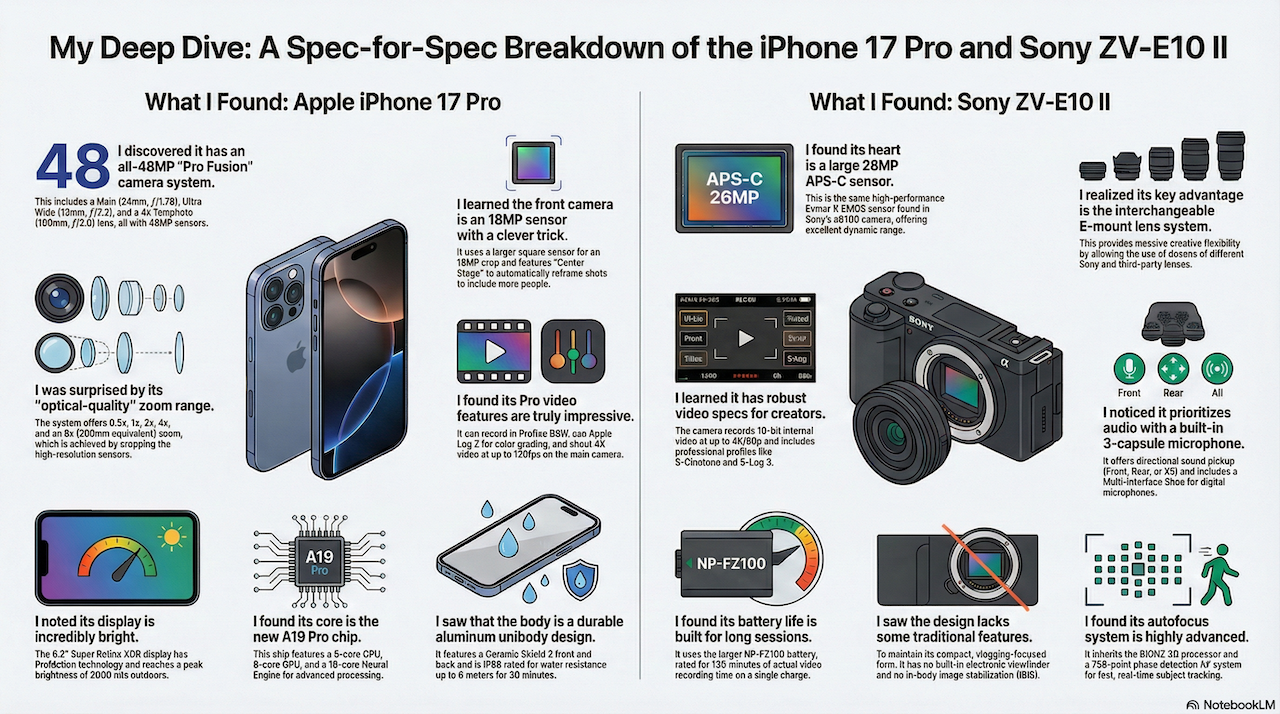
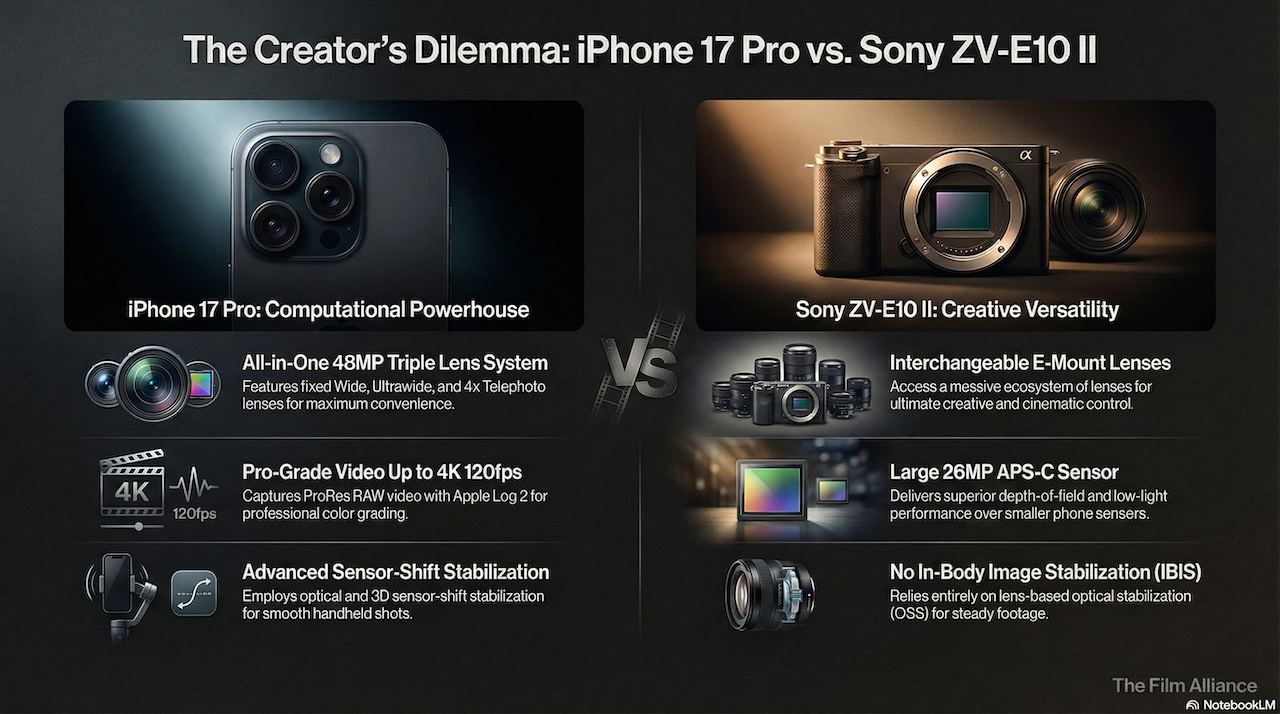
Its hardware is equally impressive. The device features a "48MP Pro Fusion camera system" that includes a Main (24mm), an Ultra Wide (13mm), and a new 4x (100mm) Telephoto lens. By leveraging the high-resolution sensors, it also delivers "optical-quality" zoom at a 2x (48mm) and an incredible 8x (200mm), giving you a versatile range of focal lengths without swapping hardware.
For video creators, the specs are staggering for a phone. It offers "ProRes video recording up to 4K at 120 fps with external recording," and supports professional codecs like "ProRes RAW" and "Apple Log 2." For filmmakers, this means capturing footage with immense latitude in the color grade—a level of control previously unheard of in a device this small. It is, without a doubt, the most powerful and convenient video creation tool ever put into a smartphone.
--------------------------------------------------------------------------------
2. The Creator’s Choice: Where the Sony ZV-E10 II Takes the Lead
For all its power, a smartphone is designed to be a jack-of-all-trades. The Sony ZV-E10 II, however, is a master of one. For creators focused on image quality and creative control, its purpose-built design offers fundamental advantages that computational photography can't overcome.
It All Starts with the Sensor
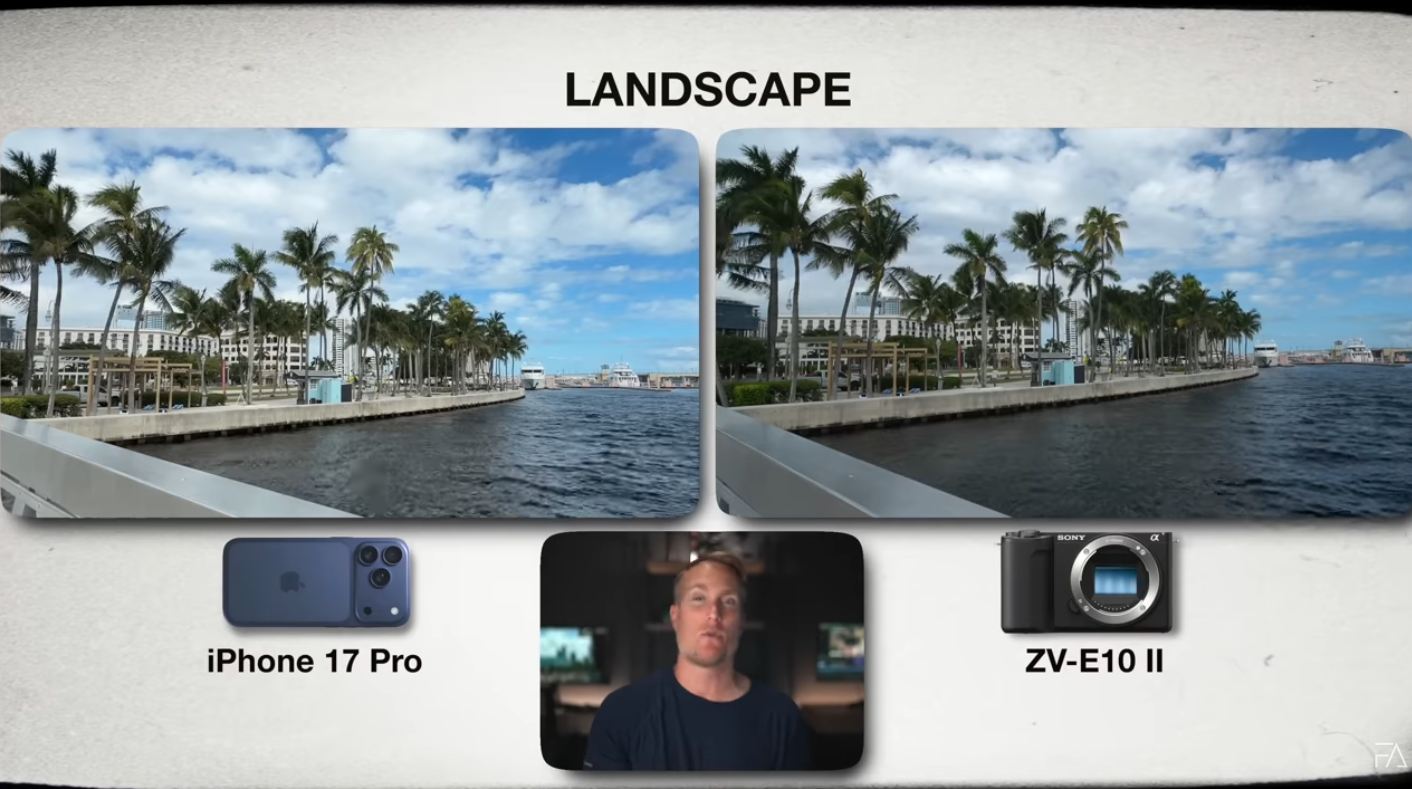
The single most important difference lies in the sensor size. The ZV-E10 II features a large "26MP APS-C Exmor R CMOS Sensor," which physically dwarfs the sensors found in any smartphone. This isn't just a numbers game; a larger sensor captures more light, which directly translates to superior image quality. You get a wider dynamic range, measured by independent testers at Photons to Photos at 10.95 stops, giving it the ability to retain more detail in the brightest highlights and darkest shadows of a scene. In practical terms, this means you can film a scene with a bright window and a person's face without the window becoming a blown-out white mess or the face being lost in shadow. It's the key to achieving a balanced, cinematic look directly in-camera.
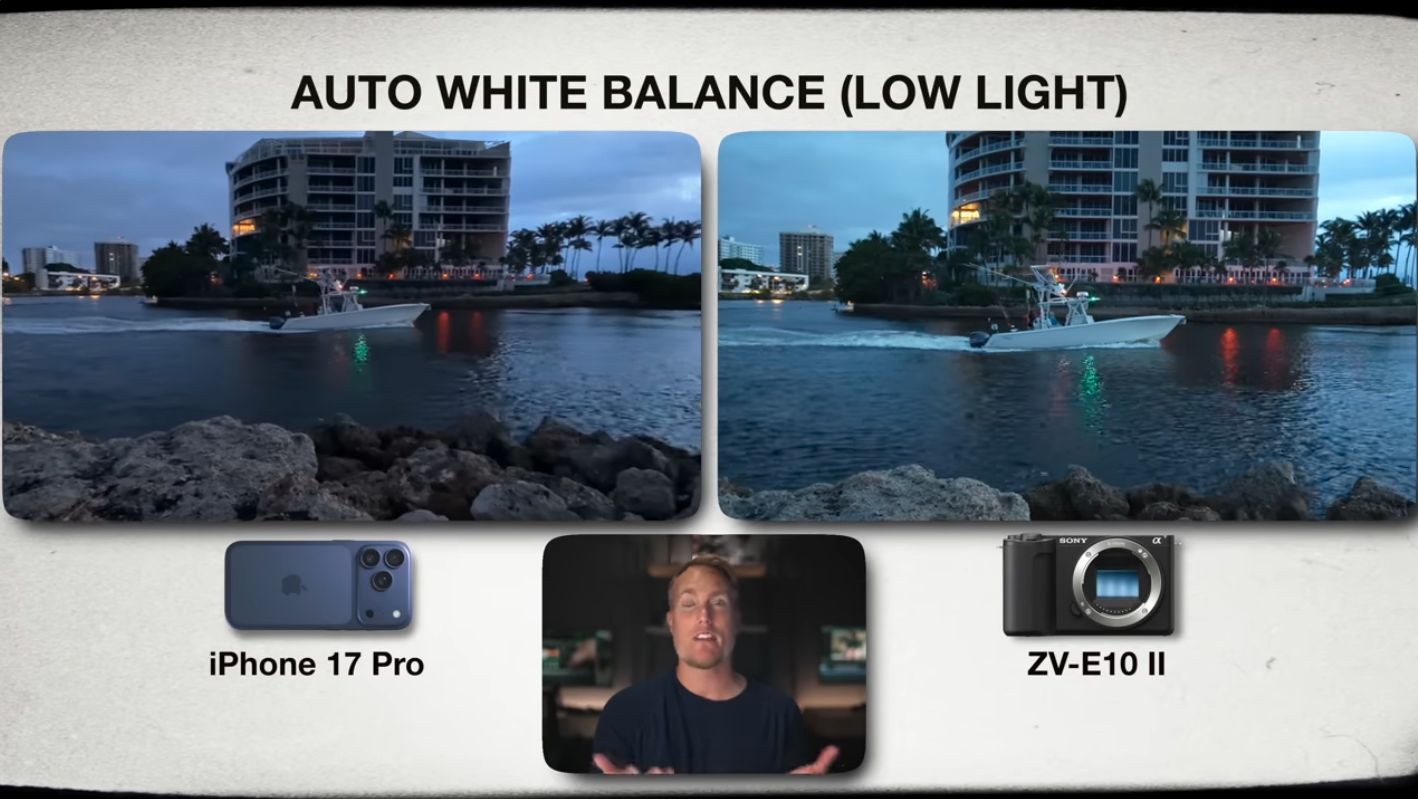
Crucially, this larger sensor produces a more organic image in challenging light. Where smartphone processing can make low-light scenes look "smudgy" or have details "smoothed over by noise reduction," the APS-C sensor delivers cleaner, more natural-looking footage, giving you more usable shots and far greater flexibility in your color grade.
The Unmatched Freedom of Interchangeable Lenses
While the iPhone offers multiple focal lengths, you are limited to its built-in optical lenses and the digital crops between them. The ZV-E10 II is built on Sony’s "versatile E-mount system," giving you access to a massive ecosystem of interchangeable lenses. This is the key to true creative control. Want to isolate your subject with the creamy, out-of-focus bokeh that separates professional work from amateur video? Mount an f/1.8 prime lens—a physical reality that no software-based "Portrait Mode" can genuinely replicate. Need a specific wide-angle look for an architectural shot or a tight telephoto for wildlife? There's a lens for that. This adaptability ensures your camera can grow with your skills and creative ambitions.
...if you are interested in using more than one or two lenses, nothing beats Sony E-mount for lens selection and thus lower costs in the long run.
Purpose-Built for the Vlogging Workflow
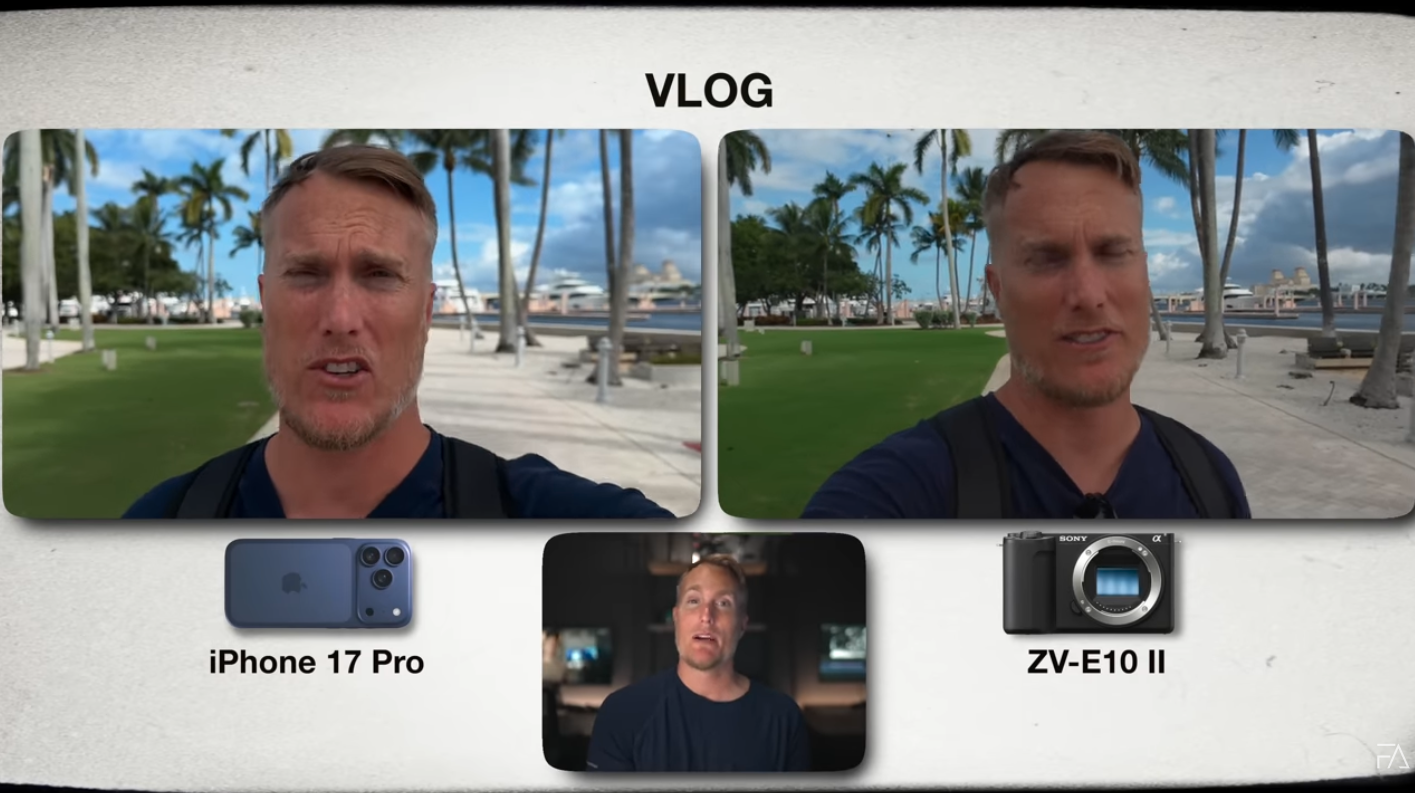
Sony designed the ZV-E10 II with the specific needs of vloggers in mind. The "fully articulating touchscreen LCD" isn't a convenience; it's a critical tool for shot composition when working as a solo operator, eliminating the guesswork of framing. One-touch buttons like the "Background Defocus" C1 button and the "Product Showcase option" streamline common vlogging tasks, quickly shifting focus from your face to an object you're presenting without fumbling through menus.
Audio is just as critical, and the ZV-E10 II excels here. The iPhone’s "four studio-quality mics" are designed to capture ambient sound omnidirectionally—great for a conference call, but problematic for vlogging in a noisy environment. The Sony's built-in "Directional 3-Capsule Mic," with its ability to prioritize sound from the front, is a workflow-defining feature that drastically reduces the time you’ll spend cleaning up audio in post-production.
3. By the Numbers: A Head-to-Head Showdown
Here’s how the key specifications stack up at a glance:
|
Feature |
Sony ZV-E10 II |
Apple iPhone 17 Pro |
|
Primary Sensor |
26MP APS-C Exmor R CMOS |
48MP Fusion Main (smaller format) |
|
Lens System |
Interchangeable (Sony E-mount) |
Fixed Triple Lens (13mm, 24mm, 100mm) |
|
Max Video Specs |
4K/60p (Internal, 10-bit) |
4K/120fps (ProRes, External Recording) |
|
Pro Video Codecs |
S-Cinetone, S-Log 3 |
ProRes, ProRes RAW, Apple Log 2 |
|
Audio |
Directional 3-Capsule Mic, MI-Shoe |
Four studio-quality mics |
|
Screen |
3.0" Fully Articulating Touchscreen |
6.3" Super Retina XDR |
|
Weight |
377g (13.3oz) (w/ battery & card) |
206g (7.27oz) |
|
Starting Price |
$999.99 (Body only) |
$1,059.00 (256GB) |
4. The Verdict: Choose Your Tool Based on Your Ambition
Ultimately, the right choice comes down to your primary goal as a creator.
The iPhone 17 Pro is an outstanding tool for those who prioritize maximum convenience, spontaneity, and a fully integrated workflow. If your content lives primarily on social media and you need to shoot, edit, and post in minutes, its power and simplicity are unmatched.
However, for creators who are serious about elevating their craft, controlling every aspect of the final image, and achieving the best possible quality, the Sony ZV-E10 II is the superior long-term investment. Its fundamental advantages provide a much higher ceiling for artistic growth. The iPhone delivers a fantastic social media post. The ZV-E10 II delivers the foundational footage for a short film, a client project, or a broadcast-quality YouTube series. The choice isn't about today's vlog; it's about what you want your content to be capable of a year from now.
Conclusion: What Kind of Creator Are You?
The choice between these two devices isn't really about technology; it's about creative philosophy. The iPhone is a content-capture device; the ZV-E10 II is a filmmaking tool. The former automates your look; the latter empowers you to create it. As a creator, which of those goals is your priority?
Author