
Osmo Pocket 4P vs Pocket 3 - Worth the Upgrade?
Jul 21, 2026Get the full story watching the video above ⬆️
Purchase:
Osmo Pocket 3 - https://geni.us/o1aeKmx
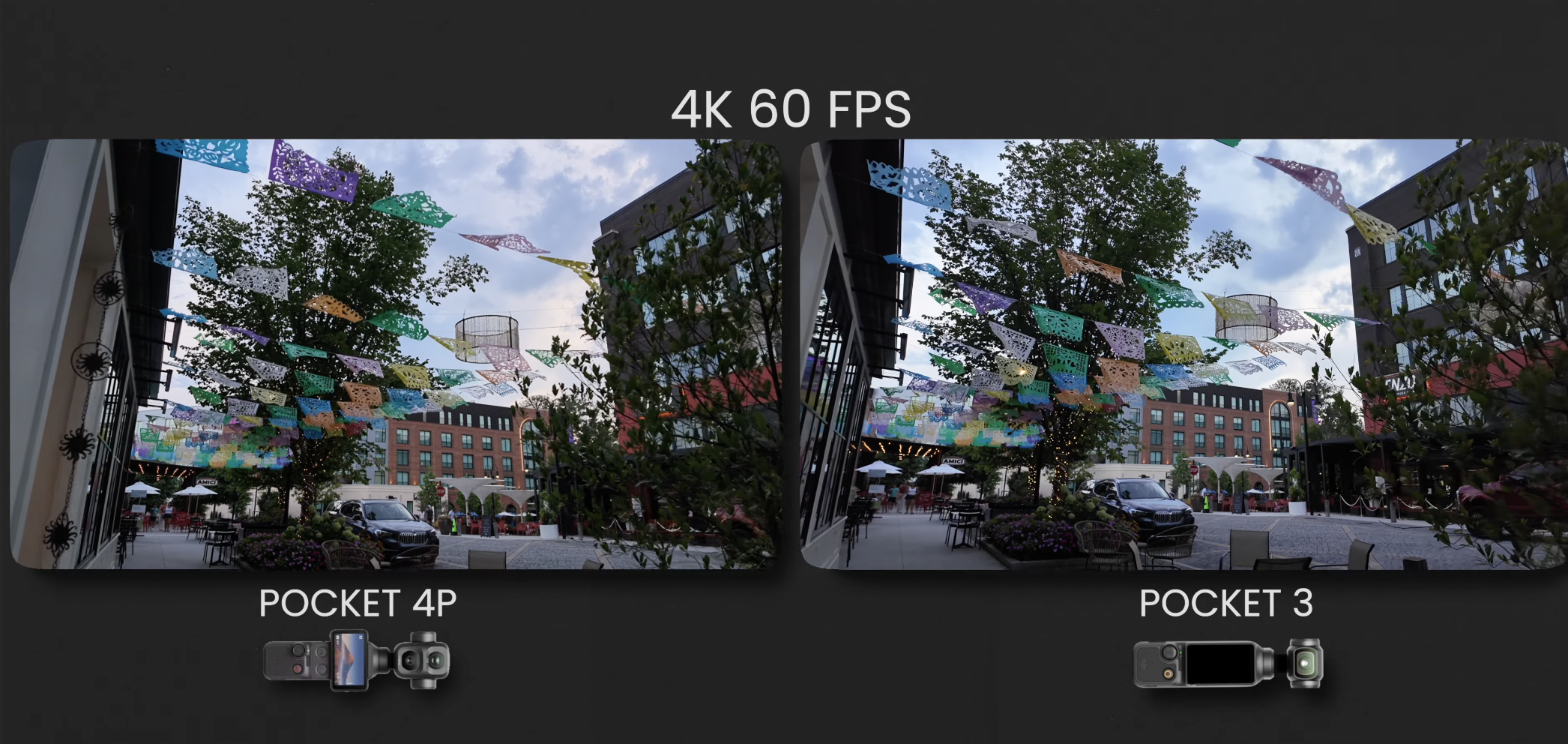
In many everyday situations, these cameras produce surprisingly similar image quality. When I filmed in controlled lighting, outdoor daylight, and standard low-light conditions, there were times when I had trouble telling them apart.
The biggest differences appear when the lighting becomes more challenging or when I need more flexibility in post-production. The Pocket 4P captures more highlight and shadow information, offers stronger Log profiles, produces sharper slow-motion footage, and includes a useful 3x telephoto camera.
However, the Pocket 3 still creates excellent footage, costs much less in the United States, and remains one of the best compact gimbal cameras available.
In this Osmo Pocket 4P vs Osmo Pocket 3 comparison, I will explain the real-world differences and help you decide whether the Pocket 4P is worth the upgrade.
Osmo Pocket 4P vs Pocket 3: The Biggest Differences
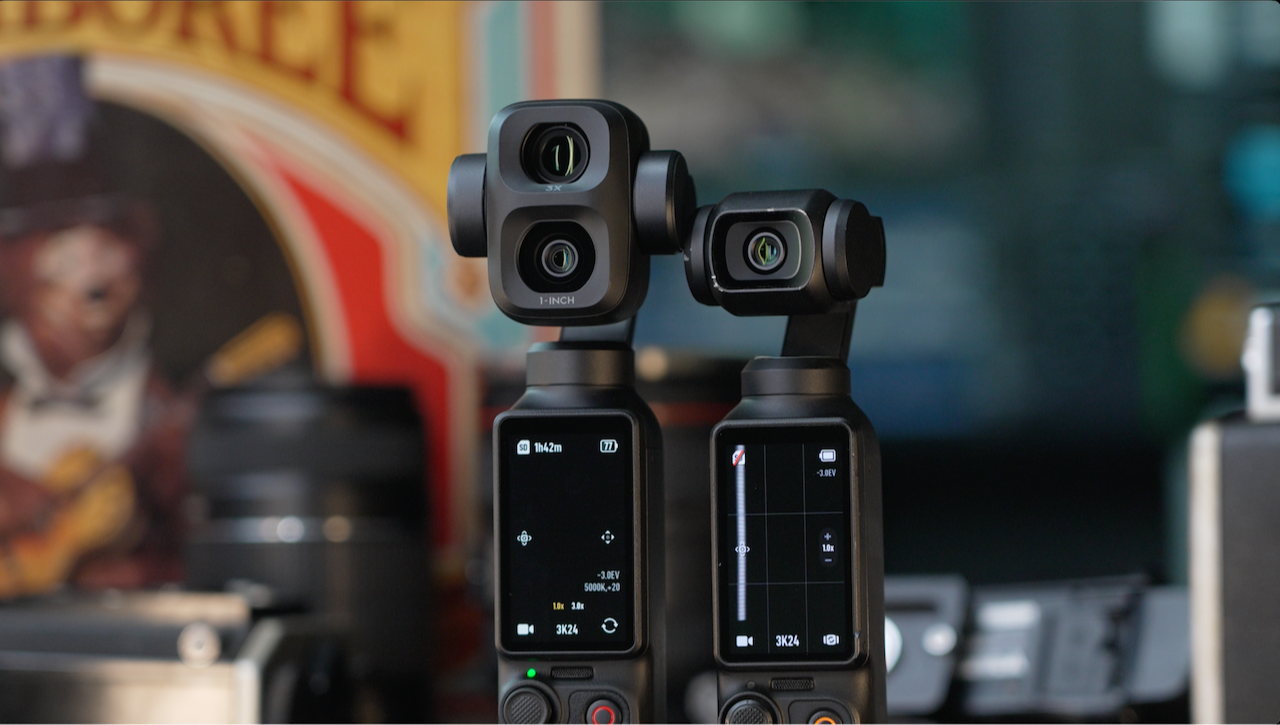
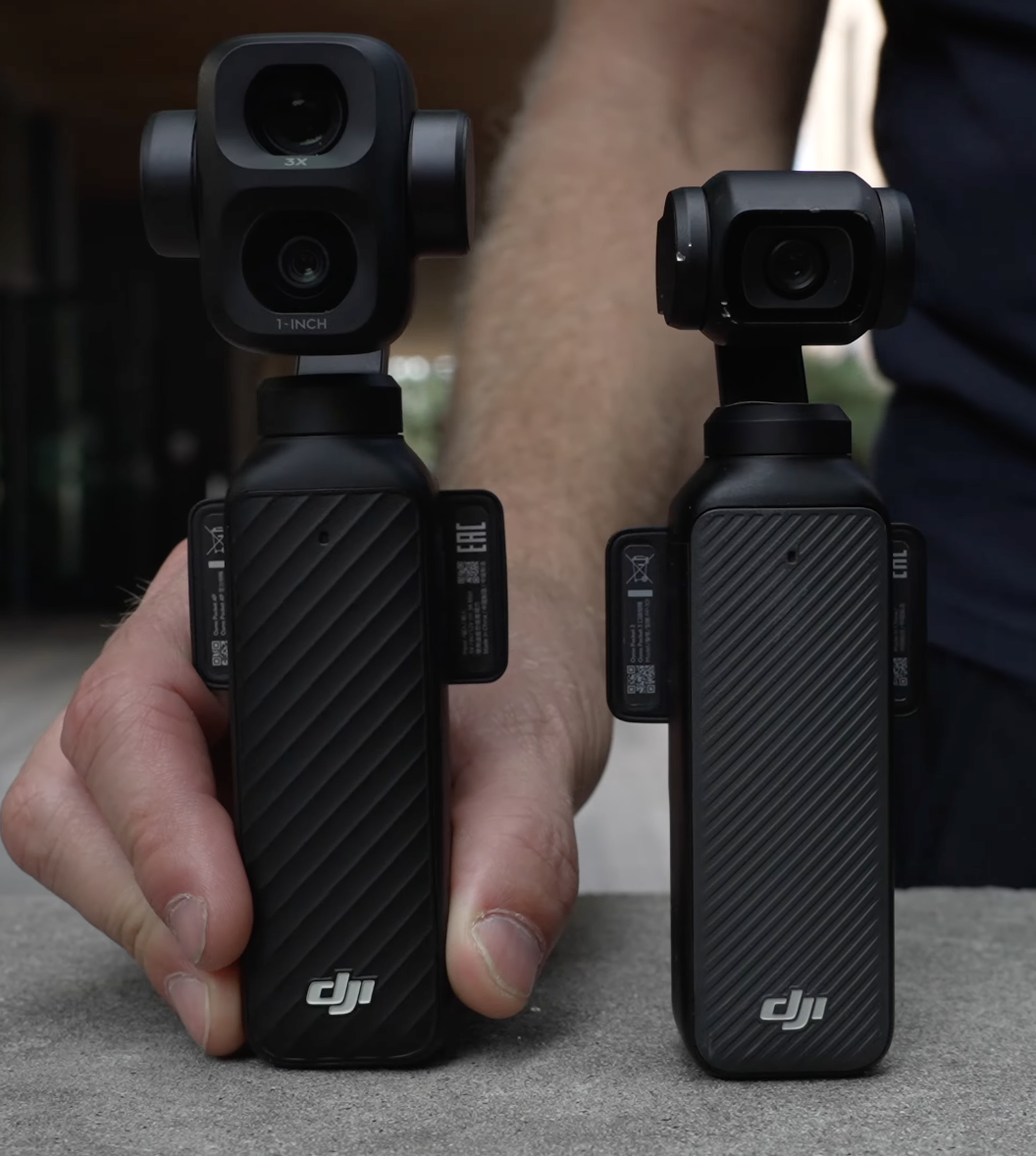
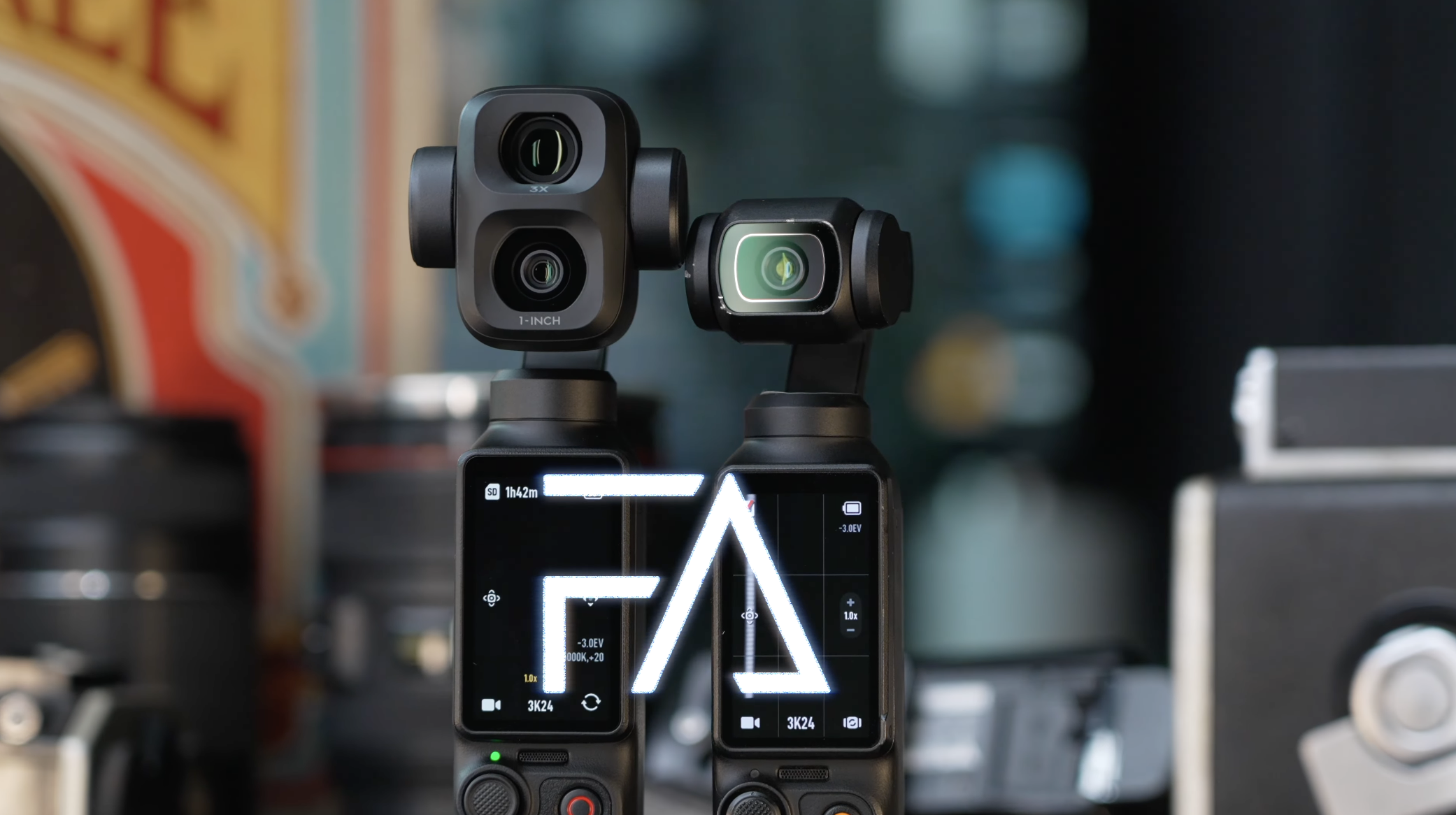
The Osmo Pocket 4P has a dual-camera system.
Its 1x camera uses a 20mm-equivalent wide lens, while its 3x camera gives you a tighter 60mm-equivalent perspective.
The Osmo Pocket 3 only has a single 20mm-equivalent wide camera.
That additional 3x camera is one of the most meaningful upgrades because it gives me more creative options for:
-
Talking-head videos
-
Portraits
-
Product shots
-
Detail shots
-
Nature footage
-
Cinematic B-roll
-
Background compression
The Pocket 3 is still excellent for vlogging, travel, walking shots, and everyday filming. However, the Pocket 4P feels more versatile because I can quickly switch between wide and telephoto perspectives.
Price and Value
The Osmo Pocket 3 starts at approximately $439 in the United States.
The Pocket 4P may sell for around $599 in Mainland China, but finding one in the United States for under $1,000 can be difficult.
That price difference is important.
At its normal international price, the Pocket 4P offers a strong upgrade. At an inflated import price, the decision becomes much harder.
The Pocket 3 produces image quality that is close enough in many situations that I would not recommend spending more than twice as much unless you specifically need the 3x lens, improved dynamic range, D-Log 2, better slow motion, or higher-resolution photos.
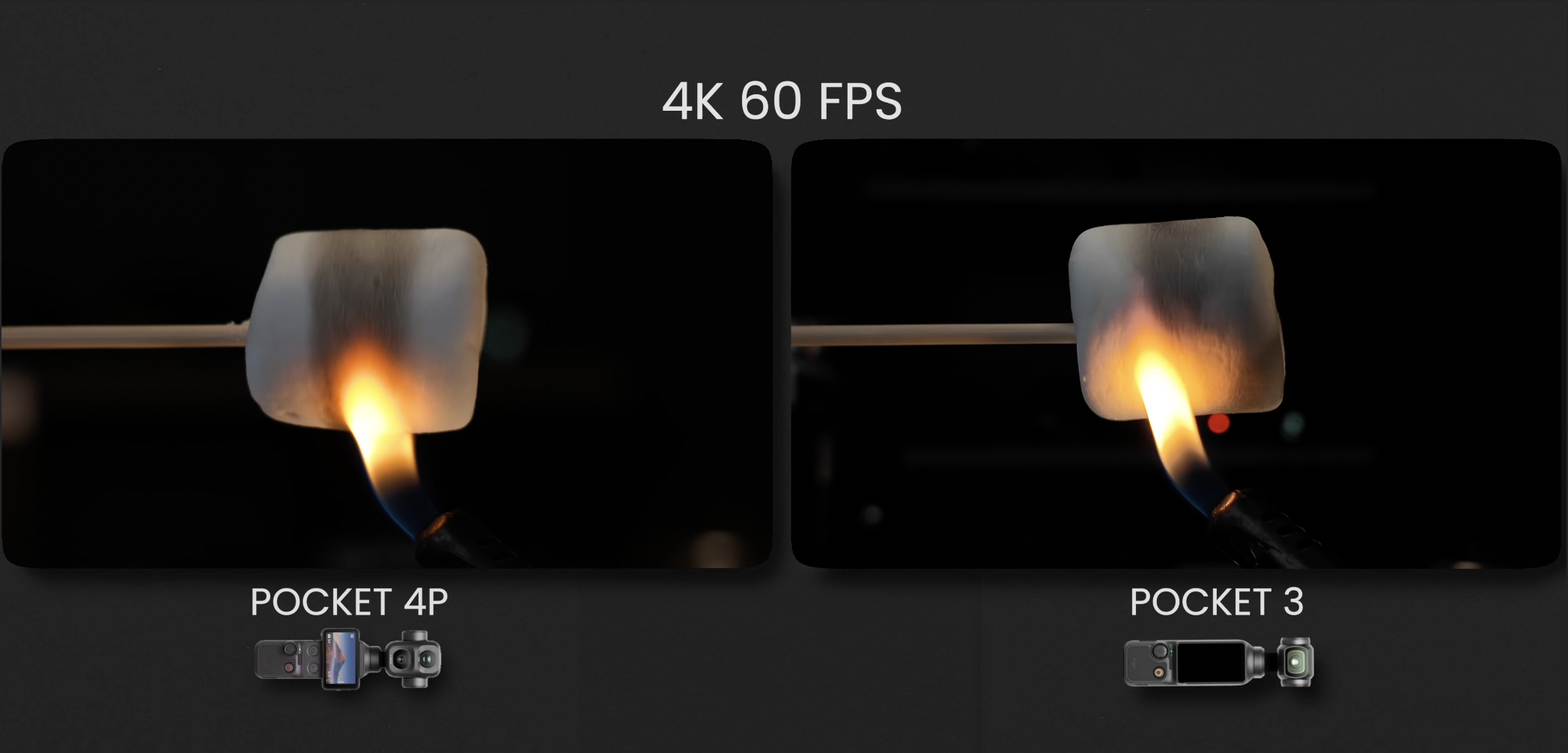
Image Quality
At first, I expected the Pocket 4P to look obviously better in every shot.
That was not what I found.
In controlled product shots, standard 4K60 footage, and many low-light scenes, the cameras looked extremely similar.
The Pocket 4P usually gave me slightly richer color and more information in the image. The Pocket 3 sometimes looked about 10% more muted, but I probably would not notice the difference without placing the clips side by side.
This is important because it shows how capable the Pocket 3 still is.
For normal daylight filming, travel videos, family footage, social media, and casual vlogging, the Pocket 3 can produce results that are remarkably close to the newer camera.
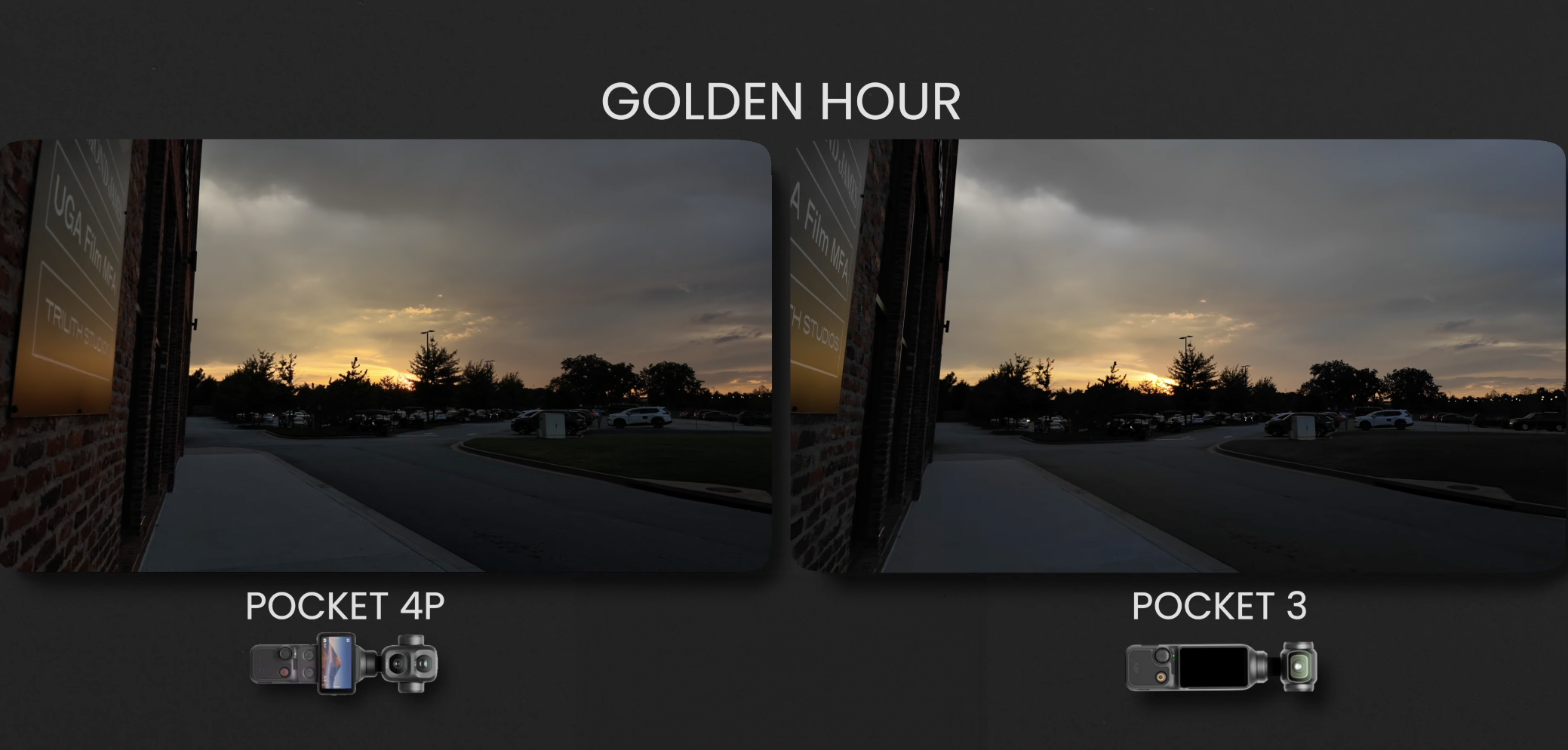
The Pocket 4P begins to separate itself when the scene contains bright highlights, deep shadows, difficult color, or high frame rates.
Dynamic Range
Dynamic range is the biggest image-quality advantage of the Pocket 4P.
Dynamic range determines how much detail a camera can preserve between the brightest and darkest parts of a scene.
This matters when filming:
-
Bright skies above darker buildings
-
Subjects standing under an overhang
-
Interior rooms with bright windows
-
LED lights in dark environments
-
Green-screen footage
-
Backlit outdoor scenes
In one outdoor comparison, both cameras were exposed the same way. The Pocket 4P retained much more detail in the clouds, while the Pocket 3 allowed the brightest parts of the sky to blow out.
The Pocket 4P also preserved more color and detail underneath a shaded building overhang.
The difference became even more obvious in a dark environment with a bright LED light. The Pocket 4P retained the color and detail inside the light while also keeping more information in the surrounding background.
The Pocket 3 lost more of that highlight information.
This is the biggest reason the Pocket 4P footage gives me more flexibility. It captures more information before I even begin editing.
Color and White Balance
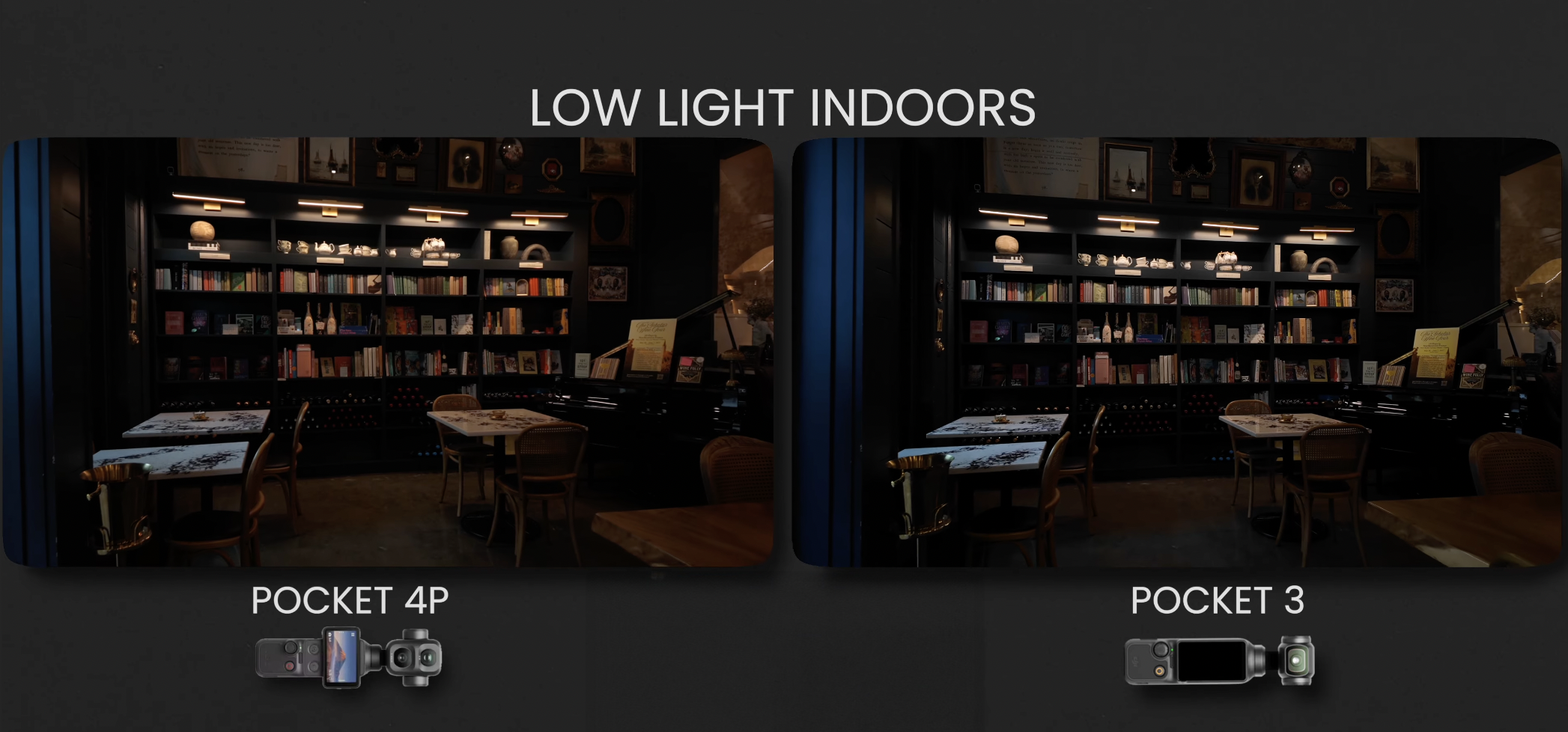
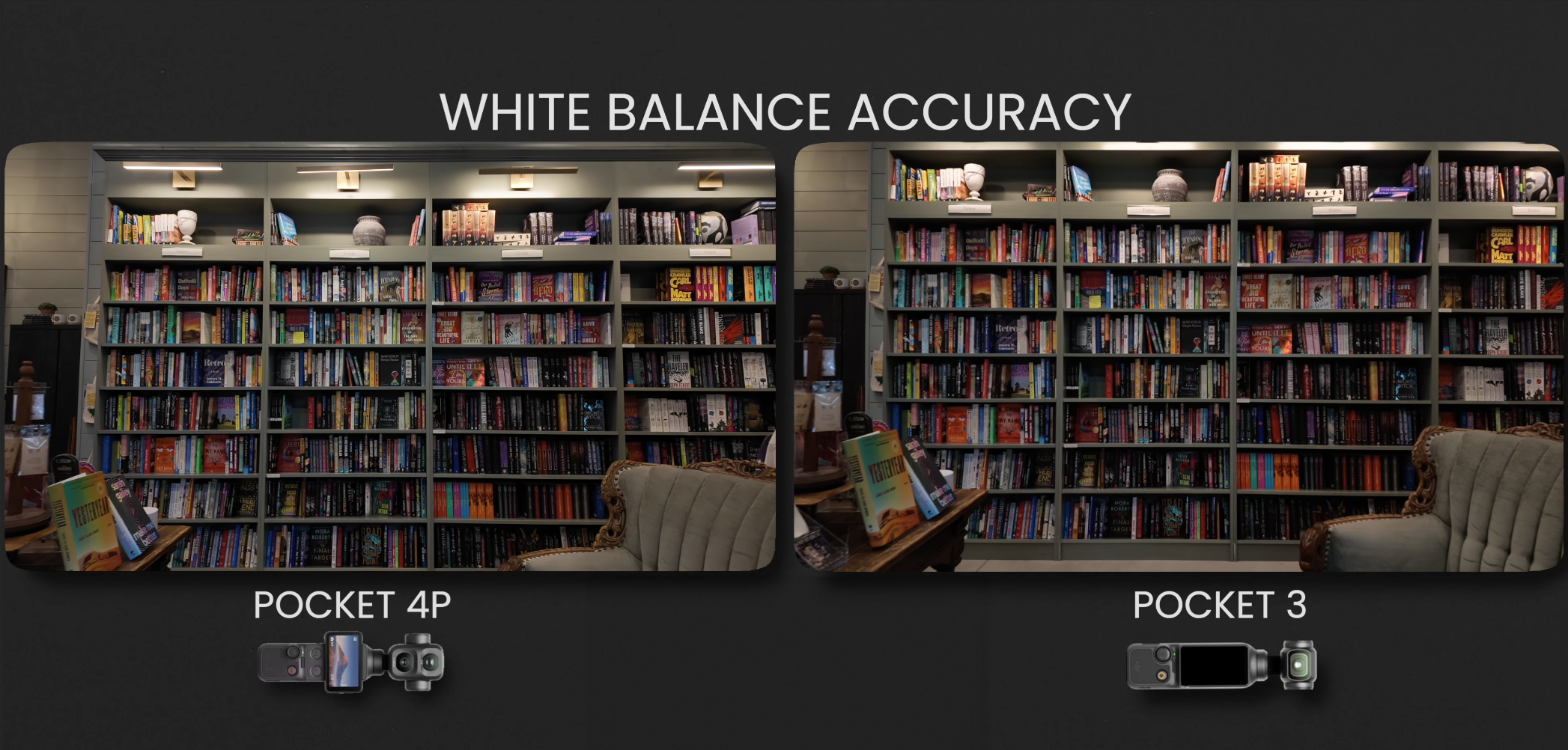
The Pocket 4P generally gave me more accurate white balance in difficult indoor lighting.
In a low-lit interior test, it produced a more neutral image and retained more accurate color underneath the lights.
The Pocket 3 leaned slightly warmer and more yellow.
Outdoors, the differences were still visible but more subtle.
The Pocket 4P produced slightly more vibrant color, while the Pocket 3 looked a little more muted.
However, the Pocket 3 did not lose every color comparison.
In one indoor scene with a blue wall, the Pocket 3 produced a deeper blue that looked closer to what I saw in person. The Pocket 4P rendered the same wall as a lighter shade of blue.
I saw similar differences in the sky during an outdoor real-estate-style shot. The Pocket 4P produced a lighter blue that looked accurate to me, while the Pocket 3 made the sky appear darker.
Neither result was necessarily bad, but the cameras clearly have different color science.
That means using them together as an A-camera and B-camera may require some color matching.
Standard Color Profiles
Most casual users will probably shoot in the standard color profile.
In standard color, the cameras often look close enough that I could use either one for normal everyday footage.
The Pocket 4P usually gives me slightly more saturation, color information, and highlight detail.
The Pocket 3 can look slightly warmer or more muted, but it still produces a polished image straight out of the camera.
The difference is unlikely to transform an average shot into a great one. Composition, lighting, camera movement, and exposure still matter more.
D-Log 2 vs D-Log M
The Pocket 4P has a major advantage when it comes to Log recording.
The Pocket 3 records in D-Log M.
The Pocket 4P can record in D-Log and D-Log 2.
Pocket 3 D-Log M
D-Log M gives the Pocket 3 more grading flexibility than its standard profile, but it does not preserve as much information as D-Log 2.
When I pushed Pocket 3 footage in a dark environment, I noticed less color information and more visible noise.
It can still produce a good result when properly exposed, but it is less forgiving when the lighting is difficult.
Pocket 4P D-Log 2
D-Log 2 gives the Pocket 4P much greater flexibility.
I can recover more highlights, bring back additional shadow detail, and push the colors further without the image falling apart as quickly.
In low light, D-Log 2 retained more usable color in buildings and shadows.
This is especially valuable when I accidentally overexpose or underexpose a shot.
However, Log is not magic. If I severely underexpose either camera, lifting the shadows will introduce noise that cannot be completely removed.
Proper exposure still matters.
Low-Light Performance
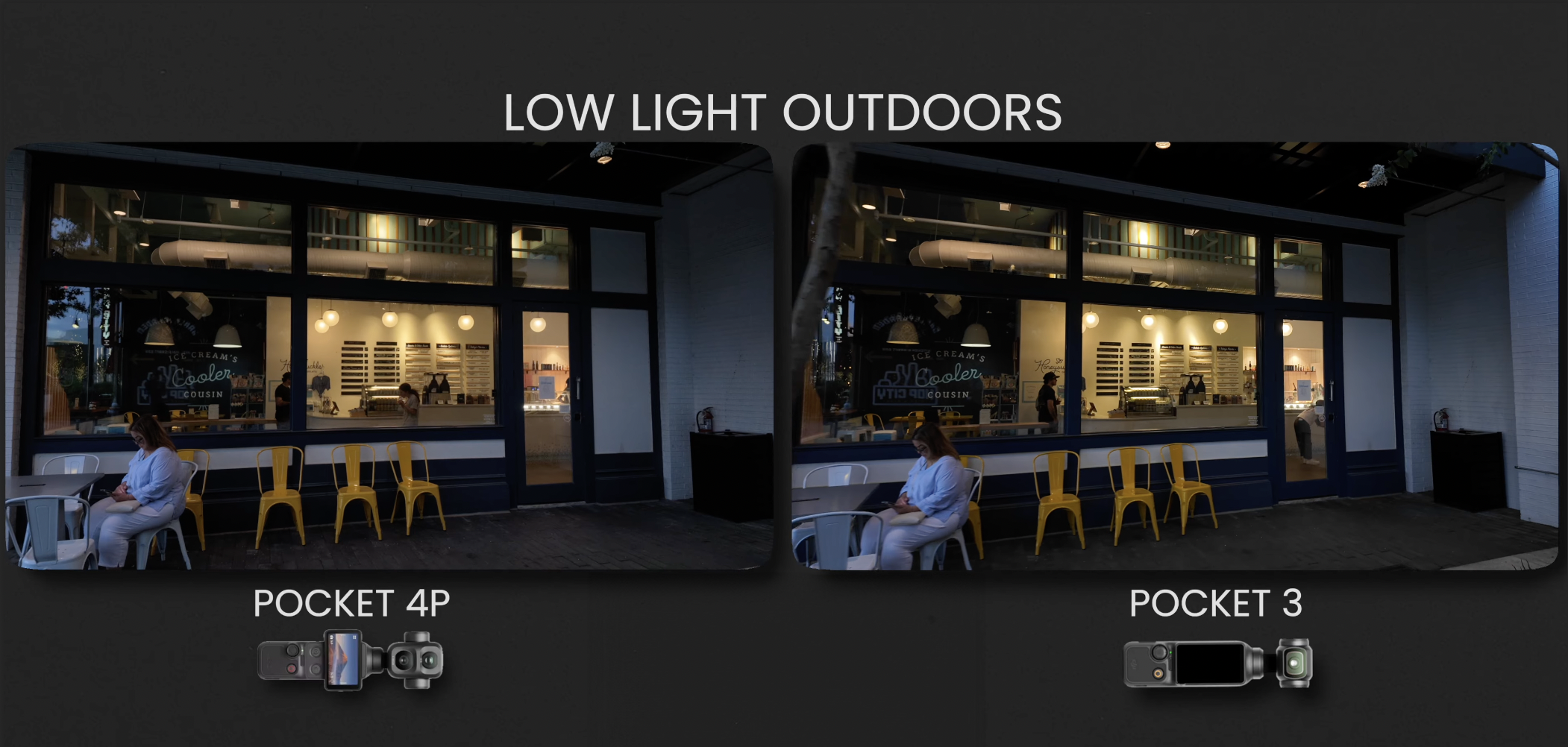
In many basic low-light scenes, the Pocket 4P and Pocket 3 looked closer than I expected.
Both standard profiles produced usable footage, and I did not see a dramatic difference unless I carefully examined the shadows and color.
The Pocket 4P sometimes retained slightly more shadow information.
In one darker shot, I could still see the reddish color of a brick building with the Pocket 4P. The Pocket 3 lost most of that color and made the building appear much darker and less defined.
That tells me the Pocket 4P is the better overall low-light camera.
Still, the improvement is not always obvious. In less demanding low-light scenes, the Pocket 3 remains very competitive.
Slow Motion and Sharpness
Slow motion is another area where the Pocket 4P has a clear advantage.
During a 4K120 comparison, the Pocket 4P footage looked noticeably sharper.
The Pocket 3 appeared softer, with fine details in moving water blending together more.
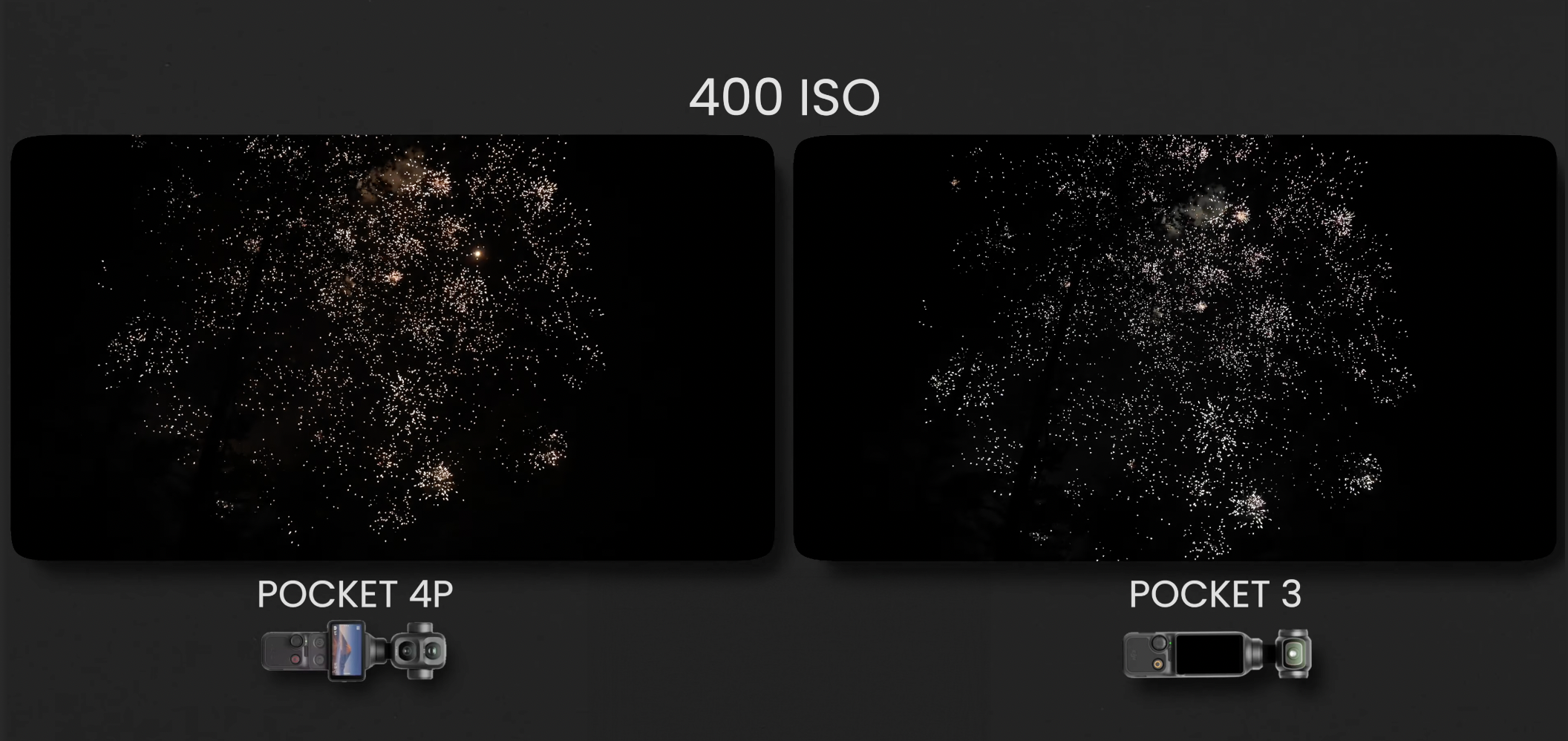
The Pocket 4P also maintained impressive sharpness when recording at 4K240.
That gives me much more flexibility for filming:
-
Water
-
Fireworks
-
Sports
-
Wildlife
-
Product shots
-
Fast movement
-
Cinematic action
The Pocket 3 can still create good slow motion, but the Pocket 4P gives me a sharper and more detailed result at high frame rates.
Stabilization
Stabilization is one category where I did not notice a major difference.
Both cameras use built-in mechanical gimbals, and both produced extremely smooth footage.
Even when walking downstairs, the footage remained controlled and usable.
This is one of the reasons the Pocket 3 remains such a good camera.
The Pocket 4P may improve image quality in certain conditions, but the Pocket 3 already has excellent stabilization.
If your main reason for upgrading is smoother walking footage, I do not think the difference will justify the price.
Subject Tracking
Both cameras performed well when tracking me through normal movement.
They continued tracking even when a pole briefly passed between me and the camera.
In a more difficult tracking test, both still managed to stay locked onto the subject, although the Pocket 4P lost me during one attempt and required a retake.
Tracking performance can vary depending on contrast, movement, obstacles, and the size of the subject in the frame.
Overall, I would feel comfortable using either camera for solo filming, vlogging, and basic automated tracking shots.
Photography
The Pocket 4P has a much larger advantage for still photography.
It captures approximately 37-megapixel photos, compared with approximately 9 megapixels from the Pocket 3.
The extra resolution gives me more room to:
-
Crop
-
Reframe
-
Print larger
-
Preserve fine detail
-
Edit more aggressively
Neither camera would replace a dedicated mirrorless camera for serious photography, but the Pocket 4P is clearly the stronger option if still photos matter to you.
Green-Screen Performance
The Pocket 4P also gave me a better result during a green-screen test.
Because it retained more lighting information, I was able to pull a cleaner key from the footage.
The Pocket 3 lost more detail and produced a weaker result even though I used the same exposure and lighting setup.
This is another example of dynamic range affecting more than just outdoor skies.
Better highlight and color retention can also improve studio workflows, product filming, visual effects, and chroma keying.
Who Should Upgrade to the Pocket 4P?
The Pocket 4P is worth considering if you need:
-
A dedicated 3x telephoto camera
-
Better dynamic range
-
Stronger highlight recovery
-
D-Log and D-Log 2
-
Sharper 4K slow motion
-
4K240 recording
-
Better low-light color retention
-
Higher-resolution photos
-
More flexibility when color grading
It is the better camera for creators who frequently shoot in difficult lighting or want the most flexibility in post-production.
Who Should Keep the Pocket 3?
I would keep the Pocket 3 if you mainly use it for:
-
Casual vlogging
-
Family videos
-
Travel
-
Daylight filming
-
Walking shots
-
Social media content
-
Standard color footage
-
Simple cinematic B-roll
I would also keep it if the only Pocket 4P available costs close to or above $1,000.
The Pocket 3 is still small, easy to carry, stable, and capable of producing excellent 4K footage.
In many real-world situations, most viewers will not notice a significant difference.
Is the Pocket 4P a Huge Upgrade?
I would not call the Pocket 4P a huge upgrade in every category.
It is more accurate to call it a meaningful upgrade for specific types of shooting.
The standard image quality can be surprisingly similar. Stabilization and tracking are also close.
The real upgrades are:
-
Dynamic range
-
Lens flexibility
-
Log recording
-
Slow-motion sharpness
-
Low-light color
-
Photography resolution
If those features matter to you, the upgrade can be worthwhile.
If you are happy with the Pocket 3 and mainly shoot in good lighting, you may be better off keeping it and spending the money on lighting, audio, accessories, or travel.
Final Verdict
After comparing the Osmo Pocket 4P and Osmo Pocket 3, I am giving the overall win to the Pocket 4P.
It captures more information, retains highlights better, preserves more color in low light, produces sharper slow motion, and gives me greater flexibility through D-Log and D-Log 2.
The additional 3x camera also makes it a much more versatile creative tool.
However, the Pocket 3 is not suddenly outdated or incapable.
It completely changed what people expected from a pocket-sized gimbal camera, and it still creates footage that can look surprisingly close to the Pocket 4P in many situations.
The Pocket 4P is the better camera, but the Pocket 3 remains the better value for many people, especially in the United States.
Pocket 3 owners should upgrade because they need the Pocket 4P’s specific improvements, not simply because a newer model exists.
Author