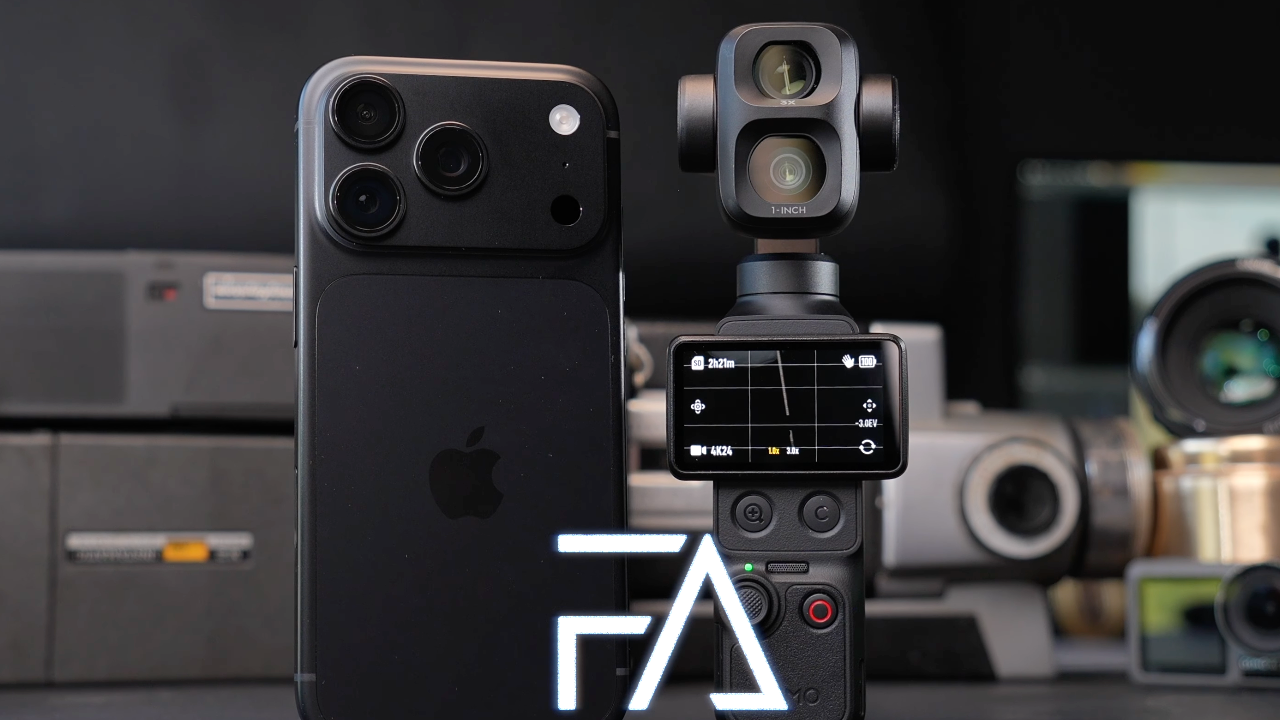
iPhone 18 Pro vs Osmo Pocket 4P - Watch Before you Buy!!
Sep 25, 2026Get the full story watching the video above ⬆️
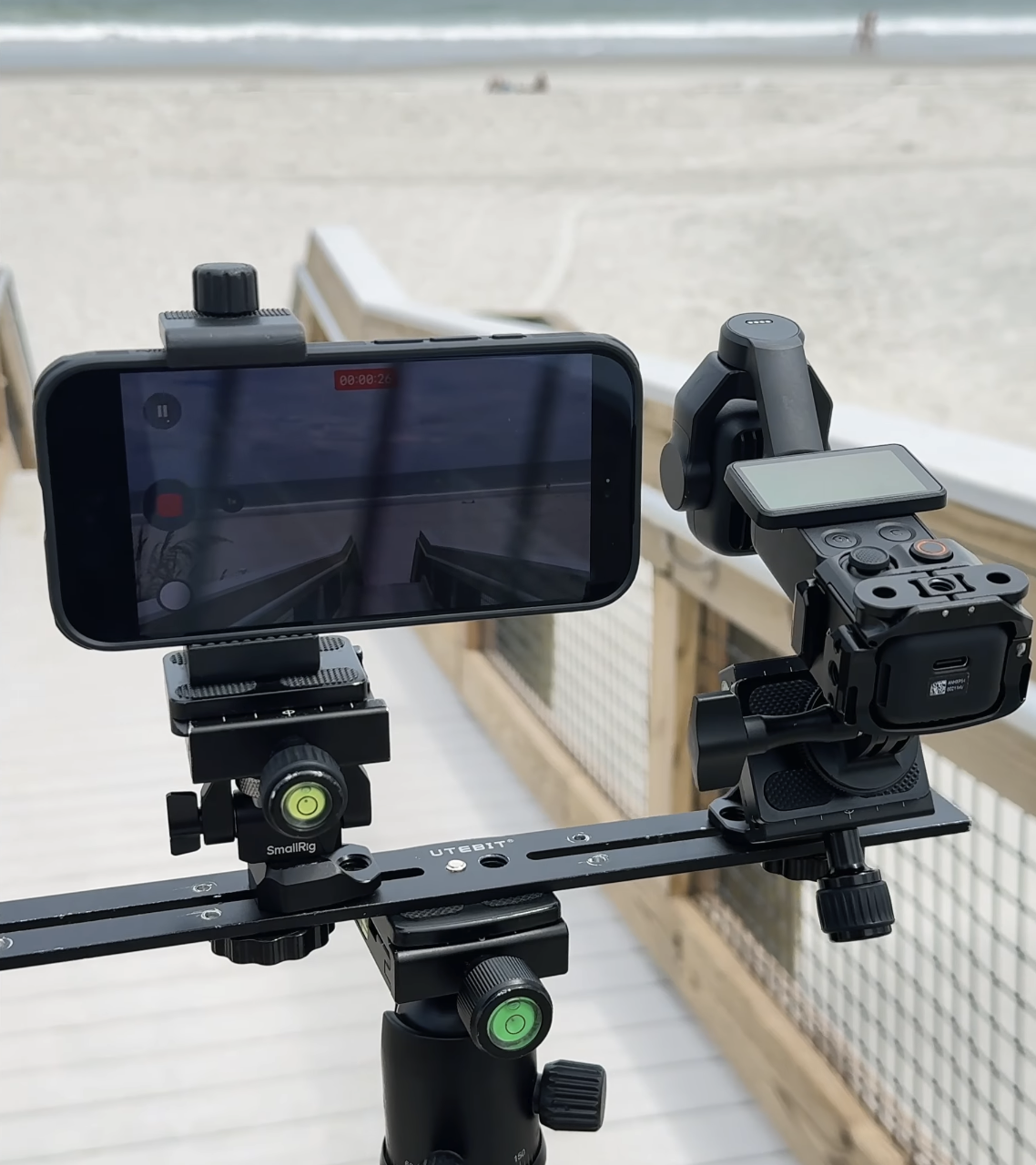
I really love using both of these cameras, but for completely different reasons. The iPhone 18 Pro is the camera I always have on me. The DJI Osmo Pocket 4P is the camera I reach for when I actually care about how the footage is going to look. After shooting both side by side in all kinds of real-world situations, from sunrise to pitch black, here's what I found.
The Specs That Matter
The iPhone 18 Pro has a 48MP main camera with Apple's new variable aperture, which goes from f/1.48 all the way to f/4. That's the headline feature this year, and it's a big deal for a phone. One thing to know: by default the iPhone saves photos at 24MP, so if you want the full 48, you have to switch that over.
The Pocket 4P has a 1-inch sensor with a 20mm equivalent lens, plus a 60mm telephoto for 3x zoom. It shoots 37MP photos, records up to 4K 240, and DJI claims up to 17 stops of dynamic range in D-Log2. And the biggest difference of all: it has a real 3-axis mechanical gimbal, while the 18 Pro uses electronic stabilization.
Where the iPhone 18 Pro Surprised Me
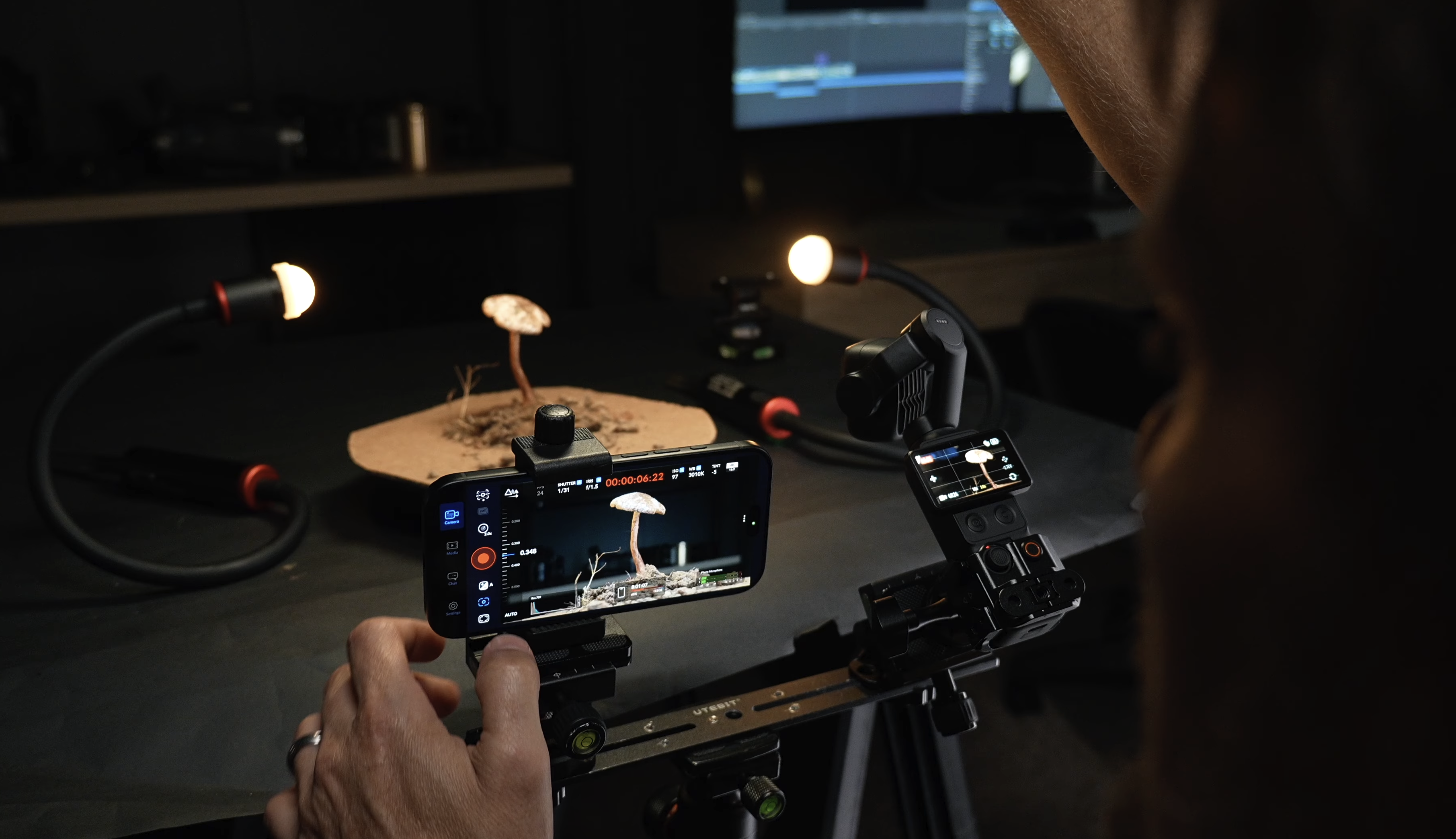
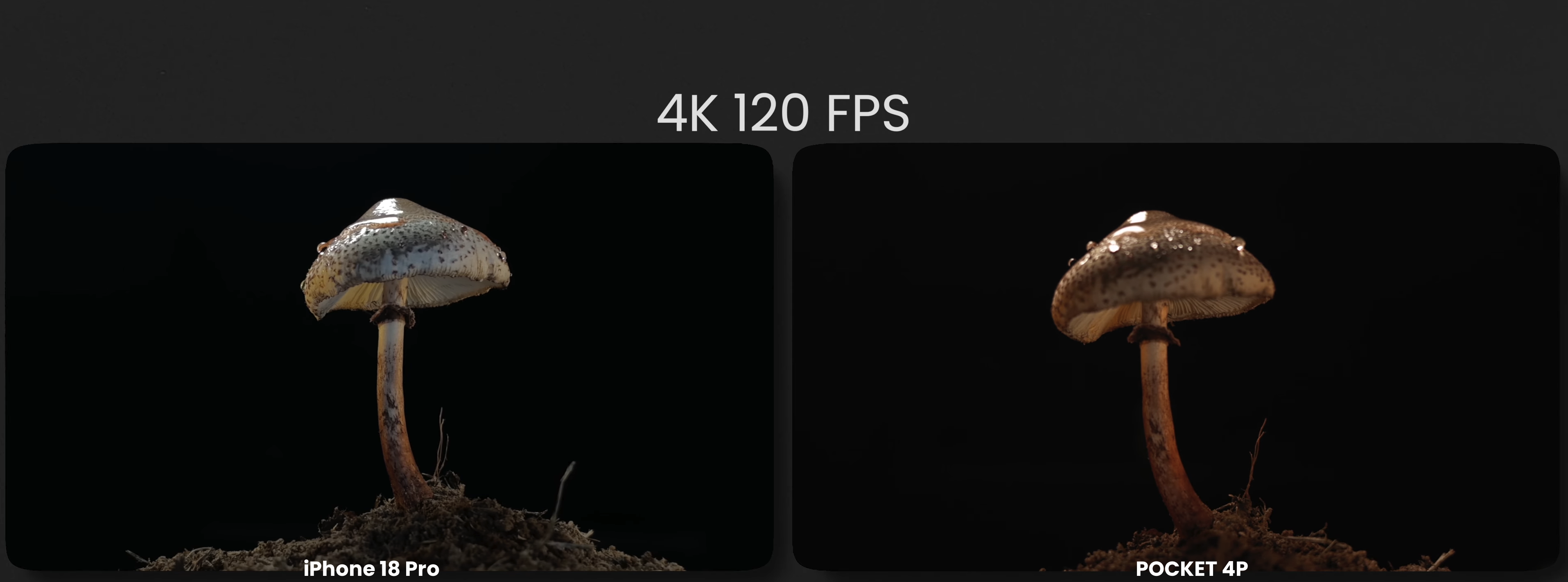
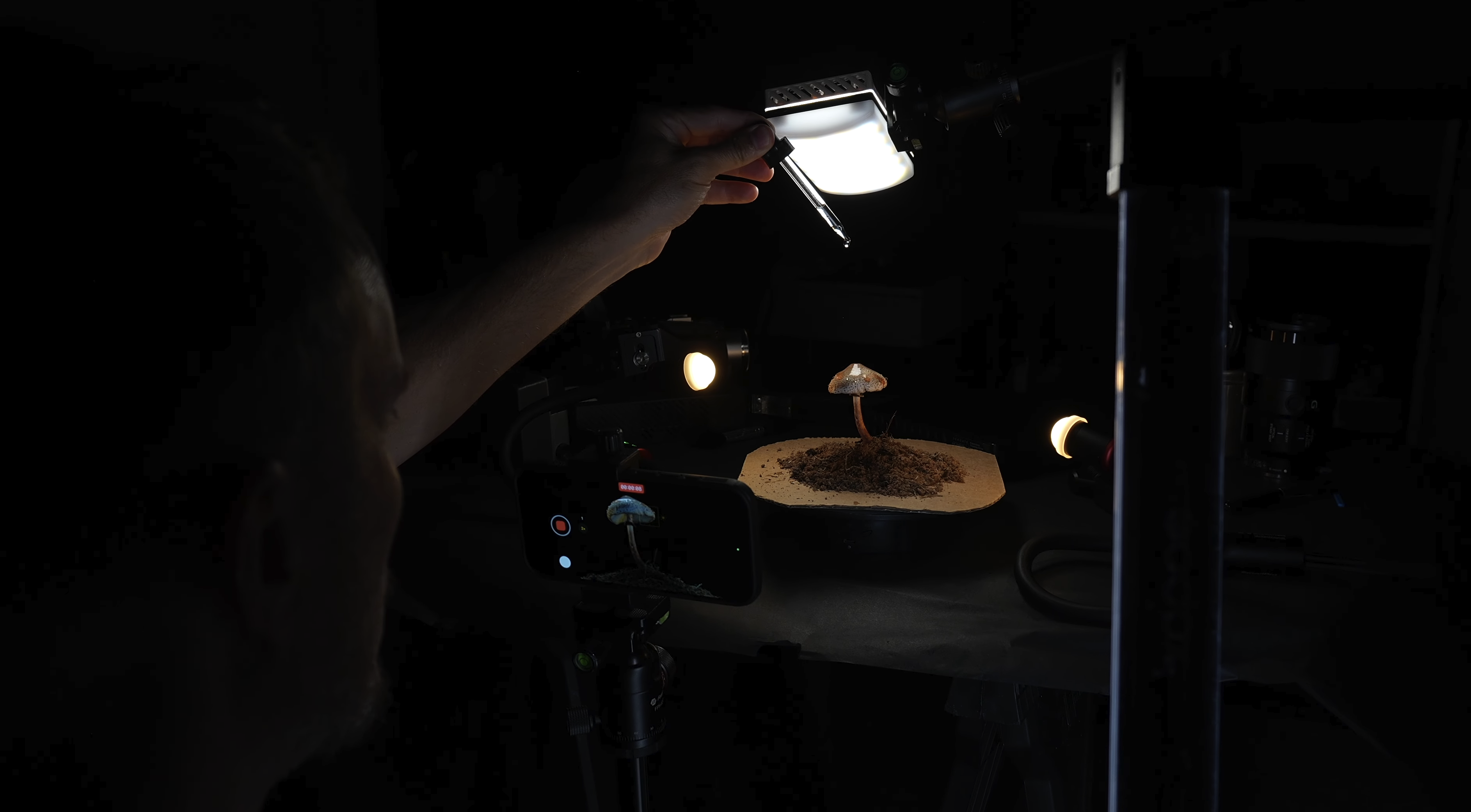
The very first shot I got with the 18 Pro was a mushroom at 4K 120, and honestly I was blown away. Thanks to that variable aperture, the whole mushroom was in focus, top to bottom. On the 4P, my aperture is fixed, so the stem was sharp but the front of the cap fell out of focus. That was a clear win for the iPhone.
The 18 Pro also won a few other rounds:
- Low light talking heads. Skin tones held up better on the iPhone in dim light. On the 4P, skin started to get a little blotchy.
- Scenes that are already colorful. On a graffiti wall full of color, the 4P came out a little too digital for my liking, and the iPhone's photo looked better overall, especially for fast-paced content.
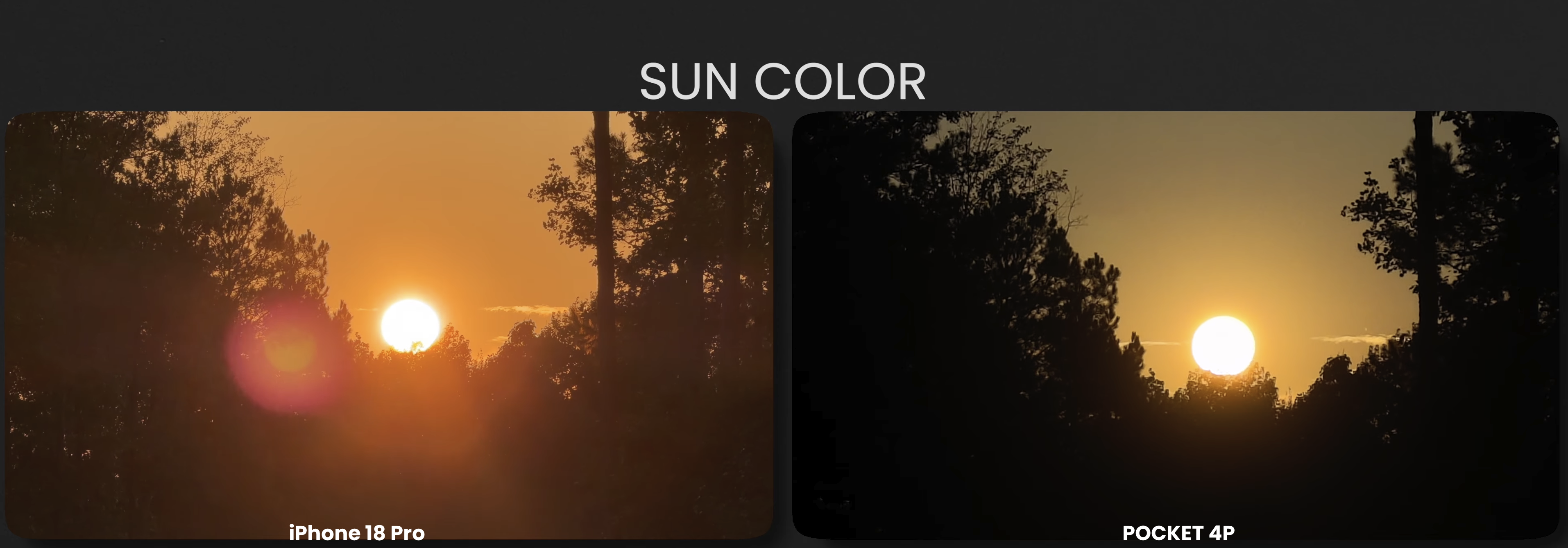
- Sunrise. At the crack of dawn, the iPhone gave me this orange sherbet sky that looked great. The 4P went with more of a purple gradient. Honestly, that one comes down to taste.
Where the Pocket 4P Pulls Ahead
Here's the thing I keep coming back to: the iPhone lifts the midtones, and I can't really control it. Sometimes that's not an issue. But a lot of the time, that lifted look is exactly what makes footage read like it came from a phone instead of a camera.
- Skin tone in daylight. The 18 Pro still oversaturates my skin, just like every iPhone before it. The 4P gives me skin tones that look a lot closer to how I actually look.
- Low light and night. In a low light shot at a taco stand, the 4P held onto contrast and deeper colors, and it just looked more like a movie. In extreme darkness, the iPhone's trees turned to mush and noise was all over the frame, while the 4P stayed a lot cleaner.
- Lens flare. Pointing both at a streetlight, the iPhone's flare looked smeared, with a green ghost in the frame. The 4P held together almost like a real camera lens.
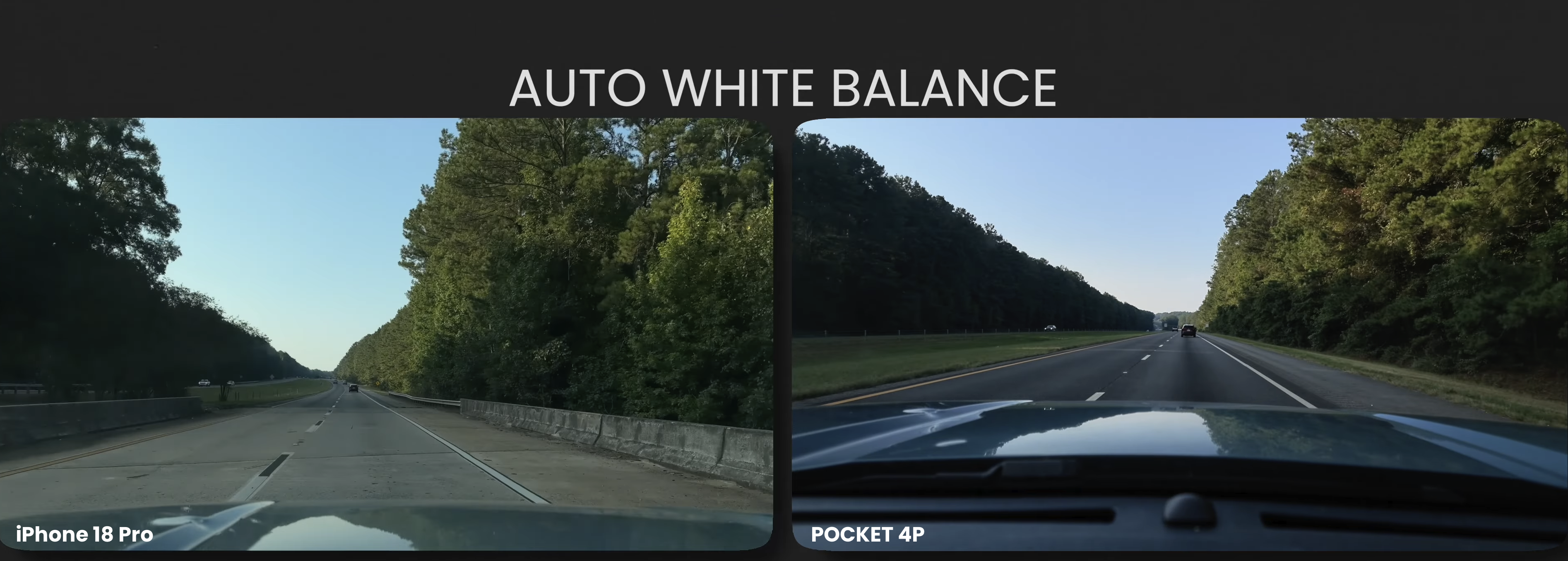
- Foliage and driving shots. The iPhone gives trees a fake lime green look. The 4P keeps greens darker, with more contrast.
- Bright pavement. Even at 0.0 exposure comp, the iPhone pushed the reflection on the pavement close to overexposure. The 4P kept it under control.
Shooting in Log: Apple Log 2 vs D-Log2
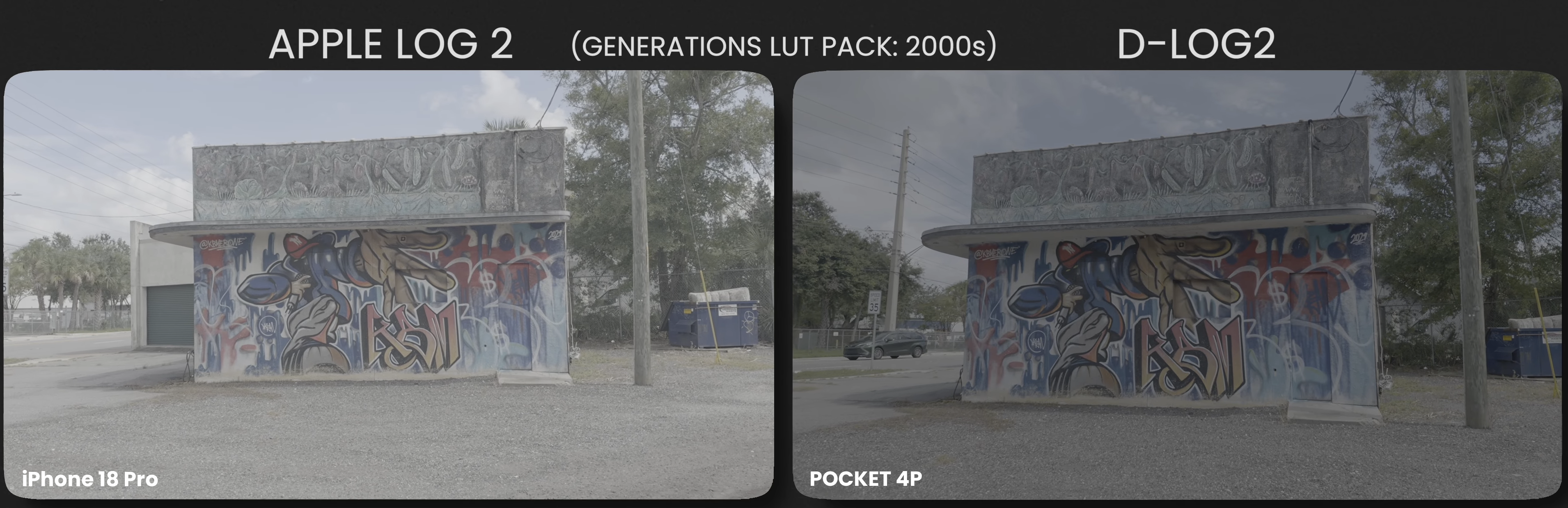
Most people aren't going to shoot log, but if you do, both cameras have a lot of dynamic range. I graded both with my own LUTs, and I was able to push and pull the shadows and bring up saturation on both to get the color I wanted. The one difference I noticed is that the 4P seemed to have a little less noise in the shadows. If you want to test it yourself, I left the project files for these shots in the description of my video.
Stabilization: Gimbal vs Electronic
This one isn't really a fair fight. The 4P has a mechanical gimbal, so the camera itself physically stays level no matter how dark it gets. The 18 Pro relies on electronic stabilization, which has to work a lot harder in low light. Even in good light, I found the 4P gave me a smoother look. To be fair, part of that could be user error on my end.
Photography: 48MP vs 37MP
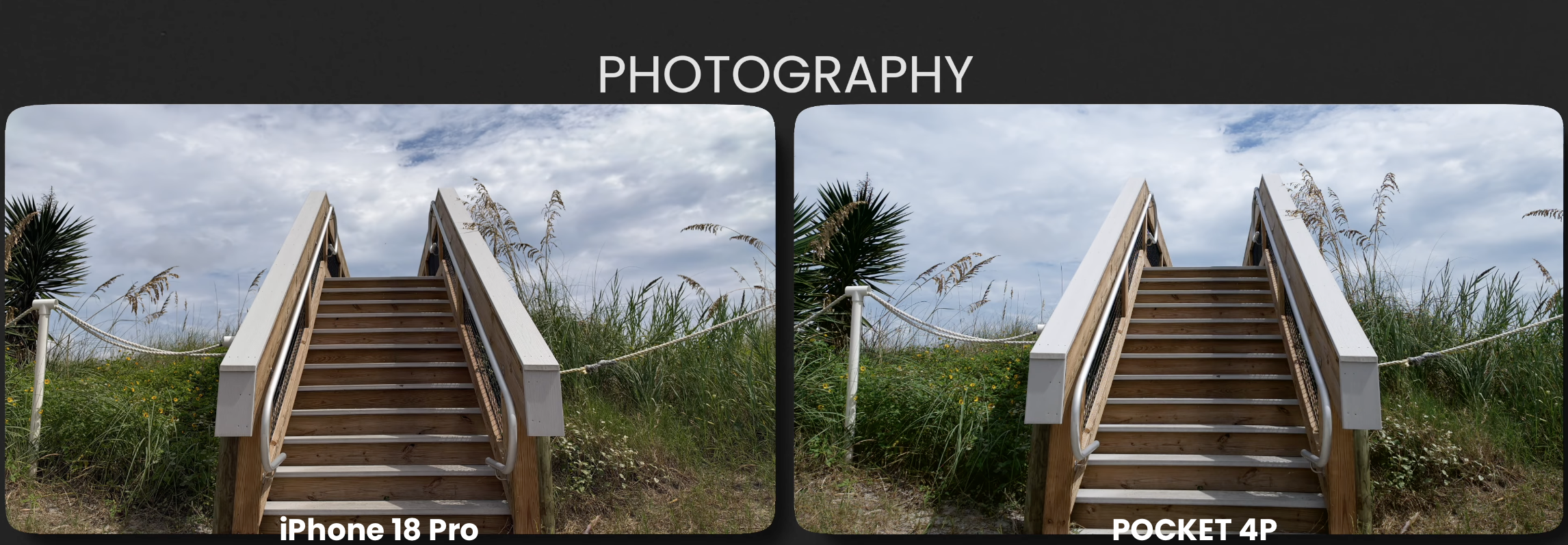
In good, even light, there's not much of a difference between these two for photos. Where they split is color. On a boardwalk shot, the iPhone had a more saturated, almost yellow tint, while the 4P looked more true to life with more contrast. But like I said earlier, when a scene is already packed with color, I actually preferred the iPhone.
So Which One Should You Buy?
I always wondered if Apple would finally fix the issues older iPhones had, like skin tone and low light, especially with this new variable aperture. Unfortunately, it's not as much of a change as I was hoping for. After using it in all these real-world scenarios, I'd call the 18 Pro a small upgrade, not a huge one.
If I had to pick one, I'd choose the Pocket 4P for its color science, dynamic range, and stabilization, especially in low light. But the 18 Pro is not a bad camera at all. It's still the thing I grab for a quick memory or reference shot, and nothing beats having it in your pocket all the time.
My recommendation: if you're on a budget, pick up the Pocket 4P as your A cam and use an iPhone 17 Pro or 16 Pro as your B cam, instead of going all in on the 18 Pro.
FAQ
Is the iPhone 18 Pro good for video?
Yes. The variable aperture gives you real control over depth of field, and it does well in low light talking heads and colorful scenes. It still lifts midtones and oversaturates skin in daylight, so I recommend shooting Apple Log 2 if skin tones matter to you.
Is the DJI Osmo Pocket 4P better than an iPhone for vlogging?
For me, yes. The mechanical gimbal, 1-inch sensor and more natural skin tones in daylight make it my pick for vlogging and travel content.
How many megapixels is the iPhone 18 Pro vs the Pocket 4P?
The iPhone 18 Pro's main camera is 48MP (it saves at 24MP by default). The Pocket 4P shoots 37MP photos.
Does the Pocket 4P have a variable aperture?
No. The aperture is fixed, which is why close-up subjects can fall out of focus compared to the 18 Pro.
Author