
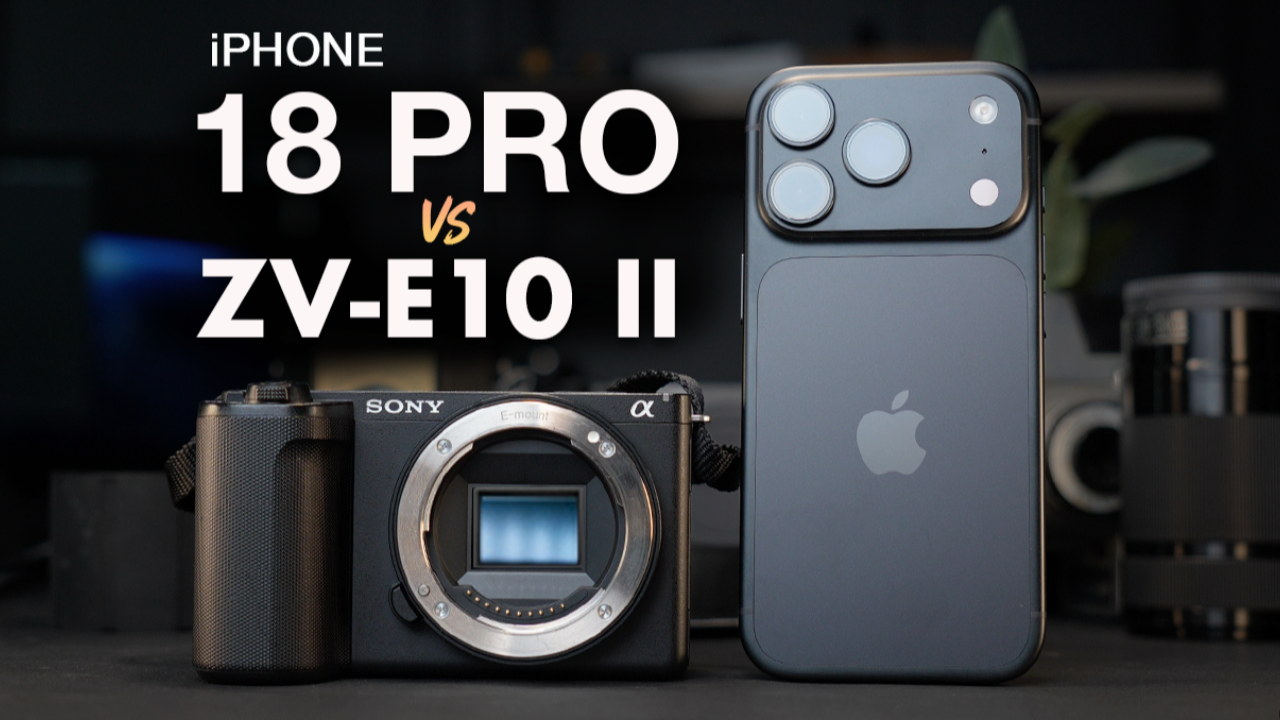
iPhone 18 Pro vs Sony ZV-E10 II: Why I'd Still Pick a Real Camera
Oct 22, 2026Get the full story watching the video above ⬆️
If you're stuck choosing between the iPhone 18 Pro and the Sony ZV-E10 II for YouTube, vlogging or everyday filmmaking, here's my honest answer after shooting with both: the ZV-E10 II is the better camera, but the iPhone 18 Pro is the better tool to have on you.
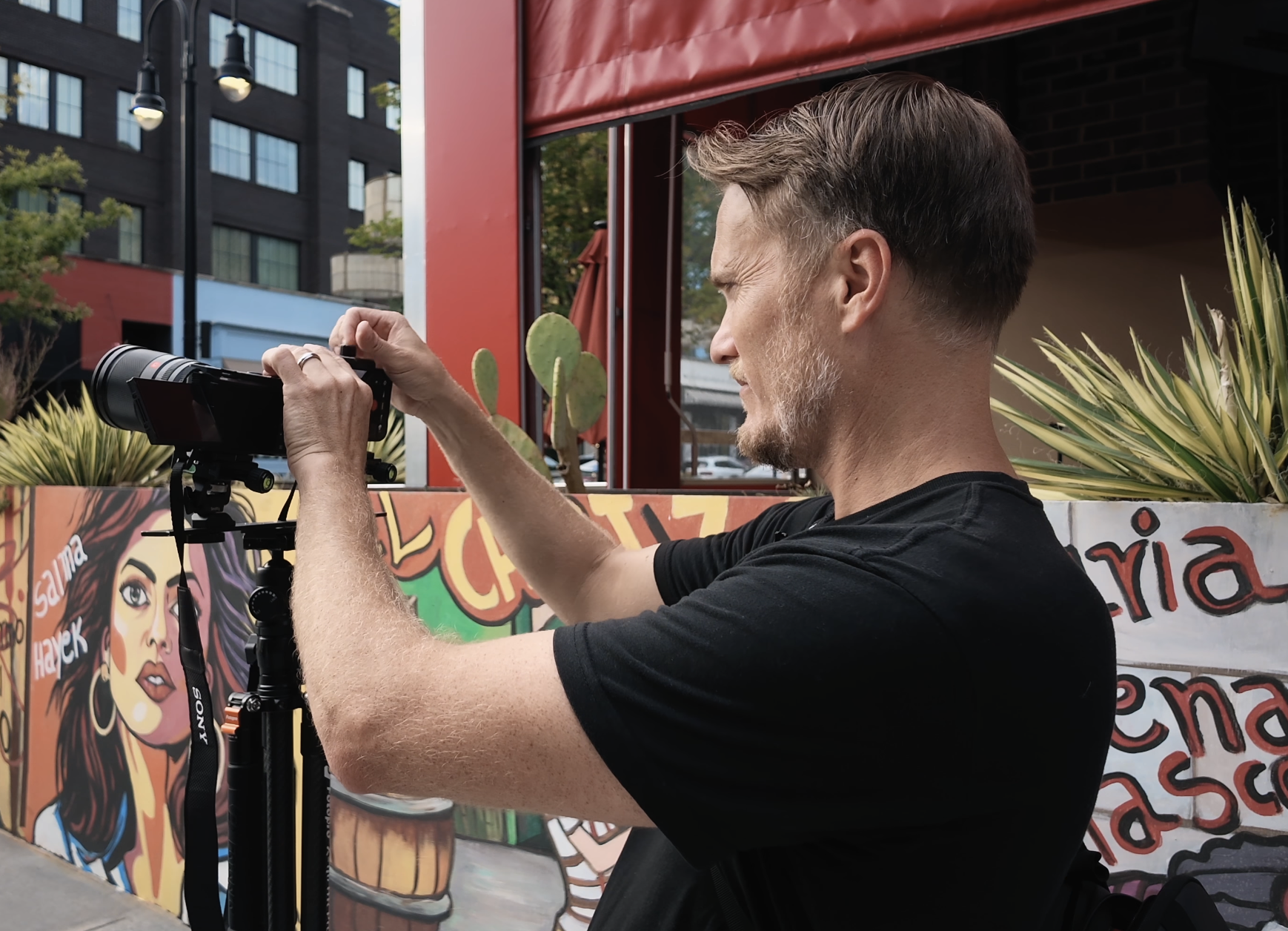
I'm Joel with The Film Alliance, and I make camera comparison videos for a living. I've shot side by side tests with phones, pocket gimbals and mirrorless cameras, so I know where a phone keeps up and where a real camera pulls away. In this post I'll walk you through how I actually use each one, what I'd buy, and why.
Meta description: iPhone 18 Pro vs Sony ZV-E10 II for video. A filmmaker's hands-on take on color, skin tones, low light, stabilization, log and which camera is right for YouTube and vlogging.
iPhone 18 Pro vs Sony ZV-E10 II: Key Specs
The biggest difference is sensor size: the ZV-E10 II's APS-C sensor is several times larger than the iPhone's main camera sensor, and that shows up in color, skin tones and low light.
|
Spec |
iPhone 18 Pro |
Sony ZV-E10 II |
|
Sensor |
48MP Pro Fusion system (main, ultra wide, telephoto) |
26MP APS-C (23.5 x 15.6 mm) |
|
Lenses |
Three built in, variable aperture on main |
Interchangeable Sony E-mount |
|
Max video |
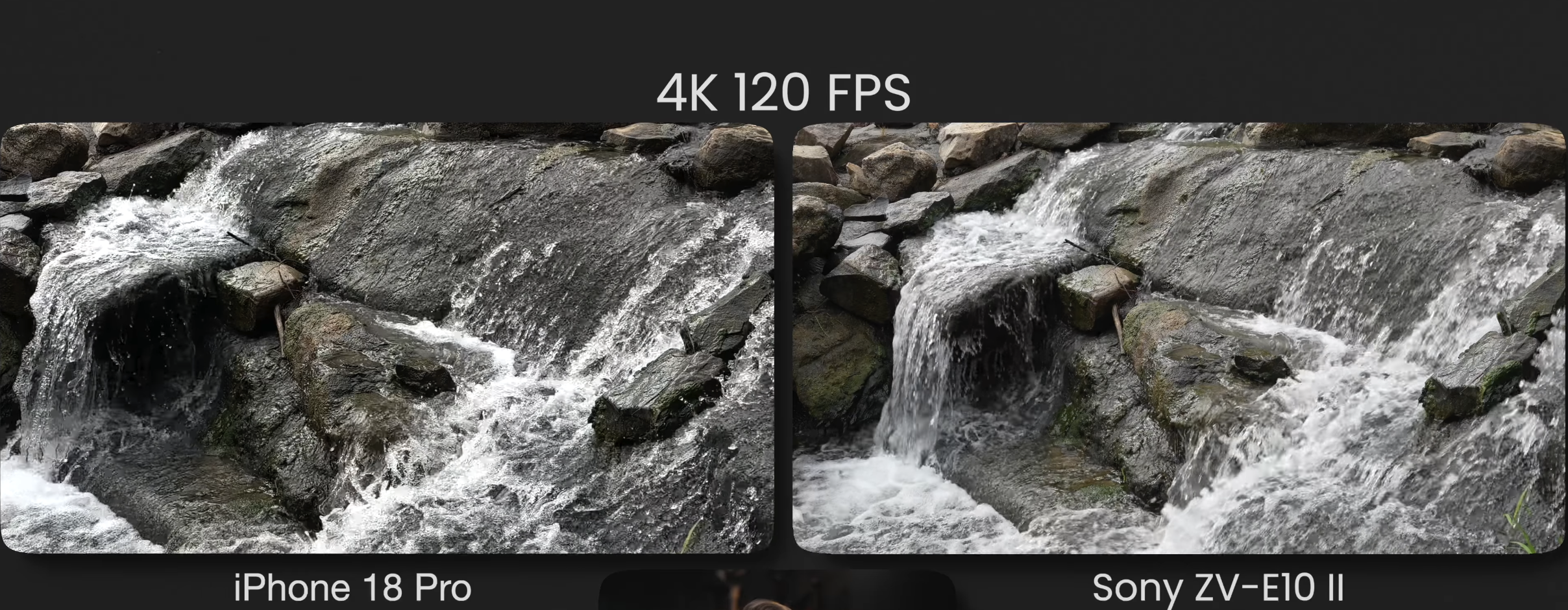
4K 120 |
4K 60, 1080p 120 |
|
Log profile |
Apple Log 2 |
S-Log3, 10-bit |
|
Stabilization |
Built in, gimbal-like in good light |
No in-body stabilization, digital Active mode only |
|
Screen |
6.3 in OLED |
3 in flip-out touchscreen |
|
Battery and storage |
Built in |
Swappable battery and SD card (UHS-II) |
|
Weight |
211 g |
Body plus lens, needs a bag |
Specs from Apple, B&H and Apotelyt.
Color Science: Phone Processing vs a Real Camera
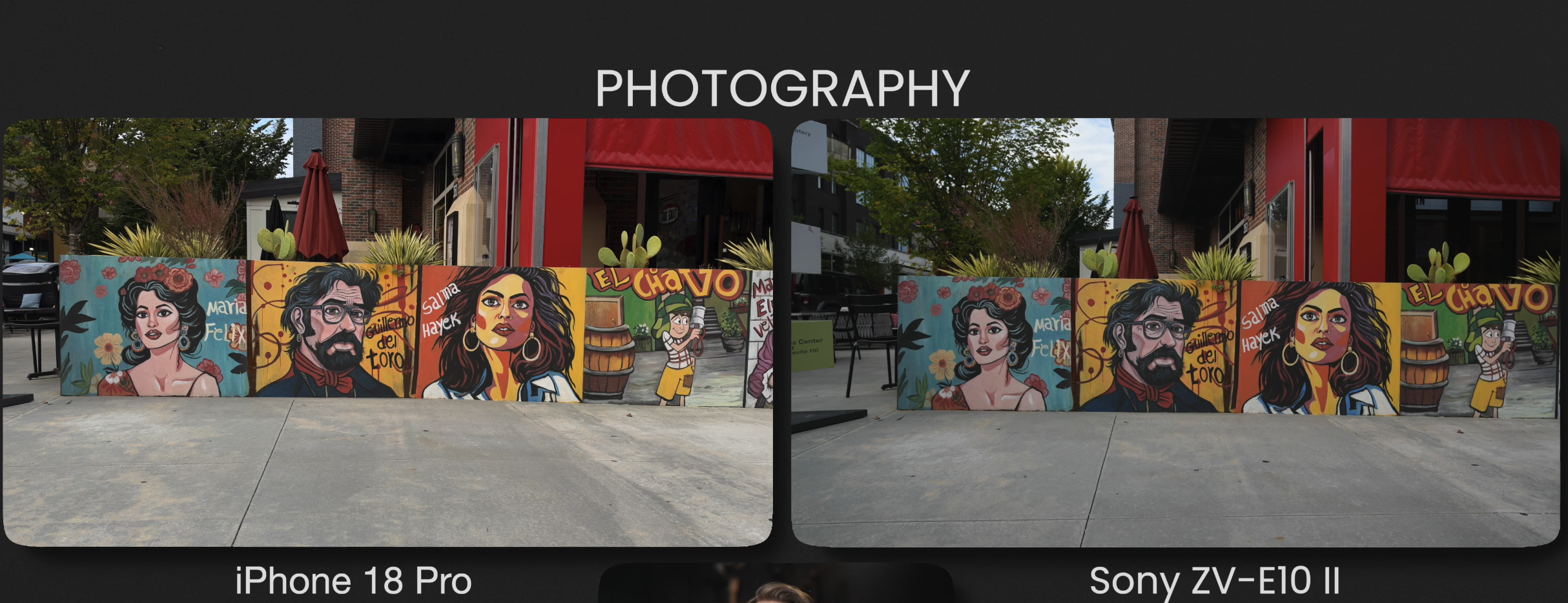
In bright, even light, I honestly struggle to tell these two apart. The iPhone 18 Pro holds its own, and if you mostly shoot outside on sunny days, it'll do the job.
The difference shows up when the light gets tricky. The iPhone's processing tends to lift the midtones, so blacks start looking gray and shadows lose their depth. Skies get extra texture pulled into the clouds, which looks dramatic at first but ends up feeling a little digital. And when you shoot into the sun, you'll often get that green ghost flare.
The ZV-E10 II's standard color profile looks more like what I actually saw standing there. Blacks stay black, skies look natural, and highlights roll off smoothly. If you like shooting straight out of camera with very little grading, that matters a lot.
Skin Tones and Vlogging
Skin tone is where I'd pick the ZV-E10 II every time. Nobody notices if a landscape looks a little off, but everyone notices when a face does.
The iPhone 18 Pro's main camera tends to push skin tones in a way that looks processed, especially in mixed or low light. The ZV-E10 II, paired with a wide lens like the Viltrox 13mm f/1.4 (about a 20mm field of view on APS-C), gives me natural, flattering skin right out of camera.
For vlogging, the flip-out screen is a big deal too. I can see myself while I talk to the camera and nail tough low angle shots without guessing what's in frame.
Low Light Performance
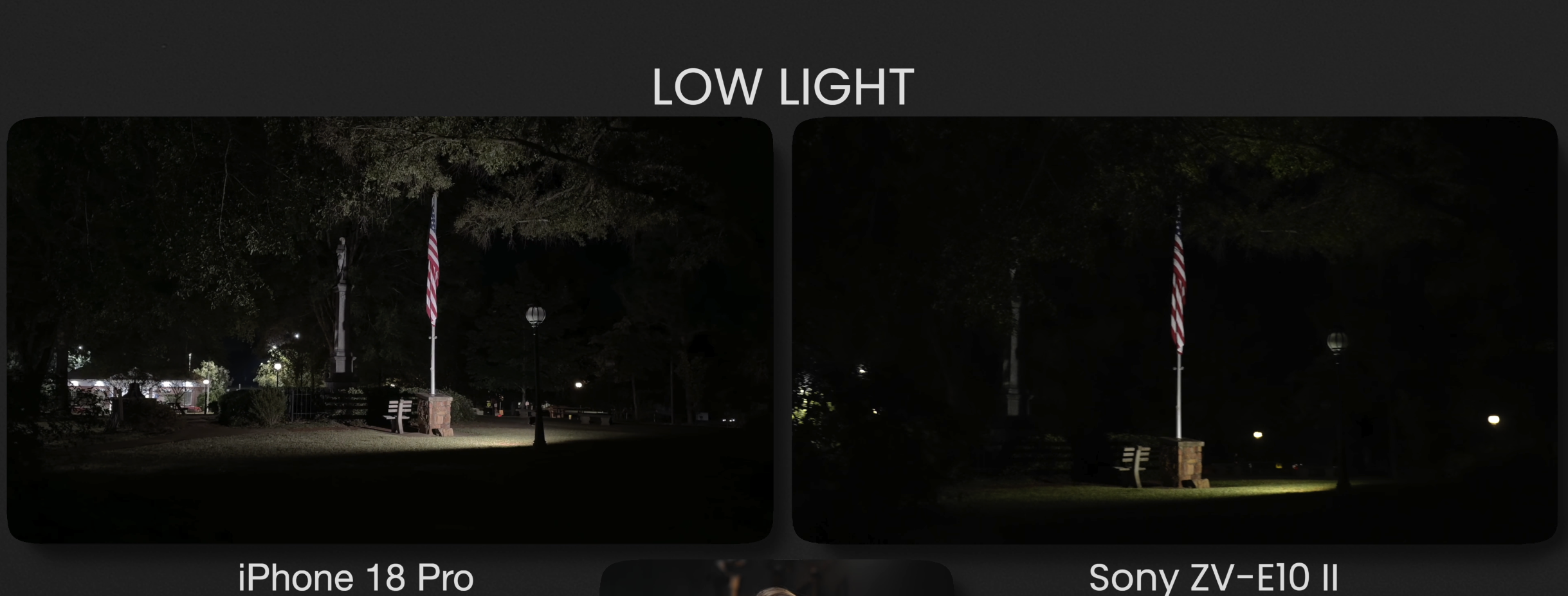
When I'm standing still at night, the ZV-E10 II produces the better image, and it isn't close. That larger 26MP APS-C sensor gives more dynamic range, cleaner shadows and a more cinematic look.
The iPhone 18 Pro gets noisy in the dark, lifts the midtones and tends to turn lights a little more yellow. Bright light sources like street lamps also blow out faster. You can fix some of that in post by pulling down the saturation, but if you want low light footage that looks right out of camera, the bigger sensor wins.
Stabilization: Where the iPhone 18 Pro Wins
If you film handheld while walking, the iPhone 18 Pro is the clear winner. In good light, its stabilization is so smooth it looks like the phone is on a gimbal.
The ZV-E10 II has no in-body image stabilization. It relies on Sony's digital Active mode, which crops in and still leaves noticeable shake, especially with third-party lenses that don't have their own stabilization. In low light it gets worse, to the point where I can't use walking shots at all.
If you plan to do a lot of walk-and-talk vlogging with the ZV-E10 II, budget for a gimbal or a lens with optical stabilization.
Depth of Field and Interchangeable Lenses
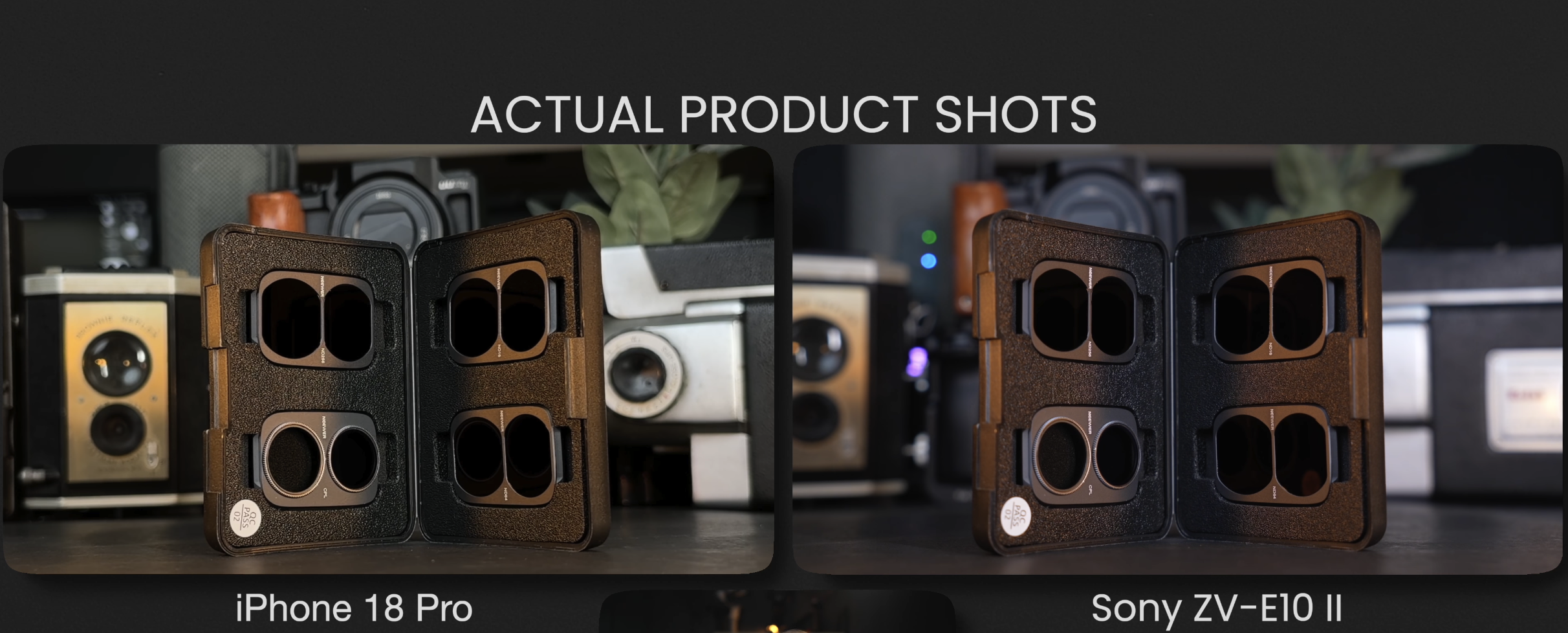
The iPhone 18 Pro now has a variable aperture on its main camera, and I actually like it for product shots. Setting it to f/4 keeps the whole product in focus, which is often what I want.
But it's not the same as a real lens. On the ZV-E10 II, a lens like the Sigma 18-50mm f/2.8 gives you real background blur that a phone can't fake convincingly. And because it's an interchangeable lens camera, you can grow your kit over time: a fast prime for low light, a wide for real estate and vlogging, or a dedicated telephoto for wildlife.
The iPhone's built-in telephoto is handy in bright light, but once the light drops, its smaller sensor struggles. A dedicated telephoto lens on the Sony is night and day different.
Shooting Log: Apple Log 2 vs S-Log3
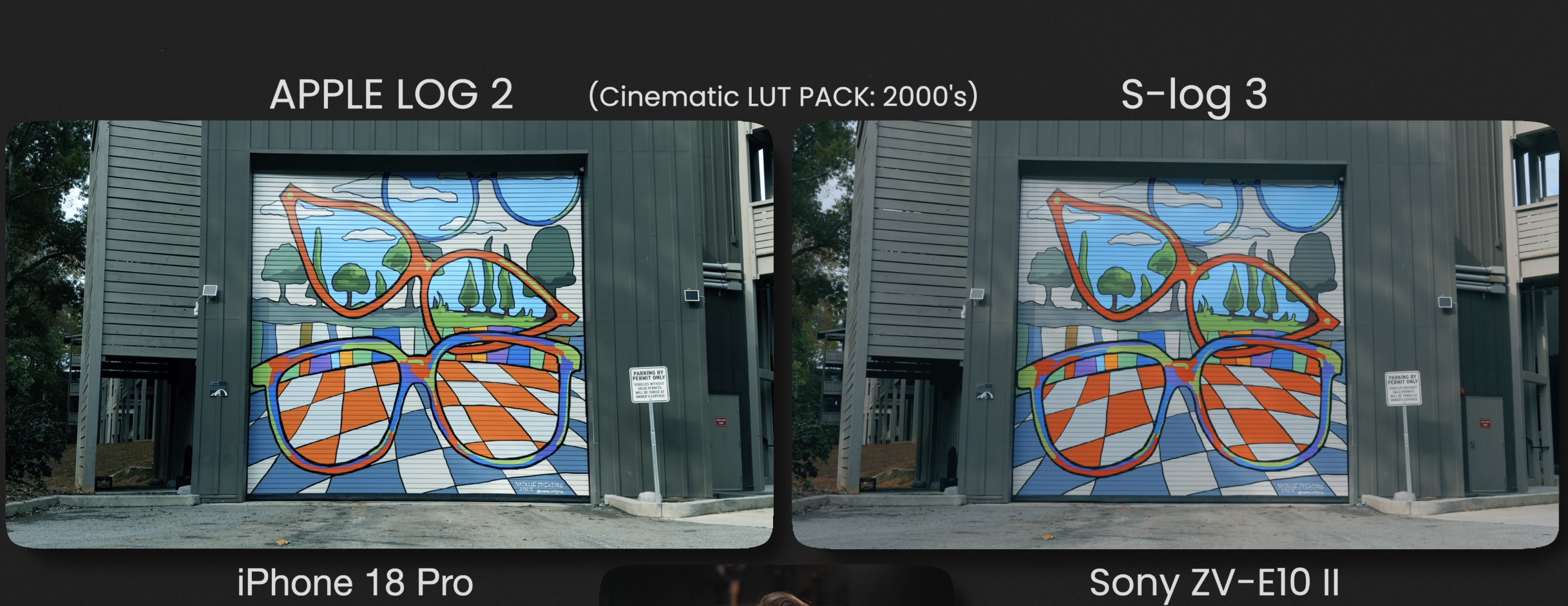
Both cameras shoot log, and both are great for color grading, but they feel different in the edit.
Apple Log 2 on the iPhone 18 Pro gives me a lot of room in the dynamic range to push and shape the image. S-Log3 on the ZV-E10 II records in 10-bit and, in my experience, is easier to grade, especially if you're a beginner. It comes out of the camera looking closer to where you want to end up.
If you shoot log on either one, a good set of film look LUTs will get you to a finished look fast. That's exactly why I built my own LUT packs.
Portability and Real-World Usability
Image quality isn't the whole story. The best camera is the one you actually have with you, and that's where the iPhone 18 Pro shines.
It lives in my pocket. Nobody looks twice when I pull it out in a crowd, and security guards aren't going to shut me down for filming with my phone. Time lapse, slow motion and quick clips are a swipe away.
The ZV-E10 II is small for a mirrorless camera, but it's still a camera. Add a lens, spare batteries and maybe a gimbal, and you're carrying a bag. People notice you. On the plus side, you can swap the battery and SD card in seconds, which matters on long shoot days.
Which Should You Buy? My Setup
If I had to choose, I'd buy the Sony ZV-E10 II with a good lens and keep using an older iPhone. The iPhone handles reference footage, family memories and, of course, calls and texts. The ZV-E10 II handles everything I care about creatively.
Get the Sony ZV-E10 II if you:
- Care about skin tones and natural color straight out of camera
- Shoot in low light or want a more cinematic look
- Want real background blur and the option to swap lenses
- Vlog to camera and want a flip-out screen
Get the iPhone 18 Pro if you:
- Film a lot of handheld walking shots without a gimbal
- Want one device that's always in your pocket
- Shoot in public and don't want to draw attention
- Mostly film in bright, well lit conditions
Honestly, the two make a great A cam, B cam pair.
FAQ
Is the iPhone 18 Pro better than the Sony ZV-E10 II for video? Not for overall image quality. The ZV-E10 II's larger APS-C sensor gives better skin tones, dynamic range and low light performance. The iPhone 18 Pro wins on stabilization and portability.
Is the Sony ZV-E10 II good for YouTube? Yes. It's built for creators, with a flip-out screen, 4K 60 recording, S-Log3 and interchangeable lenses. Just plan for a gimbal or stabilized lens if you film handheld while walking.
Does the Sony ZV-E10 II have image stabilization? No in-body stabilization. It uses digital Active mode, which crops the image and works best with stabilized lenses.
Can the iPhone 18 Pro replace a mirrorless camera? For casual shooting in good light, it gets surprisingly close. For low light, skin tones and shallow depth of field, a mirrorless camera like the ZV-E10 II is still better.
Is the Sony ZV-E10 II good for beginners? Yes. Its standard color profile looks great with little grading, and S-Log3 is easy to grade once you're ready to learn color.
Final Thoughts
The iPhone 18 Pro is the most capable phone camera I've used, and for a lot of people it'll be enough. But if you want to grow as a filmmaker, a real camera like the Sony ZV-E10 II gives you more control, better image quality and room to build a lens kit over time.
Whichever camera you pick, what you put in front of it matters just as much. My talking head course walks you through lighting, audio and framing so your talking heads look professional, no matter what camera you own.
Thanks for reading. I'm Joel with The Film Alliance.
Author

