
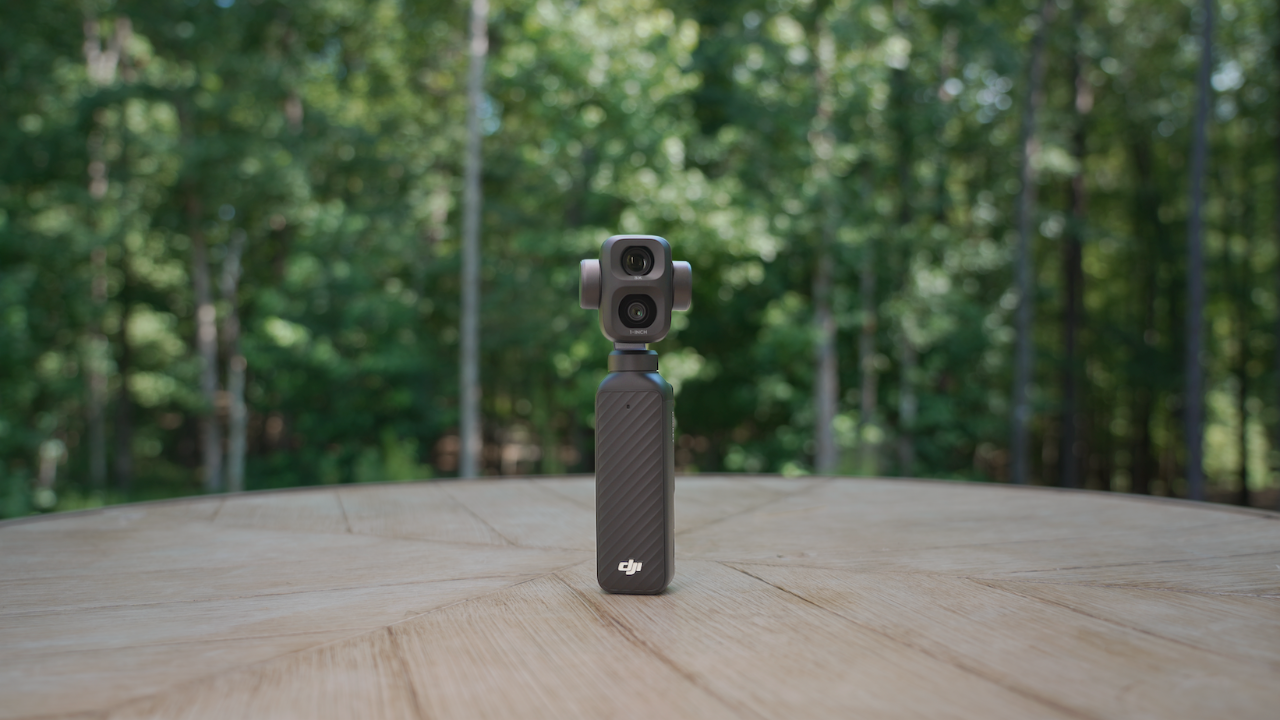
Osmo Pocket 4P 30-Day Review: Would I Buy It Again?
Jul 28, 2026After using the Osmo Pocket 4P almost every day for 30 days, I appreciate it more now than I did when I first bought it.
I have used it for cinematic B-roll, talking-head videos, handheld vlogging, tracking shots, slow motion, product shots, photography, family videos, bright daylight, backlighting, studio lighting, low light, and extremely dark nighttime environments.
I have also compared it with the Osmo Pocket 3, Insta360 Luna Ultra, iPhone 17 Pro, Osmo Action 6, Sony ZV-E10 II, Sony a6700, and GoPro Mission 1 Pro.
After all of that testing, the honeymoon phase still has not completely worn off.
The Osmo Pocket 4P is not perfect. Its limited availability in the United States, imported pricing, warranty concerns, small screen, and 3X camera limitations have become more noticeable over time.
However, its image quality, stabilization, slow motion, portability, and dual-camera system have made it one of the cameras I enjoy using most.
What Changed After 30 Days?
The biggest change is how often I reach for the Pocket 4P instead of one of my larger cameras.
It is easy to grab, powers on quickly, and allows me to start filming without building a rig, choosing a lens, attaching a gimbal, or carrying a large camera bag.
That convenience has become more valuable the longer I have owned it.
The image quality and stabilization still impress me, but a few limitations bother me more than they did initially.
The lack of a proper hard case makes me nervous whenever I carry it. The screen can feel too small when I am filming alone or trying to check focus. Not having D-Log 2 on the 3X camera also feels like a bigger compromise now that I use the telephoto lens so often.
The feature that has changed the way I shoot the most is the 3X camera.
I expected to use the wide lens most of the time, but the 3X camera has become the lens I choose for talking heads, product shots, details, portraits, and cinematic B-roll.
Living With the Pocket 4P Every Day
One of the greatest strengths of the Pocket 4P is how little effort it takes to bring it with me.
It is small enough to place in a bag without building an entire camera kit around it. When something interesting happens, I can turn it on and begin recording before the moment disappears.
The internal storage has also saved me more than once.
If I forget an SD card or fill one during a shoot, I can continue recording instead of putting the camera away.
Battery life has been solid for the way I normally film. I tend to record short clips, B-roll, and everyday moments rather than leaving the camera running continuously for hours.
For longer shooting days, I still need to plan ahead and carry a charger or additional power option.
The biggest everyday concern is protecting the camera.
The gimbal, lenses, and display feel exposed, and buying mine without a normal US warranty makes me more cautious than I would be with most cameras.
Even with that concern, I still choose it over larger cameras surprisingly often because it removes so much friction from filming.
Is the Pocket 4P a Good Everyday Carry Camera?
The Pocket 4P has become one of my favorite everyday carry cameras.
During the past month, I have used it to capture wide establishing shots, tight details, foreground movement, low-angle shots, slow motion, handheld walking footage, and ordinary family moments.
The tracking system also allows me to place myself in the frame and create more intentional sequences without needing another person behind the camera.
That makes it useful for both casual recording and more cinematic storytelling.
I genuinely think the Pocket 4P works as an everyday carry camera and a cinematic vlogging camera.
It makes ordinary moments look more polished without slowing me down.
The 3X Camera Is Its Best Feature
The 60mm-equivalent 3X camera may be the best feature on the Pocket 4P.
It gives talking-head videos and portraits a more flattering perspective than the wide camera. It also adds compression, which makes backgrounds appear closer and helps subjects stand out.
I use it regularly for:
-
Talking-head videos
-
Portraits
-
Product shots
-
Nature
-
Small details
-
Cinematic B-roll
-
Everyday family moments
The 3X camera is not perfect, though.
It uses a smaller sensor than the main 1X camera, so it begins to show noise sooner in low light. Its minimum focusing distance also makes very close product and detail shots more difficult.
The biggest limitation is that it cannot record in D-Log 2.
It can still shoot in 10-bit D-Log, but D-Log does not provide the same dynamic range or highlight and shadow recovery as D-Log 2.
D-Log Workflow With the 1X and 3X Cameras
Switching between the two cameras can complicate the grading workflow.
I can shoot D-Log 2 on the 1X camera and regular D-Log on the 3X camera, but those profiles behave differently during color grading.
The files are also not clearly labeled in a way that immediately tells me which Log profile was used.
That can become confusing when I have a timeline filled with clips from both cameras.
My workaround is to shoot both cameras in regular 10-bit D-Log when I know I will be switching between them frequently.
I lose some of the flexibility of D-Log 2 on the main camera, but the footage is easier to match and grade consistently.
Low-Light Performance After 30 Days
The Pocket 4P has impressed me more in low light than I initially expected.
It is not a replacement for a full-frame or APS-C camera in extremely dark conditions, but it can still produce strong footage when I control the exposure properly.
The camera includes a dedicated Low-Light mode, which is useful when I want the camera to handle most of the settings automatically.
Personally, I prefer the regular Video mode.
It gives me direct control over the frame rate, shutter speed, ISO, and overall exposure. I also think the footage looks more natural when I make those decisions myself instead of relying on the camera’s preset processing.
The 1X camera performs best in dark environments.
The smaller 3X sensor shows noise sooner, so I try to use it only when there is enough available light or when I can add my own lighting.
Overall, the Pocket 4P is a capable low-light camera, but its biggest strengths remain portability, stabilization, and convenience.
Standard vs D-Log vs D-Log 2
The Pocket 4P gives me three main color profile options: Standard, D-Log, and D-Log 2.
Standard Color Profile
Standard produces a finished-looking image straight out of the camera.
It adds contrast and saturation while maintaining relatively natural-looking colors.
I shoot approximately 90% of my footage in Standard because of my run-and-gun style.
I like being able to pull the camera out, capture the shot, and move on without worrying about grading every clip later.
D-Log
D-Log provides a flatter 10-bit image with more room for color grading.
It is especially helpful when I want to match the 1X and 3X cameras because both lenses can use it.
It does not provide as much dynamic range as D-Log 2, but it gives me a more consistent workflow.
D-Log 2
D-Log 2 provides the most dynamic range and the strongest highlight and shadow recovery.
It is my preferred profile when I am filming a controlled scene and know I will spend time grading the footage.
The downside is that it is limited to the 1X camera and requires more post-production work.
For everyday shooting, I prefer Standard. For controlled filmmaking, D-Log 2 gives me the best image to work with.
Slow Motion
Slow motion is one of the strongest features of the Pocket 4P.
It can record up to 4K at 240 frames per second, and the image remains impressively sharp at high frame rates.
I use 4K120 more frequently because it gives me smooth slow motion without creating quite as much footage or slowing the action down too severely.
The high-frame-rate options are excellent for:
-
Water
-
Sports
-
Animals
-
Product shots
-
Smoke
-
Hair movement
-
Fast action
-
Cinematic details
Many cameras technically offer 4K120, but the footage becomes noticeably softer.
The Pocket 4P maintains a surprising amount of detail, which makes slow motion one of the main reasons I enjoy using it.
Stabilization and Tracking
The built-in mechanical gimbal continues to be one of the Pocket 4P’s biggest advantages.
I can walk, move around a subject, shoot low to the ground, or hold the camera in unusual positions without carrying an external gimbal.
The stabilization is not completely perfect.
Walking can still create a slight vertical bobbing motion, particularly if I hold the camera completely upright. Holding it at a slight angle and improving my walking technique can help reduce that movement.
Tracking has also been reliable.
It makes solo filming much easier because I can place the camera on a tripod and allow it to follow me through the scene.
That combination of tracking and stabilization makes the Pocket 4P feel like a much larger production tool than its size suggests.
The Small Screen
The Pocket 4P’s small screen is useful, but it can also be limiting.
It works well for quick framing and changing settings. However, it is more difficult to confirm critical focus, examine fine details, or review footage compared with a larger mirrorless-camera display.
This becomes especially noticeable when I am filming myself.
I may think the shot looks correct on the small display and only notice a focus or composition issue once I view the footage on a larger screen.
The small display helps keep the camera portable, but it is still a compromise.
Can the Pocket 4P Replace a Phone?
For many people, yes.
The Pocket 4P can easily replace a phone for:
-
Travel videos
-
Family memories
-
Vlogging
-
YouTube videos
-
Walking footage
-
Cinematic B-roll
-
Slow motion
-
Everyday recording
Its mechanical stabilization gives it a major advantage over a phone during movement.
The 1X and 3X cameras also create more natural-looking perspectives than relying heavily on digital zoom.
A phone still has advantages in convenience, editing, uploading, communication, and always being in your pocket.
However, when I care about image quality and camera movement, I would rather use the Pocket 4P.
Can It Replace a Mirrorless Camera?
The answer is more complicated.
For travel, casual filmmaking, vlogging, behind-the-scenes footage, family videos, and everyday content, the Pocket 4P could replace a larger camera.
For professional work, it cannot replace everything a mirrorless system provides.
A professional mirrorless camera may offer:
-
Interchangeable lenses
-
Better low-light performance
-
Replaceable batteries
-
Dual card slots
-
Larger displays
-
External recording
-
Better audio connections
-
More manual controls
-
Greater depth-of-field control
The Pocket 4P’s 12X digital zoom also cannot match the detail, compression, and natural rendering of a real telephoto lens.
For convenience, it can replace a larger camera in many situations.
For maximum image quality, reliability, and creative control, I would still use a mirrorless system.
US Availability and Warranty Concerns
The biggest issue with the Pocket 4P is still its limited availability in the United States.
I bought mine through eBay and paid a premium.
That also means I may not have the same manufacturer warranty or return protections I would receive from an authorized US retailer.
This makes owning the camera more stressful.
If I damage the gimbal, drop it, or discover a defect, I may have to rely entirely on the seller.
Anyone considering the Pocket 4P in the United States should think carefully about:
-
The import price
-
Seller reputation
-
Return options
-
Warranty coverage
-
Possible import fees
-
Replacement availability
The camera itself is excellent, but the buying situation is far from ideal.
What I Like Most
After 30 days, these are the features I appreciate most:
-
Excellent mechanical stabilization
-
Useful 1X and 3X cameras
-
Sharp 4K slow motion
-
Natural-looking Standard profile
-
Strong D-Log 2 performance
-
Reliable subject tracking
-
Internal storage
-
Fast startup
-
Small and portable body
-
Surprisingly strong image quality
The Pocket 4P makes it easy to get a polished-looking shot without turning every outing into a full production.
What I Like Least
The biggest drawbacks are:
-
Limited US availability
-
High imported pricing
-
Warranty uncertainty
-
No proper hard case
-
Small display
-
Smaller sensor on the 3X camera
-
No D-Log 2 on the 3X camera
-
Confusing Log workflow between lenses
-
Limited professional connections
-
Lower flexibility than an interchangeable-lens camera
None of these issues completely ruin the experience, but they are important to understand before buying.
Who Should Buy the Osmo Pocket 4P?
The Pocket 4P makes the most sense for:
-
Travel creators
-
Vloggers
-
Solo filmmakers
-
Parents filming family moments
-
Cinematic B-roll shooters
-
People who frequently use slow motion
-
Creators who value portability
-
Anyone who does not want to carry a gimbal
-
People who want both wide and telephoto perspectives
It is especially useful for someone who wants better camera movement and image quality without building a large rig.
Who Should Skip It?
I would consider skipping the Pocket 4P if:
-
You primarily film professional client work
-
You need interchangeable lenses
-
Low light is your highest priority
-
You require dual card slots
-
You need professional audio or external recording
-
You dislike color grading but also dislike the Standard profile
-
You are uncomfortable importing a camera without a normal warranty
-
You already own a Pocket 3 and do not need the new features
The Pocket 3, Luna Ultra, or a small mirrorless camera may offer better value depending on your needs.
Would I Buy the Osmo Pocket 4P Again?
Yes, absolutely.
Even after paying a premium, I do not regret buying it.
The Pocket 4P has become one of those cameras I enjoy more every time I use it. It makes filming feel easy while still giving me enough image quality and creative flexibility to produce footage I would actually use in a finished project.
I also believe it has the potential to become a classic camera, similar to the impact of the Osmo Pocket 3 and Sony a7 III.
That does not mean everyone should buy one.
The US availability, imported pricing, and warranty risk are serious concerns. The 3X camera also has real limitations, particularly in low light and Log recording.
However, the overall combination of image quality, stabilization, portability, slow motion, tracking, and lens versatility is difficult to find anywhere else in such a small camera.
Final Verdict
After 30 days, the Osmo Pocket 4P has become one of my favorite cameras to carry.
It is not the camera I would choose for every professional job, and it does not completely replace a good mirrorless system.
What it does better than almost anything else is remove the friction between seeing a moment and recording it.
I can turn it on quickly, capture smooth footage, switch between wide and telephoto perspectives, record sharp slow motion, and put it away without carrying an entire camera setup.
The Pocket 4P is not perfect, but I would buy it again without hesitation.
For creators who value portability and convenience without wanting to give up strong image quality, it is one of the most capable pocket cameras I have used.
Author