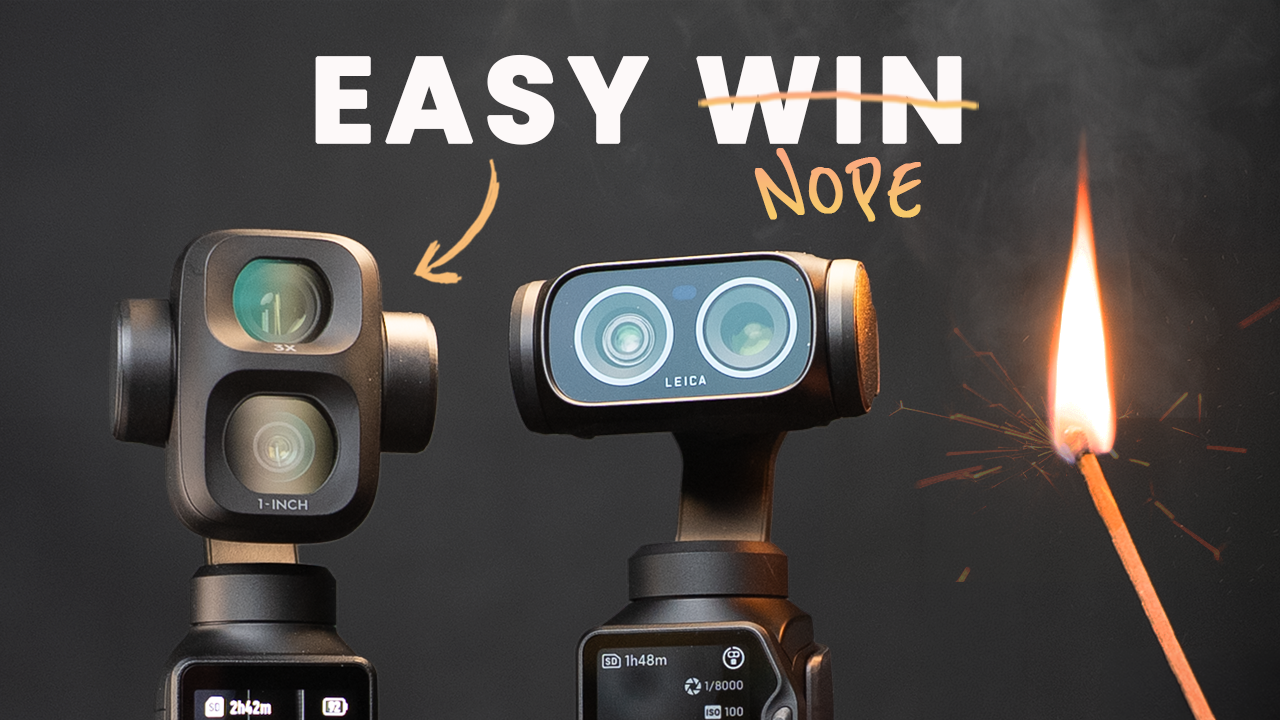
Osmo Pocket 4P vs Insta360 Luna Ultra Low-Light Comparison
Jul 27, 2026Purchase:
Insta360 Luna Ultra - https://geni.us/EZbO1Y
Low-light shooting is one of the hardest tests for any small camera. Once the sun goes down, differences in exposure, noise reduction, color science, autofocus, stabilization, and highlight control become much easier to see.
After testing the Osmo Pocket 4P and Insta360 Luna Ultra in a variety of nighttime environments, I found that both cameras performed extremely well.
The Luna Ultra generally produced more contrast, saturation, and pop straight out of the camera. The Pocket 4P gave me a more restrained, natural, and evenly exposed image.
I personally prefer the overall low-light look of the Pocket 4P, but the Luna Ultra won several individual tests and came much closer than I expected.
Price and Camera Overview
The Insta360 Luna Ultra starts at approximately $769 in the United States.
The Osmo Pocket 4P sells for around $749 in Mainland China, but US buyers may have difficulty finding one for under $1,000.
Both cameras use similar focal lengths.
Each one includes:
-
A 20mm-equivalent wide camera
-
A 60mm-equivalent 3x telephoto camera
-
A built-in mechanical gimbal
-
Standard and Log recording profiles
-
Dedicated low-light shooting options
On paper, they offer almost identical creative flexibility. Once the light begins to disappear, however, their processing and exposure behavior create noticeably different results.
Automatic Exposure Transitions
One of my first tests was to see how smoothly each camera changed exposure while using program auto.
I moved the cameras between brighter and darker areas to see how naturally they reacted.
The Luna Ultra adjusted its exposure more gradually. The change looked smooth and less distracting.
The Pocket 4P made a more visible jump as it moved between exposure levels.
This matters when filming continuously through changing light, such as walking from a bright storefront into a darker street.
A gradual transition feels more natural and is less likely to draw attention to the camera’s automatic processing.
For automatic exposure transitions, I preferred the Luna Ultra.
Low-Light Zoom Quality
I also tested both cameras at their different zoom ranges.
At 12x zoom, the Luna Ultra produced the better image.
It retained more detail in distant people and gave me a clearer view through the rain.
The Pocket 4P made the rain appear much more prominent, even though both clips were recorded at the same moment.
That difference also affected autofocus. The Pocket 4P began showing some focus pumping as it tried to decide whether to focus on the rain or the distant subject.
Neither camera is at its best at 12x in low light, but the Luna Ultra handled this difficult situation more effectively.
6x Zoom
At 6x zoom, the difference was mainly about color and contrast.
The Luna Ultra produced:
-
More contrast
-
More saturation
-
Stronger detail
-
More immediate pop
The Pocket 4P gave me a softer and more restrained color rendering.
This category comes down largely to personal taste. Some people will prefer the brighter and punchier Luna image, while others will want the more neutral Pocket 4P footage for grading.
3x Camera Stabilization
I tested the 3x cameras while both units were mounted upside down on a tripod and moved forward.
This created a stabilization test as well as an image-quality comparison.
The Luna Ultra produced stronger contrast and kept more of the foreground looking sharp. However, its footage appeared slightly bouncier.
The Pocket 4P also showed some movement, but neither camera performed poorly.
The color between them was surprisingly similar in this situation.
Overall, both mechanical gimbals made low-light movement much smoother than I would expect from a phone or digitally stabilized action camera.
Low-Light Color Science
Outside under mostly natural lighting, the two cameras produced remarkably similar color.
The Luna Ultra crushed the shadows slightly more, even though I used similar exposure settings.
The Pocket 4P retained a little more tonal range and made darker areas easier to see.
The difference became much larger once I moved indoors and introduced artificial lighting.
Artificial lights, neon signs, LED fixtures, and colored storefronts can reveal color-science differences that are not always visible outside.
Neon and Artificial Lighting
In one indoor test, the Luna Ultra rendered an orange neon sign as a deeper and richer shade.
The Pocket 4P created a lighter orange.
Neither camera perfectly matched how the sign looked in person.
In a red-lit brick-wall test, the Luna Ultra pushed the red harder and made it stand out more.
The Pocket 4P produced a more muted and neutral red, which I personally preferred.
This pattern continued throughout my testing.
The Luna Ultra generally increased saturation and contrast, while the Pocket 4P gave me a more controlled starting point.
Dedicated Low-Light Modes
Both cameras include dedicated modes intended to make nighttime filming easier.
The Luna Ultra uses PureVideo, while the Pocket 4P includes its own Low-Light mode.
The Luna Ultra’s PureVideo mode did a good job cleaning up dark scenes and making them appear brighter and more usable.
The Pocket 4P’s Low-Light mode also performed well.
However, I still prefer setting my exposure manually.
Dedicated low-light modes behave somewhat like presets. They may automatically change noise reduction, sharpening, contrast, saturation, and exposure.
Those adjustments can improve the image for beginners, but they also limit how much control I have over the final result.
Even when recording in a standard Rec.709 profile, I find that regular manually exposed footage is often easier to adjust than footage processed through a strong low-light preset.
For beginners or fast run-and-gun situations, both low-light modes are useful. For maximum control, I would shoot manually.
Color Differences in Low-Light Modes
The same color differences remained visible when both cameras were placed in their dedicated low-light modes.
The Luna Ultra produced stronger saturation, particularly in yellow lighting and illuminated windows.
The Pocket 4P reduced the saturation in those areas and produced a smoother, more natural gradient in the sky.
The Luna image may look more finished immediately.
The Pocket 4P gives me an image that is easier to shape based on my own preferences.
Lens Flare and Ghosting
Bright lights at night can create flare, ghosting, streaks, and colored artifacts.
Both cameras produced visible flare, but they handled it differently.
The Luna Ultra created a stronger purple-and-green streak across the frame. It looked almost as though the light were being smeared across the lens.
The Pocket 4P also produced a streak, along with circular flare artifacts and a small green orb below the light.
Neither rendering is technically perfect, but lens flare is also a creative preference.
Some people may like the more dramatic streak from the Luna Ultra. Others may prefer the circular and more cinematic-looking artifacts from the Pocket 4P.
Real Estate and Exterior Night Shots
In a nighttime real-estate-style shot, I had to raise the ISO on both cameras.
I preferred the Luna Ultra in this scene.
It gave the greens a deeper color, and I believe I exposed it more accurately.
The Pocket 4P appeared slightly overexposed around the illuminated signs.
This result shows how important proper exposure is.
A small exposure difference can sometimes influence the final image more than the camera itself.
Backlit Night Scenes
Backlit nighttime scenes revealed some of the biggest differences between the cameras.
In one test, the Luna Ultra added more contrast and rendered the lights with a richer color.
The Pocket 4P looked slightly more muted, but the lighting appeared more realistic.
This came down to personal preference.
In another backlit shot, the difference was much clearer.
The Luna Ultra exposed the sky better but crushed the shadows. Darker parts of the building became much harder to see.
The Pocket 4P exposed the scene more evenly and retained more information in the darker areas.
This is where I preferred the Pocket 4P’s tonal balance.
It may not have created the most dramatic sky, but it gave me more usable information across the entire frame.
Night Sky Color
Sky color has always been important to me, and the Luna Ultra occasionally produced a noticeable purple tint when I pointed it directly upward.
Some people may like that look because it creates a darker and moodier atmosphere straight out of the camera.
The Pocket 4P produced more muted and neutral sky colors.
That means I would need to add more color in post if I wanted the Pocket 4P to have the same dramatic appearance.
Interestingly, once foreground objects covered part of the frame, the sky colors from the two cameras became much closer.
This suggests that each camera’s automatic processing may react differently depending on the overall composition and brightness distribution.
Stabilization in Low Light
I did not have a major issue with stabilization from either camera.
Their mechanical gimbals are one of the biggest benefits of using these cameras at night.
Both units allowed me to capture walking and vlog-style footage that would be much harder to achieve with a phone.
Digital stabilization often becomes weaker in low light because the camera is working with slower shutter speeds and noisier frames.
The physical gimbals on the Pocket 4P and Luna Ultra keep the cameras steady without relying entirely on electronic correction.
For low-light walking footage, both cameras performed very well.
Skin Tones
For my skin-tone test, I used artificial lighting from a large television screen.
The Luna Ultra gave my skin a slightly more natural and flattering appearance.
The Pocket 4P came extremely close, and I would be comfortable using either camera under this type of lighting.
This was another category where the Luna Ultra surprised me.
It does not always produce the more accurate overall color, but in certain lighting environments, its added saturation and contrast can make skin look more flattering.
D-Log 2 vs I-Log in Low Light
After testing the standard profiles, I switched both cameras into Log.
Log shooting in low light requires careful exposure because underexposing too far can create noise, color shifts, and difficult shadow recovery.
At approximately -1.0 exposure, the Luna Ultra’s I-Log footage did not perform particularly well. I could still see a noticeable magenta cast.
At 0.0, both cameras performed much better.
I then tested both cameras at approximately +1.0 exposure.
The Luna Ultra’s I-Log footage improved significantly when overexposed by one stop.
Based on these results, my preferred starting points are:
-
Pocket 4P D-Log 2: Approximately 0.0 exposure
-
Luna Ultra I-Log: Approximately +1.0 exposure
These are not universal settings for every environment, but they gave me the best balance during my tests.
The Luna Ultra appears to benefit from receiving more light when recording I-Log. Underexposing it can introduce color issues and make the footage more difficult to grade.
Which Camera Has Better Low-Light Image Quality?
The answer depends on the type of image you prefer.
The Luna Ultra generally gives you:
-
More contrast
-
More saturation
-
Brighter low-light modes
-
Smoother automatic exposure changes
-
Better 12x low-light zoom
-
Strong performance when I-Log is overexposed
The Pocket 4P generally gives you:
-
More natural color
-
Better shadow retention
-
More even exposure
-
A smoother sky gradient
-
A more restrained standard profile
-
Strong D-Log 2 performance around 0.0 exposure
The Luna Ultra often looks more exciting straight out of the camera.
The Pocket 4P gives me a more balanced image that I can customize later.
Who Should Buy the Insta360 Luna Ultra?
The Luna Ultra is a strong choice for:
-
US buyers who want normal availability
-
Creators who like punchier color
-
People who rely on automatic exposure
-
Beginners using dedicated low-light modes
-
Creators who frequently use digital zoom
-
Anyone who wants a brighter image straight from the camera
Its PureVideo mode also makes low-light shooting easier for someone who does not want to adjust every setting manually.
Who Should Buy the Osmo Pocket 4P?
The Pocket 4P is better suited for:
-
Creators who prefer natural color
-
People who manually expose footage
-
Filmmakers who want more shadow detail
-
Users who plan to color grade
-
Creators who value D-Log 2
-
Anyone who wants a more controlled image
Its US pricing and availability remain major drawbacks, but I still prefer its overall low-light rendering.
Final Verdict
Both cameras performed extremely well in low light.
In many scenes, their colors and overall image quality were much closer than I expected.
The biggest difference was consistency in how they approached the image.
The Insta360 Luna Ultra gave me more contrast, saturation, and pop straight out of the camera. It also handled automatic exposure transitions more smoothly and performed especially well when I overexposed I-Log by approximately one stop.
The Osmo Pocket 4P created a more natural, restrained, and evenly balanced image. It retained more shadow detail in difficult backlit scenes and gave me a cleaner starting point for color grading.
I personally prefer the Pocket 4P’s overall low-light image because it feels more controlled and true to life.
However, the Luna Ultra is extremely competitive and may actually be the better choice for creators who prefer brighter, punchier footage without doing much post-production.
Author