
Osmo Pocket 4P vs Insta360 Luna Ultra - Which one is better?
Jul 21, 2026Get the full story watching the video above ⬆️
Purchase:
Luna Ultra - https://geni.us/bwuGLW
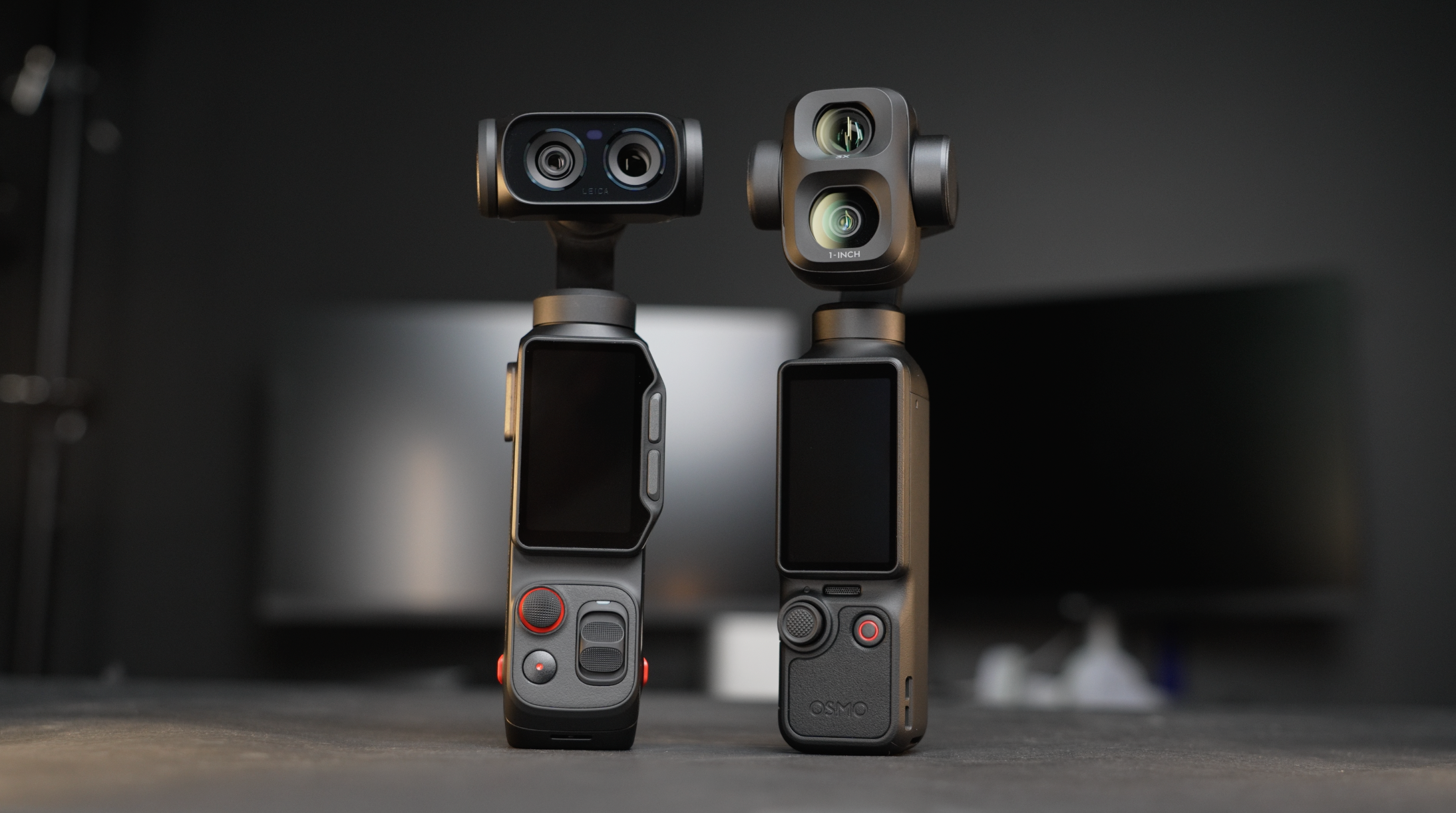
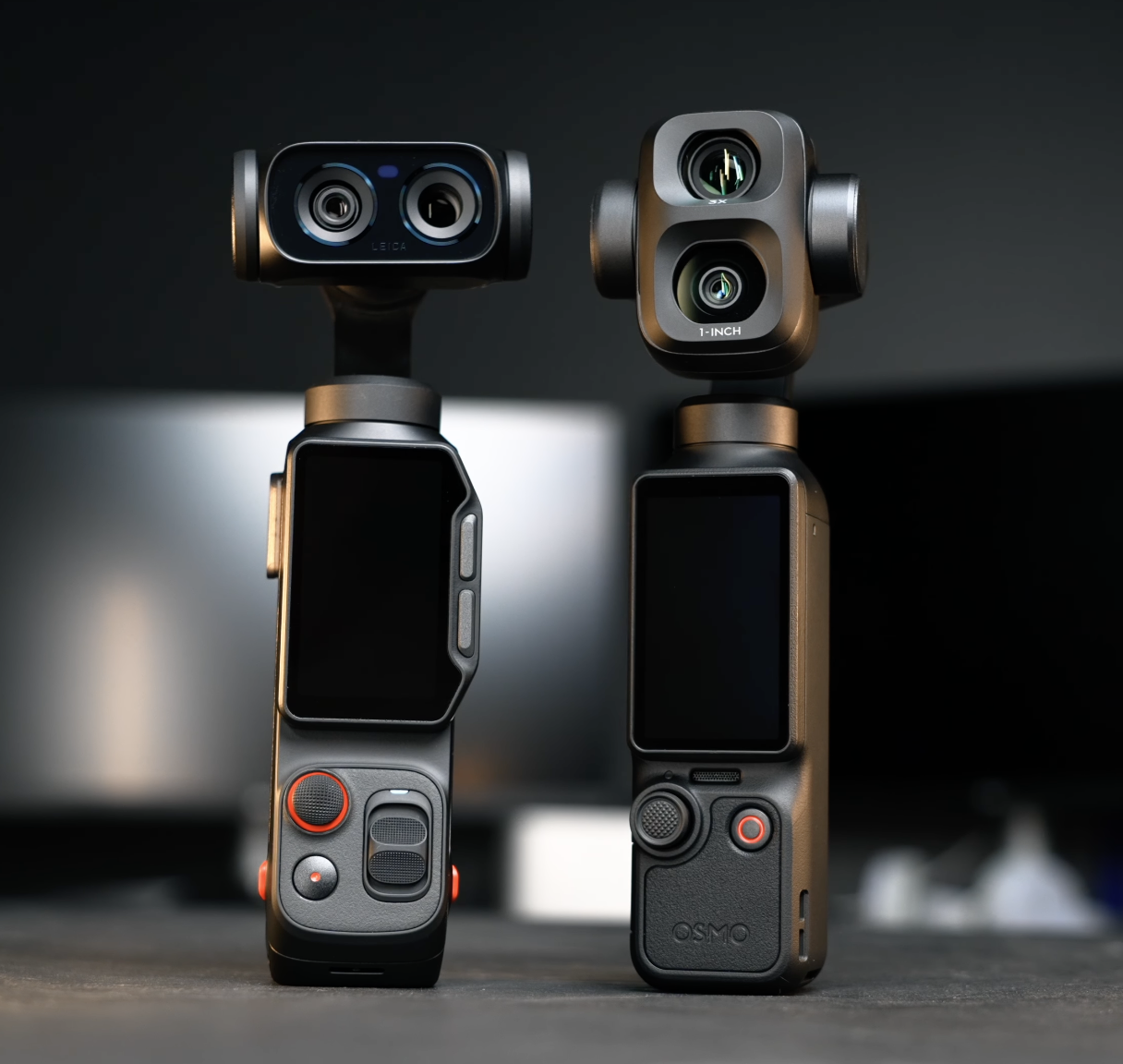
The Osmo Pocket 4P and Insta360 Luna Ultra are two of the most exciting compact gimbal cameras I have tested. On paper, they are incredibly similar. Both give you wide and telephoto cameras, mechanical stabilization, subject tracking, Log recording, and enough image quality to create professional-looking footage from a device that fits in your pocket.
After using both cameras in controlled studio lighting, low light, outdoor daylight, fast-moving tracking shots, slow motion, and everyday filming situations, I found that the difference between them is not as simple as saying one camera is better in every category.
The Osmo Pocket 4P gave me better dynamic range, more natural skin tones in controlled lighting, stronger highlight recovery, and better overall results when shooting in D-Log 2. The Insta360 Luna Ultra came surprisingly close in many situations and occasionally gave me the image I preferred, especially in certain low-light scenes.
For overall image quality, I still prefer the Osmo Pocket 4P. However, the Luna Ultra may offer the better value for many buyers in the United States, especially when the Pocket 4P is only available at an inflated import price.
In this Osmo Pocket 4P vs Insta360 Luna Ultra comparison, I will break down their lenses, image quality, color, dynamic range, low-light performance, Log profiles, stabilization, tracking, autofocus, slow motion, skin tones, pricing, and real-world value.
Osmo Pocket 4P vs Insta360 Luna Ultra Overview
Both cameras are designed around the same basic idea: give creators a small dedicated video camera with a built-in mechanical gimbal and multiple focal lengths.
The Osmo Pocket 4P and Insta360 Luna Ultra each include:
-
A wide 20mm-equivalent camera
-
A tighter 60mm-equivalent telephoto camera
-
Mechanical gimbal stabilization
-
Active subject tracking
-
Standard and Log color profiles
-
High-frame-rate recording
-
Compact, travel-friendly designs
That similarity is exactly why these two cameras are being compared so often.
I have seen plenty of people claim that the Pocket 4P is clearly the better pocket camera. After placing them side by side, I do not think the answer is that simple.
In controlled lighting and favorable outdoor conditions, the image quality can be remarkably close. The color science is different, but the actual amount of visible detail in 4K footage is often similar.
Price and Availability
Price is one of the most important parts of this comparison, especially for buyers in the United States.
The Insta360 Luna Ultra starts at approximately $769 in the US.
The Osmo Pocket 4P may sell for less in Mainland China and other international markets, but finding one in the United States for under $1,000 can be difficult.
That price difference changes how I look at these cameras.
If both were available at their normal retail prices, I would lean more strongly toward the Pocket 4P because of its dynamic range, D-Log 2 performance, and slow-motion capabilities.
However, paying a large import premium for the Pocket 4P becomes harder to justify when the Luna Ultra produces such similar results in many real-world situations.
For a US buyer, the Luna Ultra may be the more sensible purchase unless the Pocket 4P’s specific advantages are essential to your work.
Lens Comparison
The lens systems are one of the biggest reasons these two cameras are so similar.
Both cameras give you a 20mm-equivalent wide lens and a 60mm-equivalent telephoto lens.
20mm Wide Camera
The 20mm camera is the lens I would use for:
-
Vlogging
-
Walking shots
-
Travel videos
-
Establishing shots
-
Interior filming
-
Group shots
-
Everyday handheld recording
A 20mm-equivalent lens gives you a wide field of view without feeling as extreme as an action camera.
It is wide enough to film yourself at arm’s length and works well when you want to include the environment around your subject.
60mm Telephoto Camera
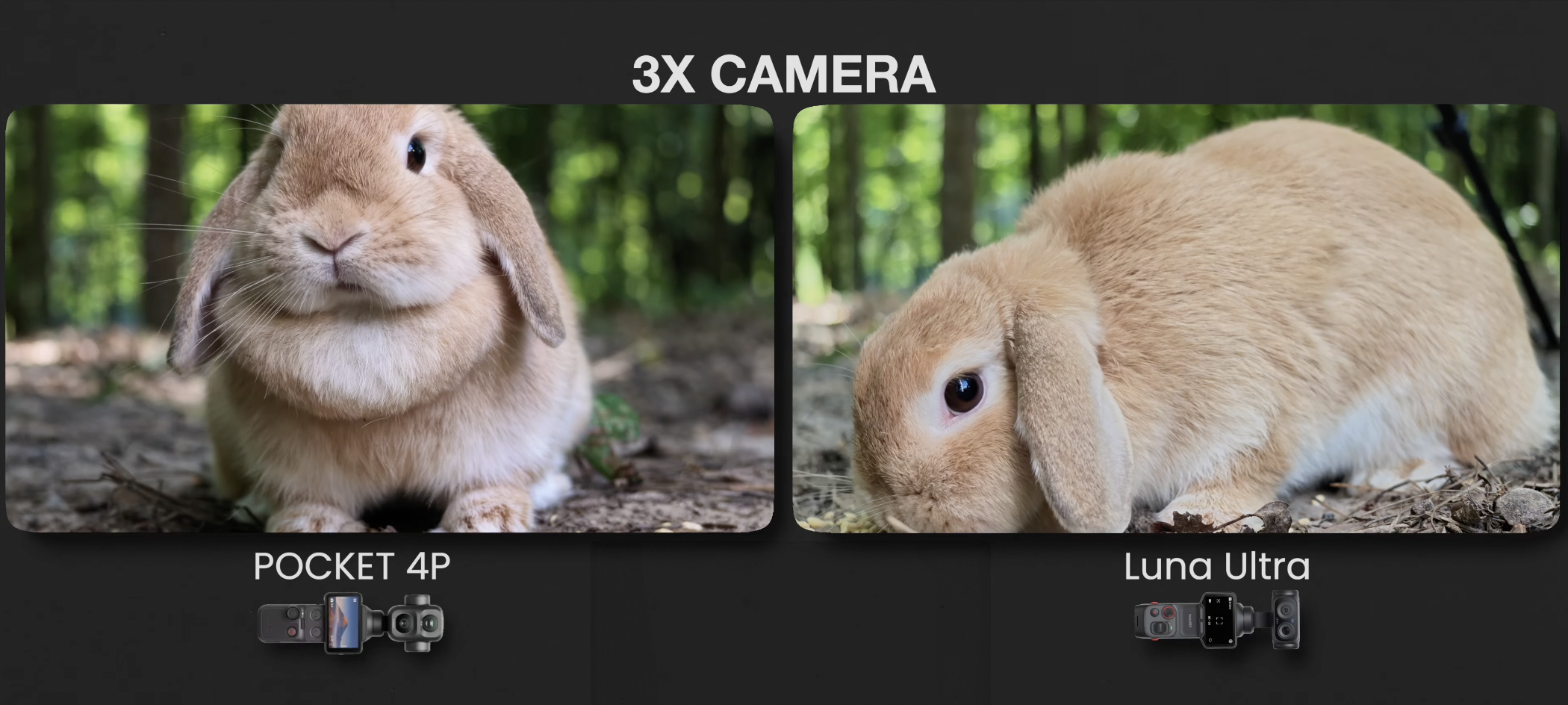
The 60mm-equivalent camera is one of my favorite features on both cameras.
The tighter 3x perspective works well for:
-
Portraits
-
Talking-head videos
-
Product shots
-
Detail shots
-
Nature footage
-
Cinematic B-roll
-
Background compression
The telephoto lens gives the footage a more intentional and cinematic look. It brings the background closer to the subject and makes it easier to create visual separation.
For me, this lens is one of the biggest reasons to upgrade from a single-lens pocket camera.
Zoom Quality
Both cameras can digitally zoom beyond their dedicated lenses, but the image changes considerably once you reach the extreme zoom ranges.
At 12x zoom, both cameras begin to develop more of a traditional camcorder look.
Fine details become less natural, digital processing becomes more visible, and the image starts to lose the clean appearance you get from the native 1x and 3x lenses.
I would not buy either camera primarily for 12x zoom.
It can be useful when you simply need to capture something far away, but I would treat it as an emergency or observational tool rather than a cinematic focal length.
Daylight Zoom Performance
In a backlit 12x zoom test, I thought the Pocket 4P retained more detail.
The shot was difficult because the light was coming from behind the subject, so I did not expect either camera to produce a perfect image.
Even so, the Pocket 4P held onto texture and clarity better.
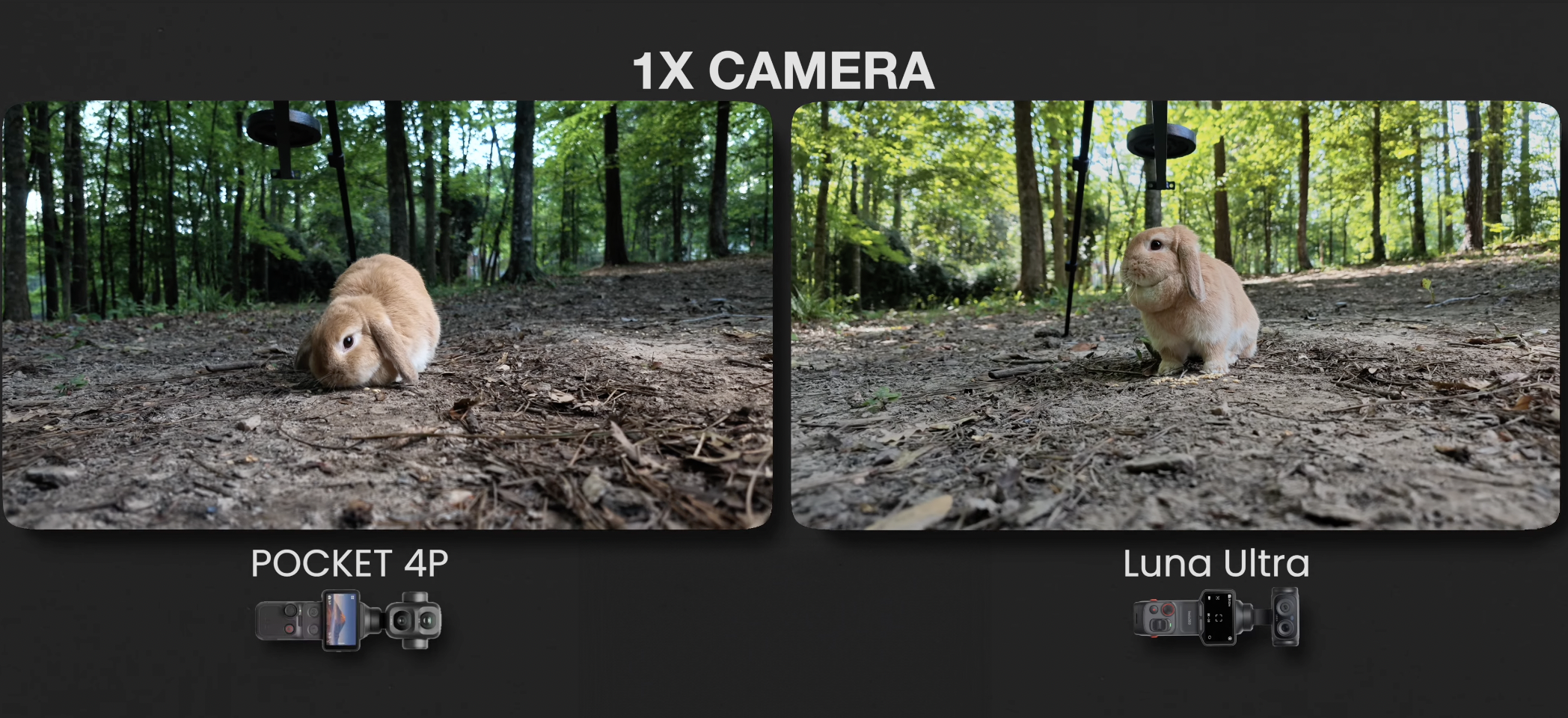
I also noticed an exposure pattern that continued throughout my testing: when both cameras used similar exposure settings, the Luna Ultra frequently appeared slightly brighter.
That brighter rendering can look attractive, but it also increases the risk of losing highlight detail.
Low-Light Zoom Performance
At 12x zoom in low light, both cameras struggled.
Noise became more visible, color accuracy suffered, and neither image looked particularly clean.
The Pocket 4P did a better job maintaining realistic color.
The Luna Ultra introduced noticeably more saturation, particularly in red brick and warm-colored objects. The reds became stronger than what I was seeing in the actual environment.
Neither camera is at its best when combining extreme digital zoom with low light, but I preferred the Pocket 4P in this test.
Standard Color Profile Image Quality
The standard color profiles are designed for creators who want footage that looks good without heavy color grading.
In many everyday situations, both cameras produced strong results straight out of the camera.
Osmo Pocket 4P Standard Color
The Pocket 4P usually gave me a more cinematic and controlled image.
Its standard profile often maintained deeper blacks and stronger contrast without immediately crushing all of the shadow detail.
In outdoor scenes with difficult highlights, it also did a better job keeping the sky visible.
However, the Pocket 4P was not always perfect.
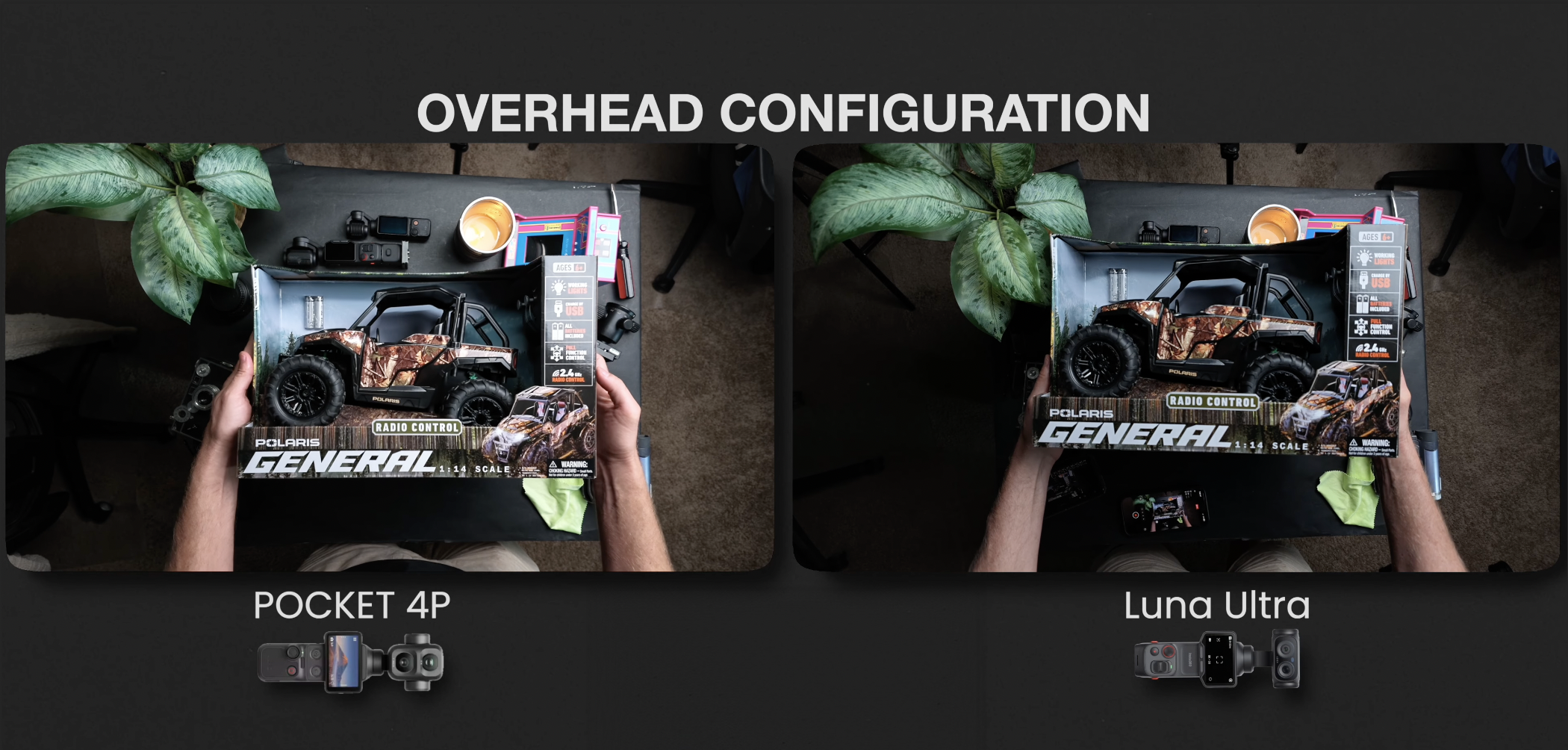
In one overhead studio configuration, I thought its standard profile looked slightly oversaturated. If I were using that footage in a finished project, I probably would have reduced the saturation slightly.
That is not something I necessarily want to do when using a standard profile. The entire point of standard color is to get a usable image without needing much correction.
Insta360 Luna Ultra Standard Color
The Luna Ultra’s standard profile also looked good in most everyday situations.
Its image was often brighter, and it tended to lift the midtones more than the Pocket 4P.
This can make the footage appear more immediately pleasing, especially on a phone or small display. However, it can also make the image feel flatter and increase the chance of clipping bright skies or highlights.
In controlled indoor product shots, I saw very little difference between the cameras. With good lighting, I would feel comfortable using either one.
The Luna Ultra also gave me pleasing skin tones in some overhead lighting setups, even when the overall image was slightly overexposed.
Exposure Differences
One of the most consistent things I noticed was that the Luna Ultra often produced a brighter image than the Pocket 4P when I exposed both cameras similarly.
This happened with both the 1x and 3x cameras.
The difference was especially visible in scenes containing:
-
Bright skies
-
Reflective water
-
Neon lighting
-
Light-colored foliage
-
Backlit subjects
-
High-contrast outdoor environments
Why the Luna Ultra Looks Brighter
The Luna Ultra appears to lift the midtones more aggressively.
Midtones include many of the important parts of an image, such as skin, foliage, clothing, buildings, and general background detail.
Lifting them makes the image brighter and easier to see, but it can also reduce contrast and push highlights closer to clipping.
I found that underexposing the Luna Ultra slightly could bring it closer to the Pocket 4P.
In several situations, I believe I could have achieved a more similar result by lowering the Luna Ultra’s exposure by approximately two-thirds of a stop.
Some creators may actually prefer the brighter Luna Ultra image. It looks more vivid and requires less shadow recovery.
I personally prefer to protect the highlights and brighten the footage later if necessary.
Dynamic Range
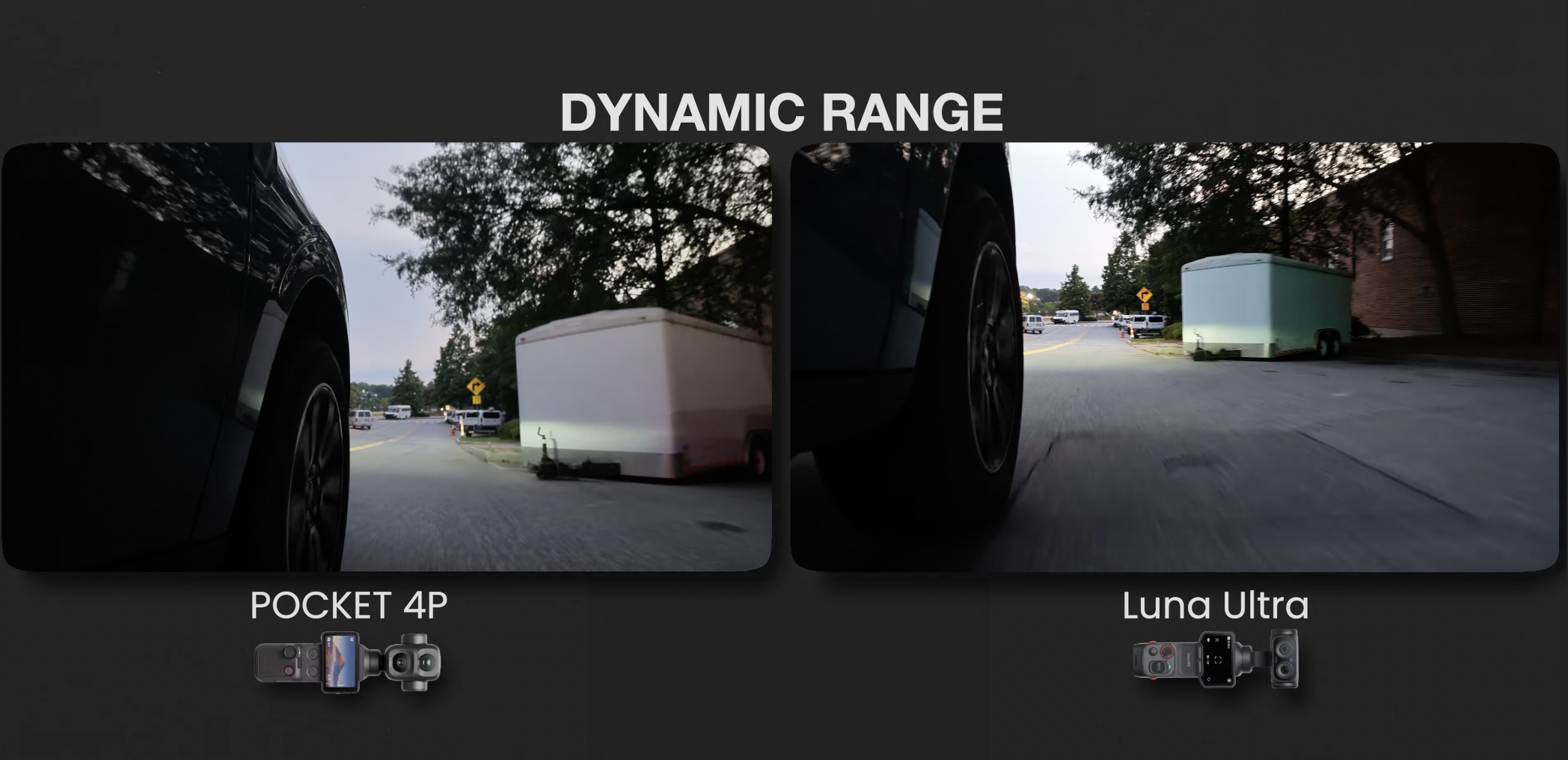
Dynamic range is one of the clearest advantages of the Osmo Pocket 4P.
Dynamic range determines how well a camera can retain detail in bright highlights and dark shadows at the same time.
This matters when filming:
-
A subject in front of a bright sky
-
A dark vehicle under direct sunlight
-
Interior scenes with bright windows
-
Reflective water
-
Backlit wildlife
-
High-contrast landscapes
Pocket 4P Dynamic Range
The Pocket 4P consistently held onto more highlight information.
In outdoor vehicle shots, the Pocket 4P retained the sky even when shadows on the vehicle were becoming dark.
The same scene on the Luna Ultra showed a more heavily blown-out sky.
I saw a similar difference in a backlit wildlife shot. The Pocket 4P kept the background, highlights, subject, and shadows under better control.
The image had more depth, and the colors in the foliage looked more natural.
Once I placed the two shots side by side, the Pocket 4P’s dynamic-range advantage became difficult to ignore.
Luna Ultra Dynamic Range
The Luna Ultra can still produce a good-looking image, especially when it is not being compared directly with the Pocket 4P.
Its brighter exposure may even be more pleasing to some viewers.
However, when a scene contains a wide difference between highlights and shadows, the Luna Ultra reaches its limit sooner.
Underexposing slightly can help, but it does not completely replace the additional information available from the Pocket 4P.
D-Log 2 vs I-Log
Both cameras include Log profiles, but the Pocket 4P has a major advantage with D-Log 2.
Log footage looks flat and washed out before grading because it is designed to preserve more highlight, shadow, and color information.
Osmo Pocket 4P D-Log 2
D-Log 2 gave me the most flexibility of any profile in this comparison.
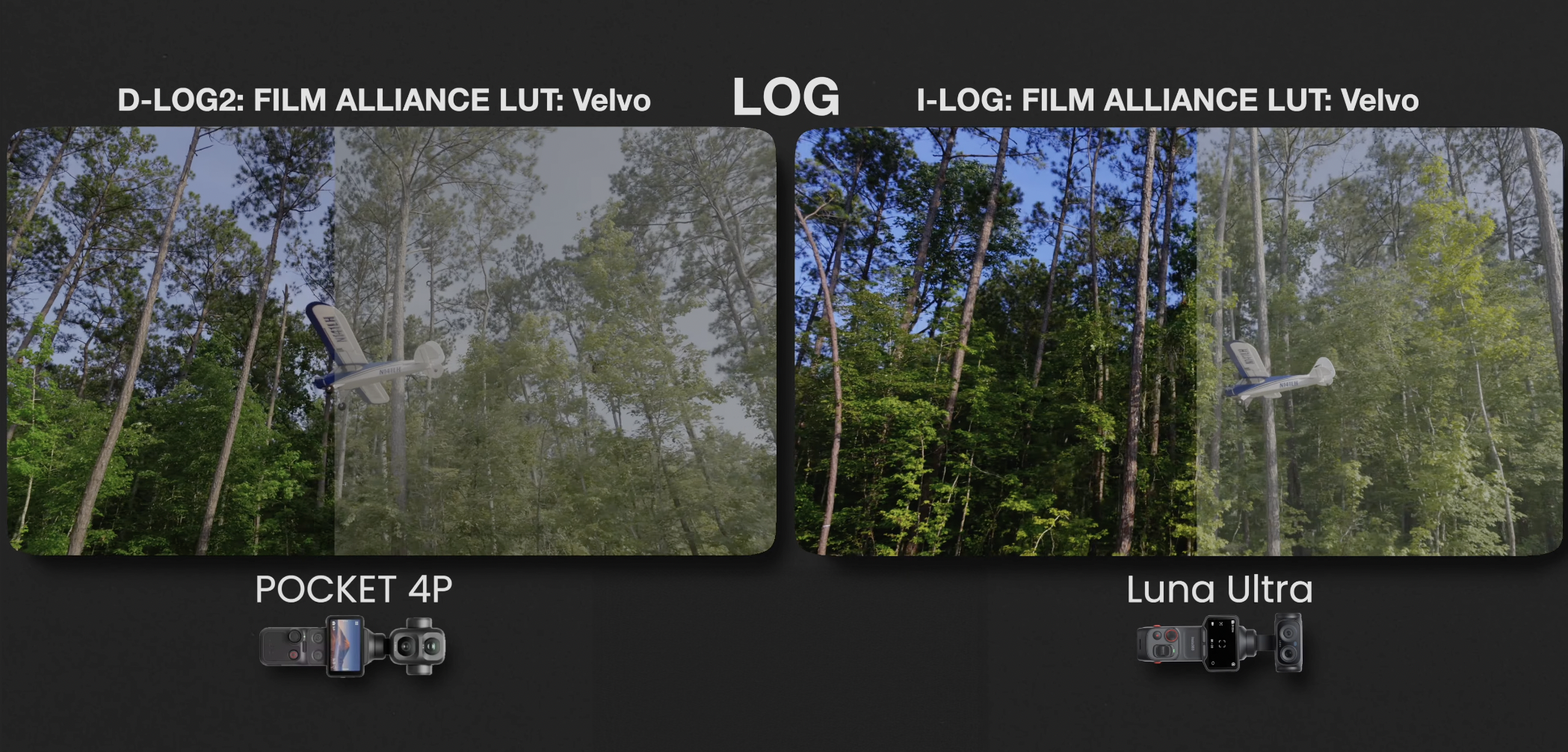
When I accidentally overexposed a bright sky, I was able to bring the highlights back during color grading.
I could recover cloud and sky texture that initially appeared close to being lost.
D-Log 2 was also impressive when underexposing in low light.
Even though I could see noise in the shadows, I was still able to recover a surprising amount of darker detail.
This makes D-Log 2 valuable for real-world filming because exposure is not always perfect.
A cloud may move, a subject may walk into brighter light, or the camera may quickly turn toward a window. The extra flexibility can save footage that would be difficult to recover from a standard profile.
D-Log 2 Limitation
The biggest limitation is that D-Log 2 is only available on the 1x camera.
When I switch to the 3x camera, I have to use regular D-Log instead.
That is frustrating because I enjoy using the 3x lens for studio talking heads and cinematic detail shots.
Regular D-Log still works, but it does not grade as easily as D-Log 2, particularly when working with skin tones.
I would love to see a future Pocket camera offer D-Log 2 on both lenses.
Insta360 Luna Ultra I-Log
The Luna Ultra’s I-Log profile is useful and can produce a very good final image.
In good lighting, I could grade I-Log footage to look surprisingly close to D-Log 2.
For bright daylight, controlled lighting, or well-exposed scenes, the difference may not be obvious to most viewers.
However, I-Log does not provide the same highlight recovery as D-Log 2.
In a bright-sky test, I could recover a small amount of texture, but not nearly as much as I could from the Pocket 4P.
I also found that I-Log was less forgiving in low light. If I were specifically filming in a darker environment with the Luna Ultra, I would probably use the standard color profile instead.
When Log Profiles Look Similar
Lighting quality has a major effect on how much these Log profiles differ.
In a well-lit driving shot and an outdoor RC plane scene, I was able to grade both cameras to look very similar.
There was plenty of light in the environment, and neither camera was being pushed to the edge of its dynamic range.
In those situations, I would feel confident using either D-Log 2 or I-Log.
The biggest differences appear when the scene is difficult:
-
Overexposed skies
-
Deep shadows
-
Backlighting
-
Low-light environments
-
Uneven mixed lighting
That is when the Pocket 4P’s extra grading flexibility becomes most valuable.
Skin Tones and Studio Talking Heads
Skin tones are extremely important to me because I regularly film talking-head content.
In controlled studio lighting, I thought the Pocket 4P clearly outperformed the Luna Ultra.
Pocket 4P Skin Tones
The Pocket 4P gave me more natural and pleasing skin tones.
The image looked detailed without appearing overly processed.
When I first saw the result, I realized that I could realistically use the Pocket 4P as a studio talking-head camera.
That is impressive for such a small device.
The 3x camera is especially useful for this because the tighter focal length produces a more flattering perspective and better background compression.
The limitation, once again, is that the 3x camera cannot use D-Log 2.
Luna Ultra Skin Tones
The Luna Ultra was still usable, but something about the skin rendering looked less natural to me in the controlled studio test.
It reminded me slightly of the processed skin tones I sometimes see from smartphones.
One thing I would strongly recommend is turning off any beauty effects.
I accidentally enabled the beauty effect during one test, and it made the skin look significantly less natural.
Beauty modes may be useful for some casual users, but I would avoid them for professional or realistic-looking footage.
Low-Light Skin Tones
Interestingly, the Luna Ultra performed better in a darker vlog-style scene.
In that particular low-light environment, I preferred the Luna Ultra’s skin tones.
The Pocket 4P did not look bad, but the Luna Ultra gave me a more flattering and natural result.
This was a good reminder that no camera wins every test.
Lighting conditions can completely change how a camera processes color and skin.
Low-Light Performance
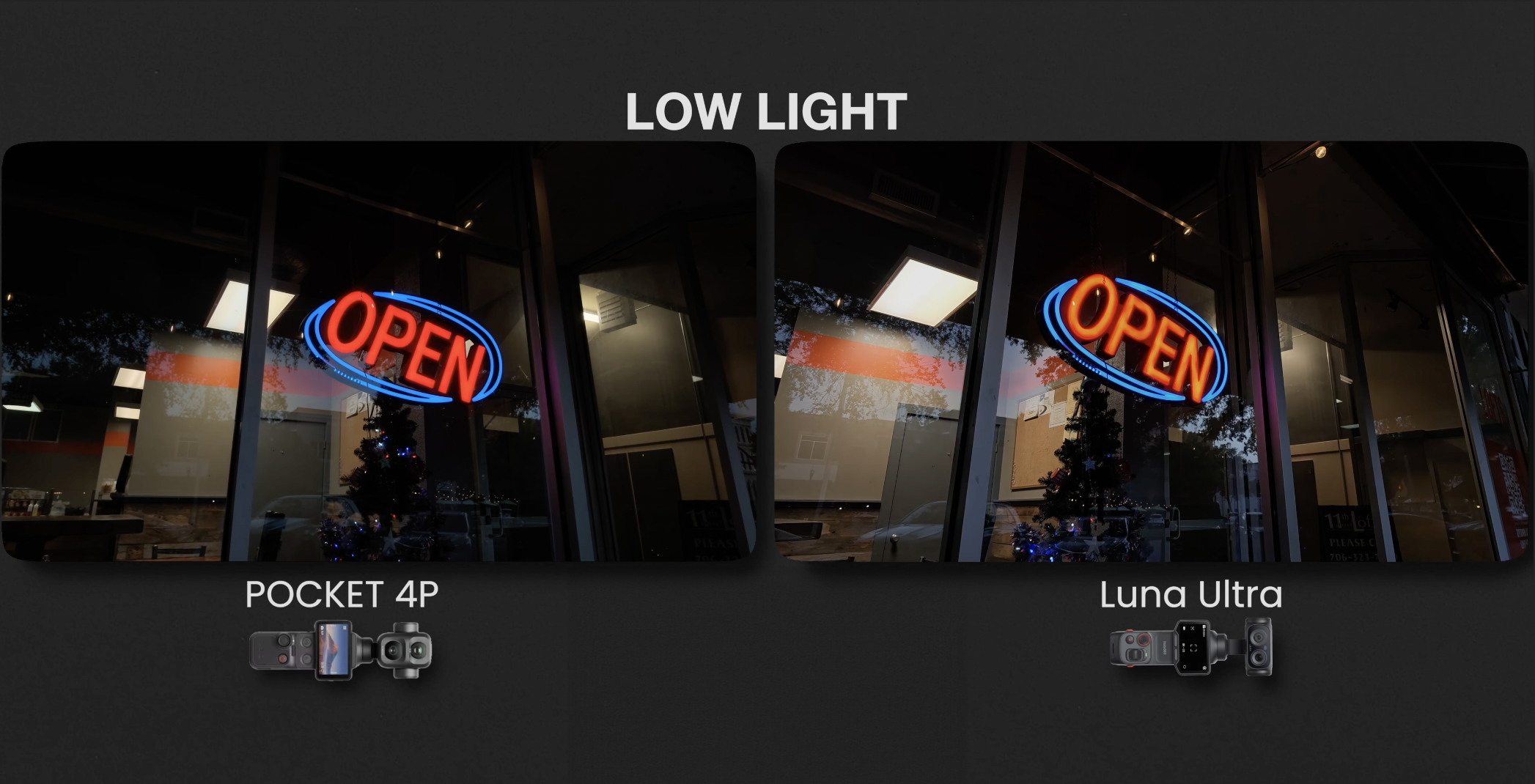
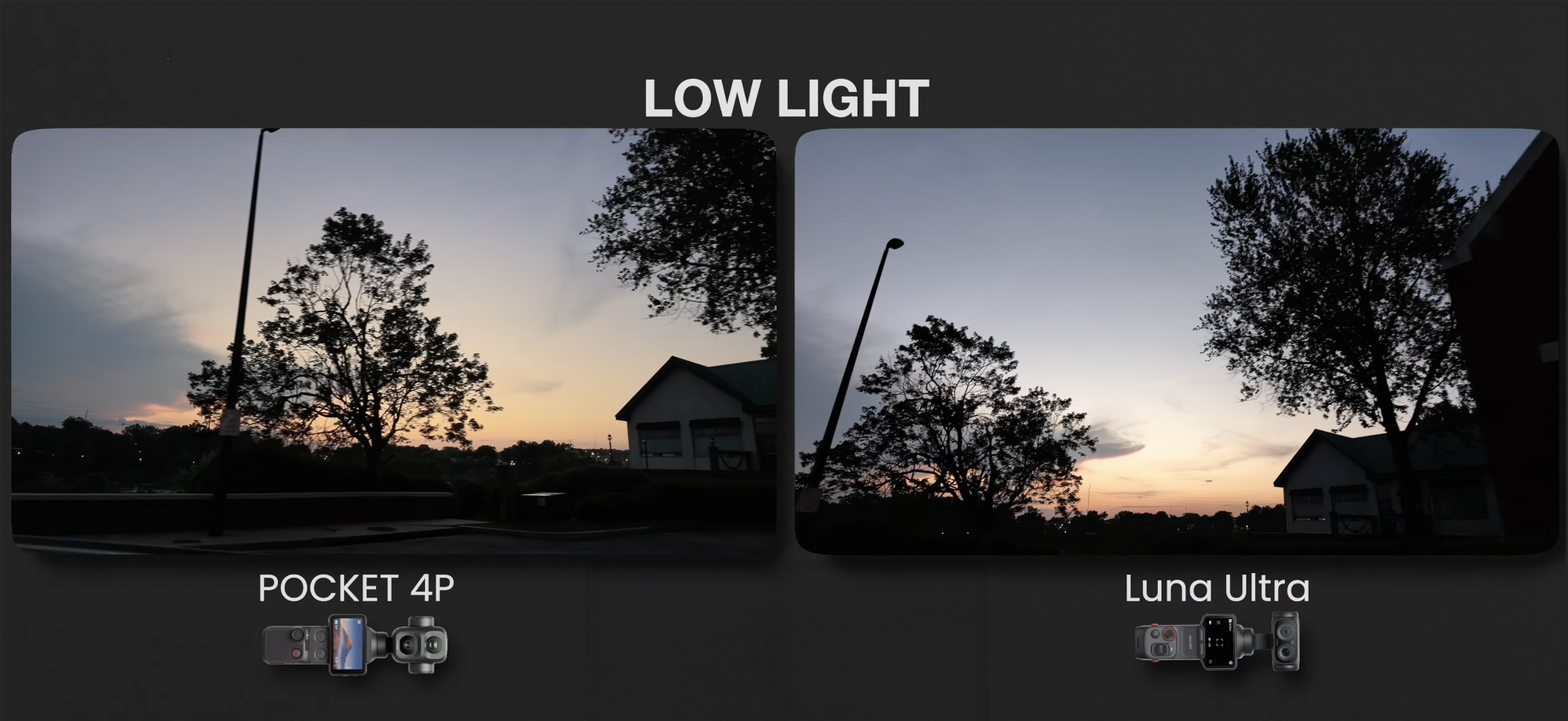
In basic low-light conditions, these two cameras were closer than I expected.
Both handled noise and color reasonably well at 4K24.
In some scenes, I could not confidently say that one camera was clearly better.
The Pocket 4P sometimes produced a darker, more cinematic image.
The Luna Ultra occasionally produced a brighter result with color that I preferred, especially around neon lighting.
In one shot, the Luna Ultra rendered the red neon color in a way that looked more appealing to me.
For a buyer in the United States, these close results are important.
If your main goal is to film everyday low-light scenes, I do not think the Pocket 4P always provides enough of an advantage to justify paying a large import premium.
Low-Light Log Recording
Low light is where I became more cautious with the Luna Ultra’s I-Log.
Log profiles preserve more information, but they can also reveal more noise when shadows are lifted during grading.
With the Pocket 4P, D-Log 2 allowed me to recover a meaningful amount of shadow information.
With the Luna Ultra, I would generally use the standard profile in low light unless I had enough controlled lighting to expose I-Log properly.
Slow Motion
The Pocket 4P has the stronger slow-motion feature set.
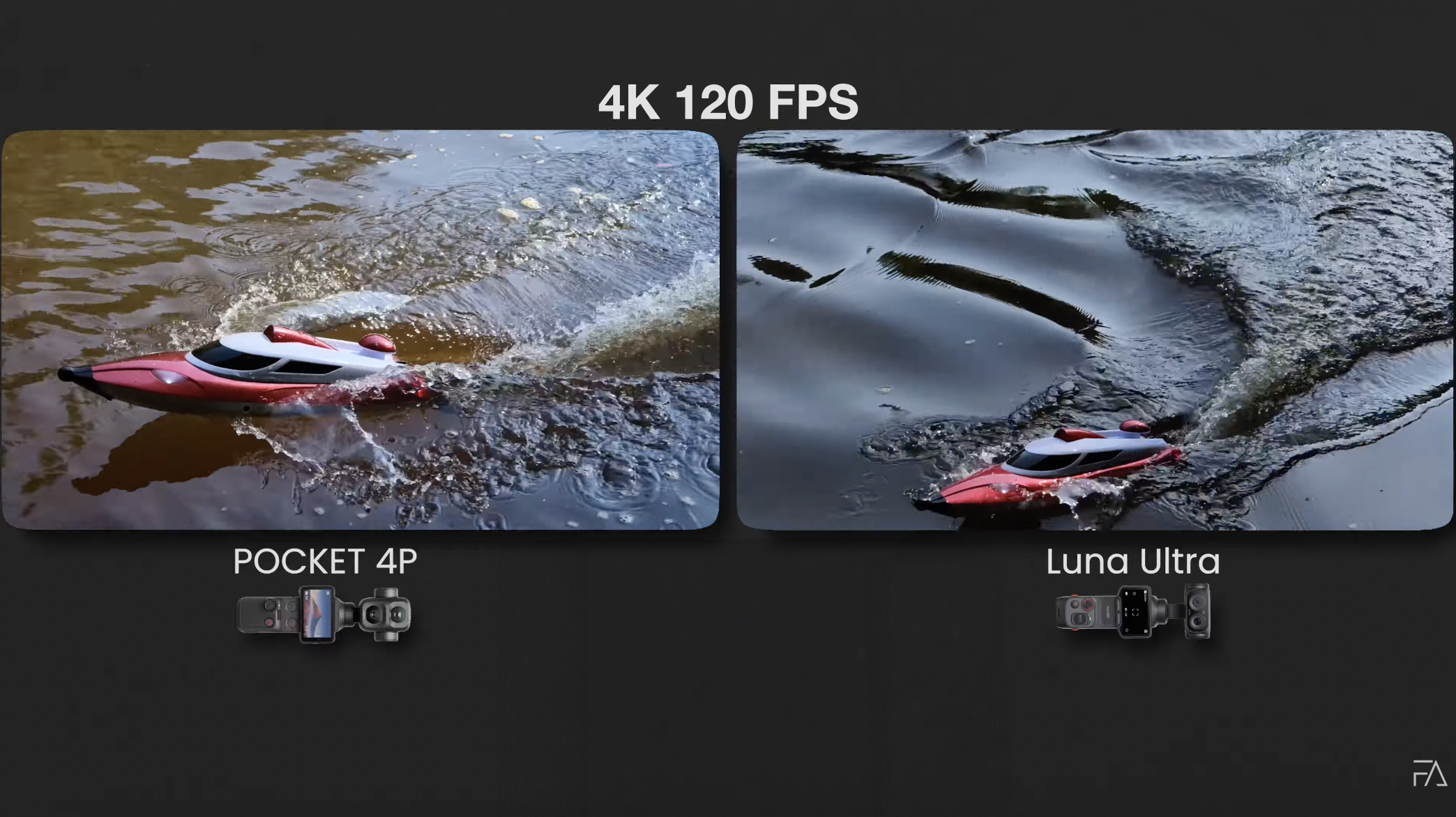
The Pocket 4P can record up to 4K240, while the Luna Ultra tops out at 4K120 or 1080p120 based on the modes I tested.
The difference matters because 4K240 gives you much more flexibility for extreme slow motion while still maintaining 4K resolution.
This is useful for:
-
Water
-
Wildlife
-
Sports
-
RC vehicles
-
Product shots
-
Smoke
-
Hair movement
-
Fast action
In a water-reflection comparison, the Pocket 4P produced a deeper, darker reflection and gave me the ability to record the shot at 4K240.
The Luna Ultra’s water reflection looked brighter, and its maximum slow-motion capability was more limited.
For creators who frequently use slow motion, the Pocket 4P is the clear winner.
Stabilization
Both cameras performed extremely well when it came to stabilization.
I tested them in handheld walking shots, low light, 3x telephoto filming, and inverted monopod tracking shots close to the ground.
The footage from both cameras was smooth enough that I did not need to add stabilization in post-production.
That is a major advantage of using a mechanical gimbal camera.
Digital stabilization can crop the image or create warping, especially in low light. A mechanical gimbal physically moves the camera to counteract shake.
Even at 3x zoom, the stabilization difference between the cameras was small.
Both delivered footage that I would be comfortable using in a finished project.
Active Tracking
Both cameras locked onto subjects effectively, even in difficult contrast situations.
I tested them with a camouflage RC vehicle and used inverted monopod-style movements close to the ground.
Pocket 4P Tracking
The Pocket 4P had the more reliable tracking system in my obstruction test.
When a tree stump briefly blocked the tracked subject, the Pocket 4P did not appear to lose its place.
As soon as the subject became visible again, the camera continued tracking almost as if the obstruction had never occurred.
Luna Ultra Tracking
The Luna Ultra temporarily lost the subject when it moved behind the obstruction.
However, it was able to recognize and reacquire it shortly afterward.
That is still a useful and acceptable result.
I would give the Pocket 4P the advantage for tracking reliability, but the Luna Ultra remained competitive.
Autofocus
Autofocus was good in many everyday situations, but both cameras struggled when a subject moved quickly toward the lens during 4K120 recording.
I tested this with an RC boat while moving the camera forward.
On the Pocket 4P, the focus window moved past the boat rather than staying locked onto it.
The Luna Ultra behaved similarly.
This is a difficult autofocus situation because the subject’s distance is changing quickly while the camera is also moving.
Neither camera seemed able to predict that I wanted the boat to remain the focus point.
For regular vlogging, static products, talking heads, and slower movement, autofocus should be reliable enough.
For fast subjects moving directly toward the camera in high-frame-rate modes, I would not expect perfect tracking.
Color LUT Workflow
Both cameras respond well to LUTs when the footage is properly exposed.
I do not recommend applying a LUT at full strength and leaving it untouched.
A LUT may look perfect in one lighting environment and overly saturated in another.
My usual workflow is to:
-
Apply the LUT to the footage.
-
Reduce its intensity to approximately 70% to 80%.
-
Make additional adjustments using the color wheels.
-
Correct exposure, white balance, and saturation as needed.
This allows me to keep the character of the LUT without letting it overpower the natural color of the footage.
When the lighting was good, both D-Log 2 and I-Log responded well to this workflow.
Build Quality and Creative Experience
Both cameras are small enough to encourage experimentation.
That is one of the things I enjoy most about pocket gimbal cameras.
I find myself creating unusual rigs, using inverted monopods, attaching accessories, and trying shots that I might not attempt with a larger mirrorless camera.
The compact size makes it easy to capture:
-
Low tracking shots
-
Orbital movements
-
RC car footage
-
RC boat footage
-
Product reveals
-
Overhead shots
-
Smooth travel B-roll
A larger camera may produce better technical image quality, but these smaller cameras often make it easier to get the camera into interesting positions.
The best shot is sometimes the one you would not have attempted with heavier equipment.
Who Should Buy the Osmo Pocket 4P?
The Osmo Pocket 4P is best for creators who prioritize maximum image quality and grading flexibility.
It is a strong choice for:
-
Filmmakers who shoot in Log
-
Creators who need better dynamic range
-
Slow-motion shooters
-
Talking-head creators
-
Travel filmmakers
-
Cinematic B-roll shooters
-
People who frequently work in backlit environments
-
Users who want stronger subject tracking
You may want to skip it if you live in the United States and can only find it at a heavily inflated price.
You should also understand that D-Log 2 is limited to the 1x camera.
Who Should Buy the Insta360 Luna Ultra?
The Insta360 Luna Ultra is best for creators who want a highly capable pocket camera without paying an import premium.
It makes sense for:
-
Buyers in the United States
-
Travel creators
-
Casual vloggers
-
People who want 1x and 3x cameras
-
Creators who like a brighter image
-
Users who need strong stabilization
-
People who shoot primarily in good lighting
-
Creators who prefer standard color over heavy grading
You may want to skip it if highlight recovery and maximum dynamic range are your top priorities.
You may also need to underexpose it slightly to prevent bright areas from clipping.
Is the Osmo Pocket 4P Worth the Extra Money?
At a normal retail price, I believe the Osmo Pocket 4P is the better overall camera.
Its D-Log 2 performance, dynamic range, skin tones, slow motion, and highlight recovery give it a noticeable advantage.
However, the answer changes when the Pocket 4P costs significantly more than the Luna Ultra.
In many daylight, low-light, stabilization, and standard-profile tests, the difference was surprisingly small.
If I lived in the United States and had to pay hundreds of dollars more for the Pocket 4P, I would have a difficult time recommending it to everyone.
The Luna Ultra gets close enough that it may be the smarter value.
Final Verdict
After comparing the Osmo Pocket 4P and Insta360 Luna Ultra, I believe the Pocket 4P is the better overall camera for image quality.
Its biggest advantages are:
-
Better dynamic range
-
Stronger highlight recovery
-
More flexible D-Log 2 footage
-
More natural controlled-light skin tones
-
4K240 slow motion
-
Slightly more reliable subject tracking
However, the Luna Ultra was much closer than I expected.
It produced similar 4K detail, excellent stabilization, capable tracking, useful I-Log footage, and occasionally better-looking low-light skin tones.
The Luna Ultra also becomes especially attractive when considering US pricing and availability.
My personal choice would still be the Osmo Pocket 4P because I value dynamic range and color-grading flexibility. For a US buyer looking for the better overall value, the Insta360 Luna Ultra may be the more practical decision.
There is no universal winner here.
The Pocket 4P is the stronger filmmaking tool, but the Luna Ultra gives you most of the same experience for a potentially much more reasonable price.
Author