Osmo Pocket 4P vs Luna Ultra vs iPhone 17 Pro - Watch Before You Buy!!
Jul 21, 2026Get the full story watching the video above ⬆️
Purchase:
Luna Ultra - https://geni.us/9GvcQ26
GoPro Mission 1 Pro - https://geni.us/LQ9S
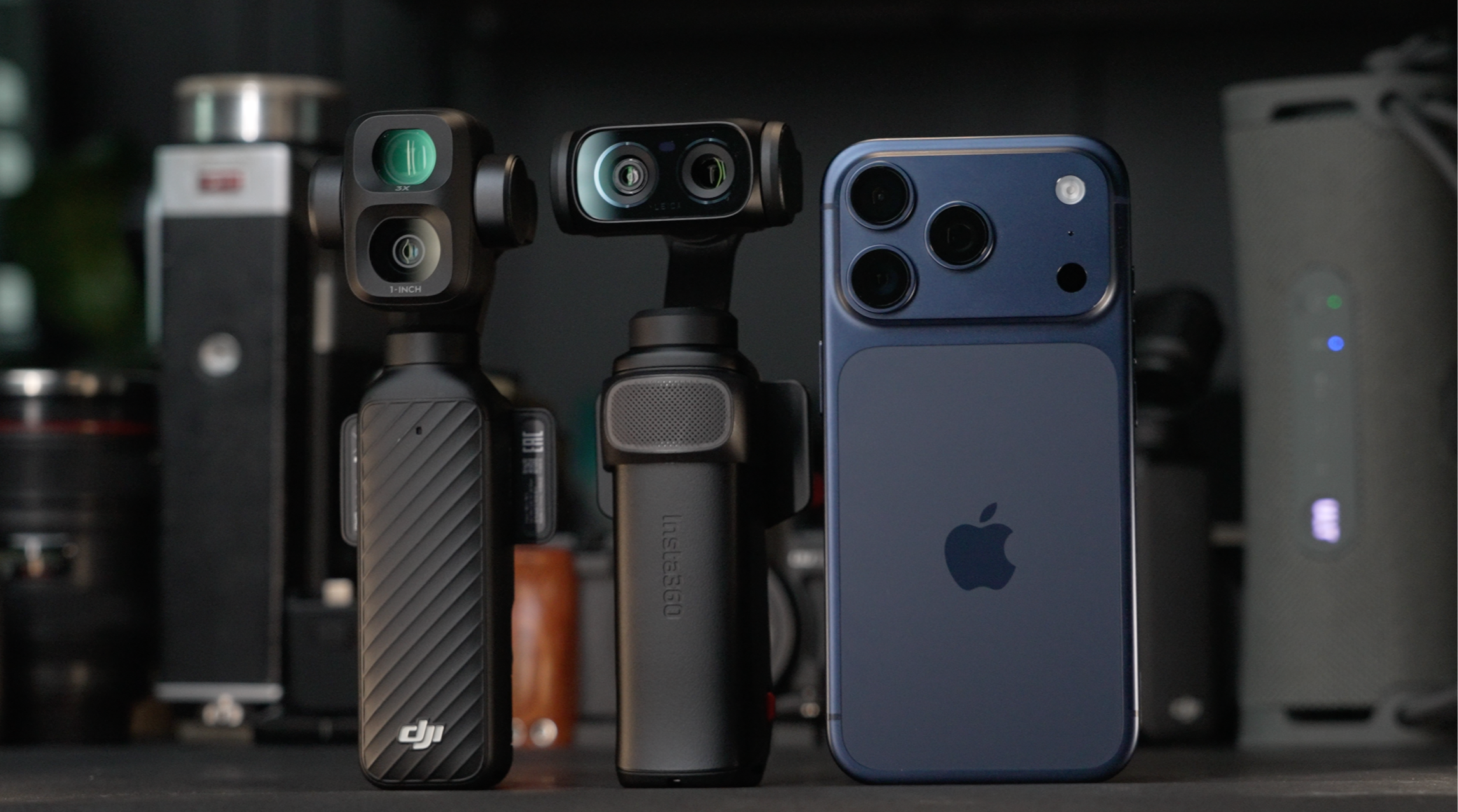
After testing the Osmo Pocket 4P, Insta360 Luna Ultra, and iPhone 17 Pro in a variety of real-world situations, I came away impressed by all three cameras. However, they each approach image quality very differently.
The Osmo Pocket 4P gave me the most natural colors, controlled exposure, and overall flexibility. The Insta360 Luna Ultra produced a slightly punchier image and offers features that make it a strong alternative, especially for buyers in the United States. The iPhone 17 Pro was easily the most convenient, but its more processed look occasionally reminded me that I was still shooting with a phone.
For overall image quality, I personally prefer the Osmo Pocket 4P. That does not mean it will be the right choice for everyone, though.
In this comparison, I will break down how the Osmo Pocket 4P, Insta360 Luna Ultra, and iPhone 17 Pro performed in terms of color, dynamic range, stabilization, low-light image quality, slow motion, lenses, Log recording, skin tones, pricing, and everyday usability.
Osmo Pocket 4P vs Luna Ultra vs iPhone 17 Pro Overview
These three cameras are designed for slightly different users.
The Osmo Pocket 4P and Insta360 Luna Ultra are dedicated compact cameras with mechanical gimbals. They are designed primarily for capturing video, cinematic movement, travel footage, vlogs, and creative shots.
The iPhone 17 Pro is different. It is a camera, editing device, communication tool, and everyday carry device combined into one product. That convenience is hard to compete with.
Here is how I see the biggest advantage of each camera:
-
Osmo Pocket 4P: Best overall image quality and dynamic range
-
Insta360 Luna Ultra: Strong compact-camera alternative with a detachable display
-
iPhone 17 Pro: Best convenience and easiest camera to carry every day
The Pocket 4P can record in D-Log 2 and offers up to 17 stops of dynamic range when using its main camera. The Luna Ultra can record in 8K and includes a detachable remote screen. The iPhone 17 Pro can record in Apple Log 2 and gives me the ability to shoot, edit, and upload from one device.
Price and Availability
Price may be one of the biggest deciding factors in this comparison.
The Osmo Pocket 4P sells for approximately $550 in some international markets. However, availability in the United States can be limited, and imported units may sell for close to or above $1,000.
That changes the value equation considerably.
At its international price, I think the Pocket 4P offers excellent value for its image quality, dual-camera system, mechanical stabilization, and Log recording capabilities. At an inflated import price, it becomes much more difficult to recommend without hesitation.
The Insta360 Luna Ultra starts at approximately $769 in the United States. It costs more than the standard international price of the Pocket 4P, but it may be easier for American buyers to purchase with regular support and fewer concerns surrounding availability.
The iPhone 17 Pro starts at approximately $999 new, although used models can sometimes be found for considerably less. Of course, the iPhone is not only a camera. Most buyers will also use it as their phone, editing device, GPS, music player, and everyday computer.
Which Camera Offers the Best Value?
At normal international pricing, I think the Osmo Pocket 4P offers the strongest image-quality value.
For buyers in the United States, the Luna Ultra may be the more practical dedicated camera. The iPhone 17 Pro offers the greatest overall utility, but you are also paying for everything the phone can do beyond shooting video.
Image Quality and Color
Image quality is the main reason I wanted to compare these three cameras.
I tested them in backlit scenes, indoor lighting, outdoor daylight, dusk, moving vehicles, controlled lighting, slow motion, and casual vlog-style situations. The differences were sometimes subtle, but each camera developed a recognizable look.
Osmo Pocket 4P Image Quality
The Osmo Pocket 4P consistently gave me the most natural and balanced image.
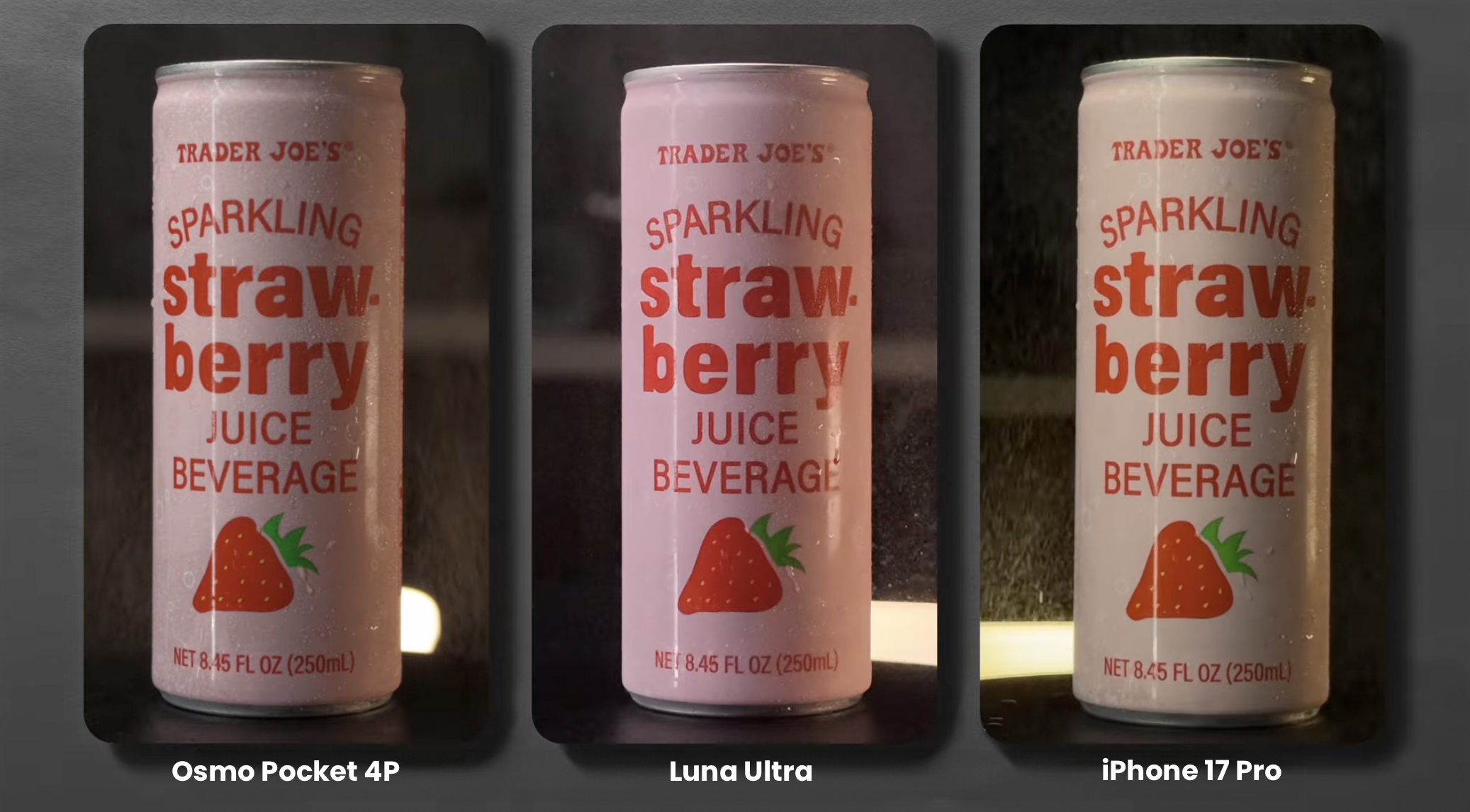
In backlit product shots, I found that its colors looked closest to what I saw in person. It maintained clean detail without making the image feel overly sharpened or digitally enhanced.
The Pocket 4P also handled saturation well. Colors were present and pleasing, but they usually did not feel pushed too far.
This was especially noticeable in scenes containing natural greens, warm indoor lighting, dark objects, and bright highlights. The image often looked controlled without appearing flat.
Insta360 Luna Ultra Image Quality
The Insta360 Luna Ultra also produced a strong image, although it tended to look slightly more saturated and contrasty.
Its blacks often appeared deeper, and certain colors, especially greens and reds, looked richer. Some people may prefer this look immediately because it can make the footage appear more finished without much editing.
In some situations, however, I noticed a slightly more digital or processed appearance than I saw from the Pocket 4P.
The difference was not dramatic. In many daylight scenes, the two dedicated cameras looked very close.
iPhone 17 Pro Image Quality
The iPhone 17 Pro remained surprisingly competitive, especially when lighting conditions were favorable.
It produced a sharp, clean image and often held enough detail to blend into a comparison without immediately looking inferior.
However, I noticed that the iPhone frequently lifted the midtones and shadows. This made some shots look brighter, but it also gave darker areas a flatter or more processed appearance.
In certain scenes, the iPhone footage looked less cinematic because the image processing reduced some of the natural contrast and depth.
This does not necessarily make the image bad. In fact, the brighter rendering may be helpful for quick videos that will not be color graded. I simply preferred the more controlled look of the two dedicated cameras.
Color Accuracy and White Balance
Color science can be subjective, but I noticed some recurring differences.
The Osmo Pocket 4P usually gave me the most neutral color reproduction. It handled warm and cool tones in a way that felt balanced without leaning too heavily toward one color.
The Luna Ultra occasionally appeared cooler or slightly greener. In other scenes, it produced richer reds and more saturated greens.
The iPhone 17 Pro showed the most noticeable white-balance variation during my testing. In difficult mixed-lighting scenes, I occasionally saw a color cast across both the subject and background.
Warm Indoor Lighting
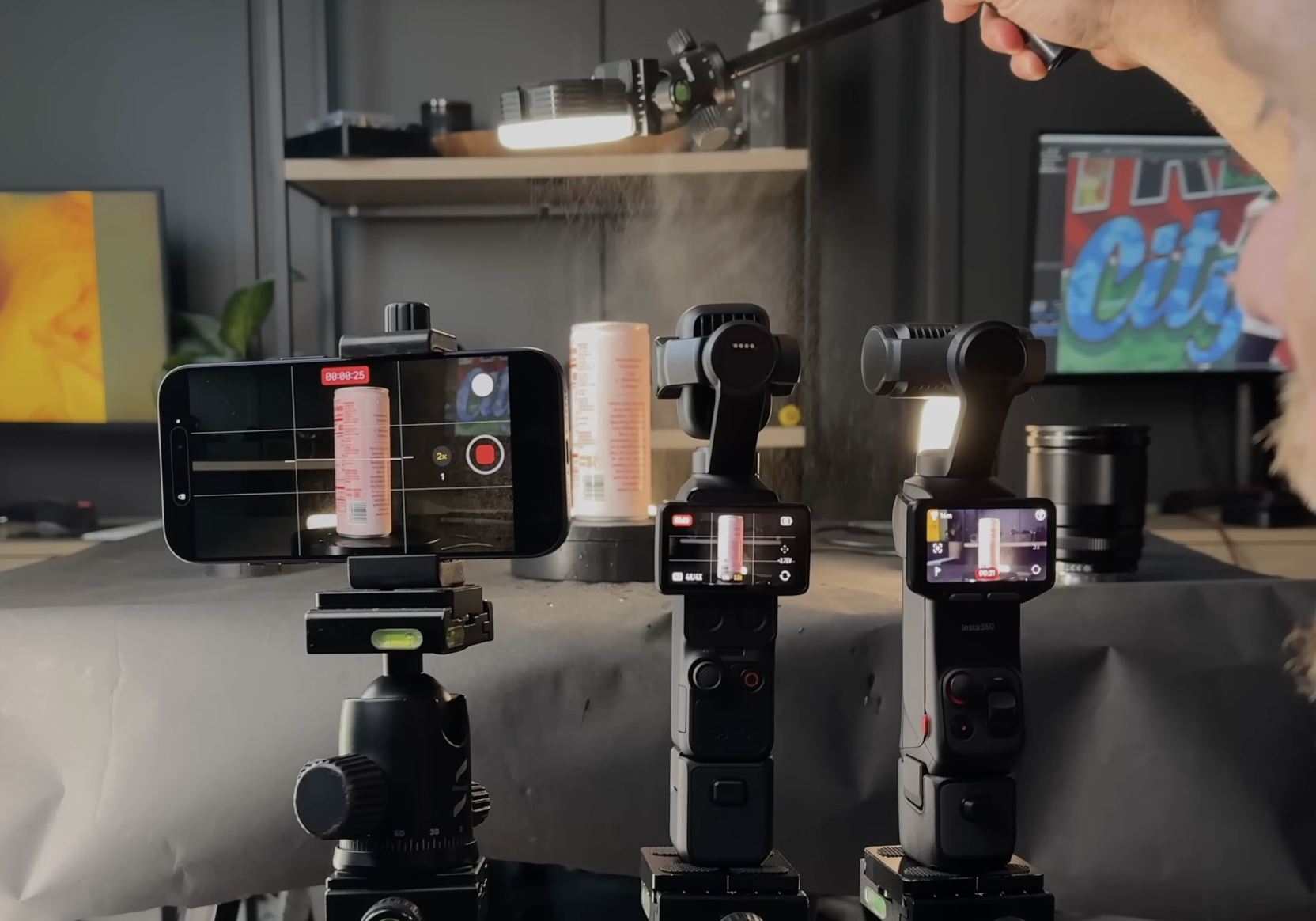
In a warm indoor coffee scene, the Pocket 4P maintained natural-looking colors in the mug, background, and steam.
The Luna Ultra looked slightly cooler and greener. Its image was still attractive, but it did not match the warmth of the room as closely.
The iPhone created a clean result, although the colors looked flatter and more neutral. The steam also did not separate from the background as clearly as it did with the two dedicated cameras.
Color Chart Results
When I compared the cameras using a color reference board in their standard profiles, the differences were not enormous.
The Pocket 4P looked the most neutral and controlled.
The Luna Ultra appeared slightly more saturated, particularly in the reds and darker patches.
The iPhone was close, but the yellows and lighter skin-tone patches appeared brighter and more lifted.
For someone who plans to use footage straight out of the camera, these color differences may influence which camera looks best without editing.
Dynamic Range and Exposure
Dynamic range describes how much detail a camera can retain between the darkest shadows and brightest highlights in a scene.
This matters in situations such as:
-
Filming inside a car with bright windows
-
Shooting outdoors under harsh sunlight
-
Recording a person standing in front of a window
-
Capturing a bright sky above a darker landscape
-
Filming indoor spaces with mixed lighting
Osmo Pocket 4P Dynamic Range
The Osmo Pocket 4P was the strongest performer for me when scenes contained both dark shadows and bright highlights.
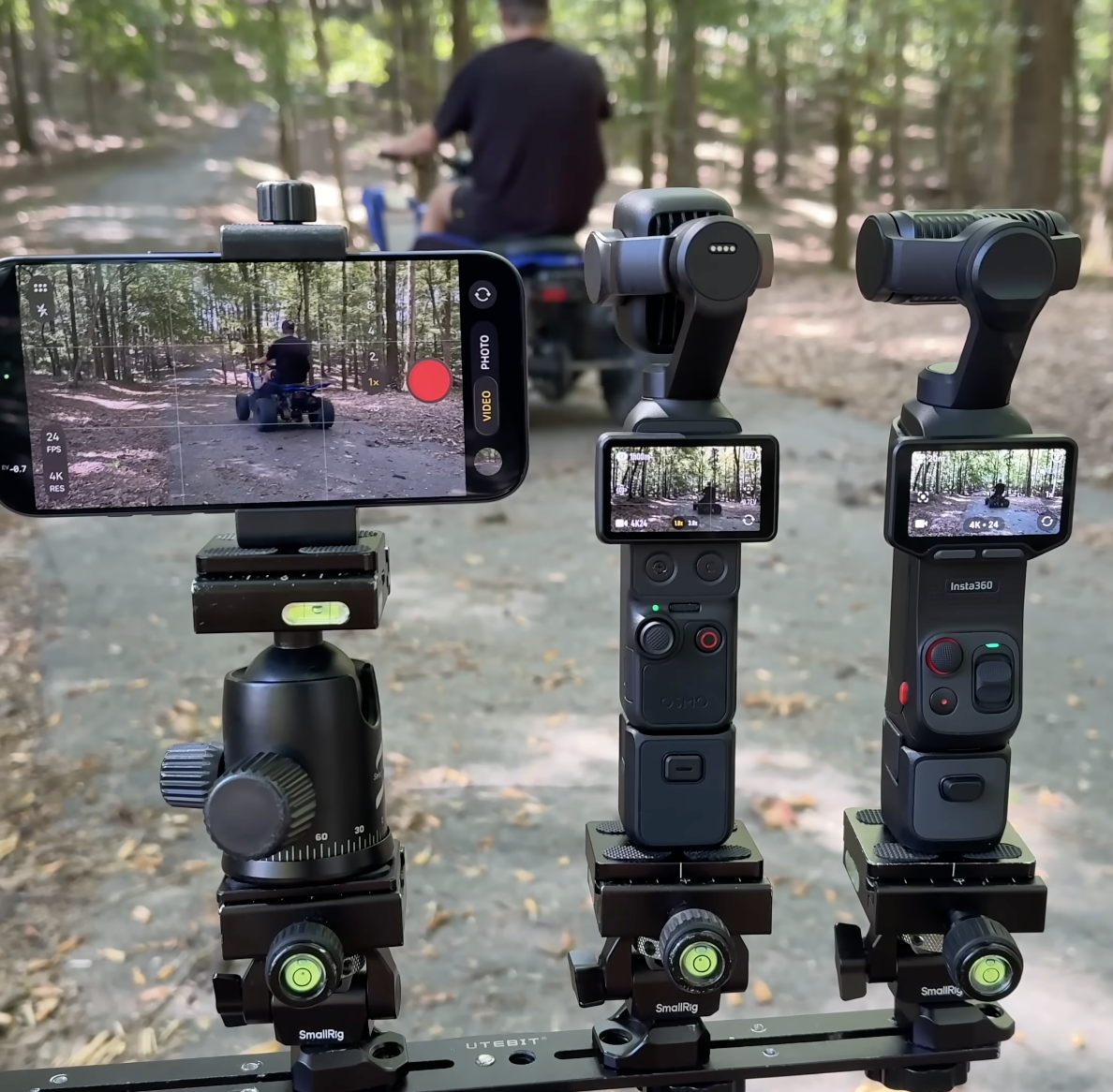
In a driving scene with a dark dashboard, bright windows, green trees, and an overexposed sky, the Pocket 4P held the scene together better than the other cameras.
The dashboard remained readable while the road and exterior environment retained useful detail.
The Pocket 4P’s D-Log 2 profile is where its dynamic-range advantage becomes most valuable. On the main 1x camera, D-Log 2 provides up to 17 stops of dynamic range, giving me more flexibility when grading difficult footage.
The limitation is that D-Log 2 is only available on the 1x camera. That means I cannot access the same maximum dynamic range while using the 3x lens.
Insta360 Luna Ultra Exposure
The Luna Ultra also handled demanding scenes well, but I found that it tended to expose slightly brighter.
In many situations, I preferred to underexpose the Luna Ultra by approximately two-thirds of a stop compared with the Pocket 4P. This helped protect the highlights and made the cameras easier to match.
For example, in a bright window scene, the Luna Ultra needed slightly more negative exposure compensation to keep bright areas from becoming too hot.
Its footage often had more contrast in the greens and shadows, which gave it a punchier appearance but slightly less of the neutral flexibility I saw from the Pocket 4P.
iPhone 17 Pro Exposure
The iPhone 17 Pro handled difficult exposure situations better than I expected.
However, the phone’s computational processing often lifted the shadows and midtones. This made the scene easier to see, but it could also reduce the sense of depth.
In highly challenging scenes, white balance could also become less consistent.
The iPhone’s standard profile is designed to produce a ready-to-share image. That makes it useful for everyday videos, but it gives me less control over the final look compared with shooting Log on a dedicated camera.
Standard Profiles vs Log Recording
All three cameras can produce good footage in their standard color profiles. However, shooting Log gives me more flexibility when I want to color grade, match multiple cameras, recover highlights, or apply a creative LUT.
D-Log 2 on the Osmo Pocket 4P
D-Log 2 is one of the biggest advantages of the Pocket 4P.
The image initially looks flat and desaturated, but that is intentional. The flatter profile preserves more information so I can later decide how much contrast, saturation, and color I want.
In difficult scenes, D-Log 2 gave me the most room to balance bright skies with darker foregrounds.
It also made it easier to create a cinematic image without fighting against baked-in sharpening or contrast.
The main downside is that D-Log 2 is restricted to the 1x lens. The 3x camera can still produce strong footage, but it does not provide the same maximum grading flexibility.
I-Log on the Insta360 Luna Ultra
The Luna Ultra includes I-Log, which gives me useful flexibility for grading.
I found that I-Log could produce a strong final image, but it generally required more work to make the colors and contrast feel as natural as the Pocket 4P.
That does not mean I-Log is bad. It is still much more useful for serious editing than relying entirely on a high-contrast standard profile.
Creators who enjoy color grading should have enough room to build a custom look from the Luna Ultra’s Log files.
Apple Log 2 on the iPhone 17 Pro
Apple Log 2 is one of the strongest reasons to consider the iPhone 17 Pro as a serious video camera.
In some situations, I found that Apple Log 2 graded nearly as well as D-Log 2. Skin tones, highlight recovery, and overall color flexibility were impressive.
The biggest tradeoff is file size.
Apple Log footage can require significantly more storage, particularly when recording at high resolutions and frame rates. That can quickly fill the iPhone’s internal storage and create a heavier editing workflow.
For casual users, the standard profile will be easier. For creators who want maximum control, Apple Log 2 can produce excellent results.
Skin Tones and Talking-Head Video
Skin tones are one of the most important tests for any camera I plan to use for talking-head videos.
A camera can look great when filming landscapes, products, or buildings but still struggle to render skin naturally.
In a controlled indoor lighting setup, the Osmo Pocket 4P gave me the most pleasing skin tones.
The image looked natural, detailed, and balanced without making my skin overly orange or processed.
The Luna Ultra also performed well. Its skin tones were slightly different from the Pocket 4P, but I could still see myself using it as an interior talking-head camera.
The iPhone 17 Pro struggled the most in this particular setup. Its skin tones looked too processed and orange for my preference.
This may depend on the lighting, profile, exposure, and automatic processing, but it showed me that the iPhone can still require extra attention when recording controlled indoor content.
For talking-head videos, I would choose either the Pocket 4P or Luna Ultra over the iPhone based on this test.
Stabilization
The Osmo Pocket 4P and Insta360 Luna Ultra use mechanical gimbals, while the iPhone 17 Pro relies more heavily on optical and digital stabilization.
In good daylight, all three cameras produced smooth footage.
However, mechanical stabilization has an advantage because the camera is physically moving to counteract shake. Digital stabilization must crop, analyze, and manipulate the image electronically.
Osmo Pocket 4P Stabilization
The Pocket 4P felt the most controlled during my walking tests.
It handled uneven movement and changes in the trail smoothly without making the footage feel overly corrected.
The mechanical gimbal also allowed me to create more intentional camera movement. Instead of simply reducing shake, it gave me smooth pans, reveals, tracking shots, and cinematic walking footage.
Insta360 Luna Ultra Stabilization
The Luna Ultra was also very smooth.
Its mechanical gimbal handled walking well, although I noticed slightly more movement in the shadows and contrast in certain outdoor scenes.
The detachable display may also make it easier to frame creative shots from unusual positions without standing directly behind the camera.
iPhone 17 Pro Stabilization
The iPhone 17 Pro performed well in daylight.
For casual walking, family videos, travel clips, and quick social media content, its stabilization should be more than enough.
Digital stabilization usually begins to show more limitations as the light decreases, though. In low light, the camera may need a slower shutter speed or higher ISO, and digital correction can introduce softness, warping, or unnatural movement.
This is one reason I still prefer a mechanical gimbal for intentional filmmaking.
Low-Light and Dusk Performance
Low-light performance is not only about making an image brighter.
I also look at:
-
Noise
-
Shadow detail
-
Motion clarity
-
Color accuracy
-
Sharpness
-
Highlight control
-
How quickly the image becomes muddy
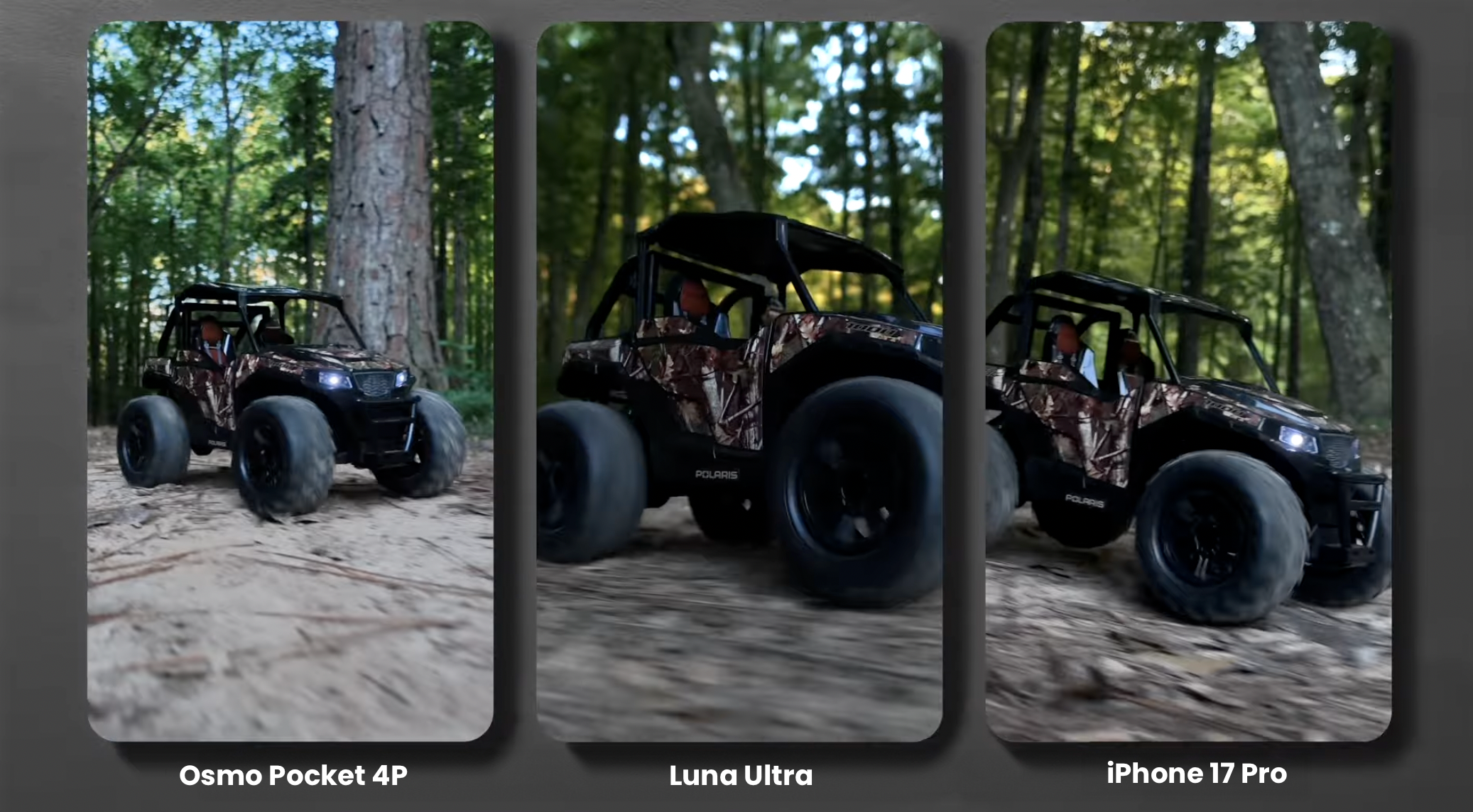
During a 4K60 test at dusk, the Pocket 4P gave me the cleanest overall image.
A moving RC car remained clearly defined against the darker forest floor, and the scene did not become overly soft or muddy.
The Luna Ultra also performed well, but its image appeared slightly softer and darker.
The iPhone 17 Pro surprised me. In that particular scene, it was difficult to immediately tell it apart from the other cameras.
This is an important reminder that camera comparisons are rarely completely predictable. Lighting, subject movement, exposure, focal length, and processing can all influence the final result.
The Pocket 4P was my overall favorite in low light, but the iPhone remained more competitive than I expected.
Resolution, Frame Rates, and Slow Motion
The Luna Ultra offers 8K recording, which gives it a resolution advantage on paper.
8K can be useful for reframing, cropping, stabilizing, or extracting still images. However, it also creates larger files and requires more storage and editing power.
For many creators, 4K remains more practical.
[IMAGE PLACEHOLDER]
Osmo Pocket 4P Slow Motion
The Pocket 4P can record up to 4K at 240 frames per second.
That gives it the greatest slow-motion flexibility of the three cameras in this comparison.
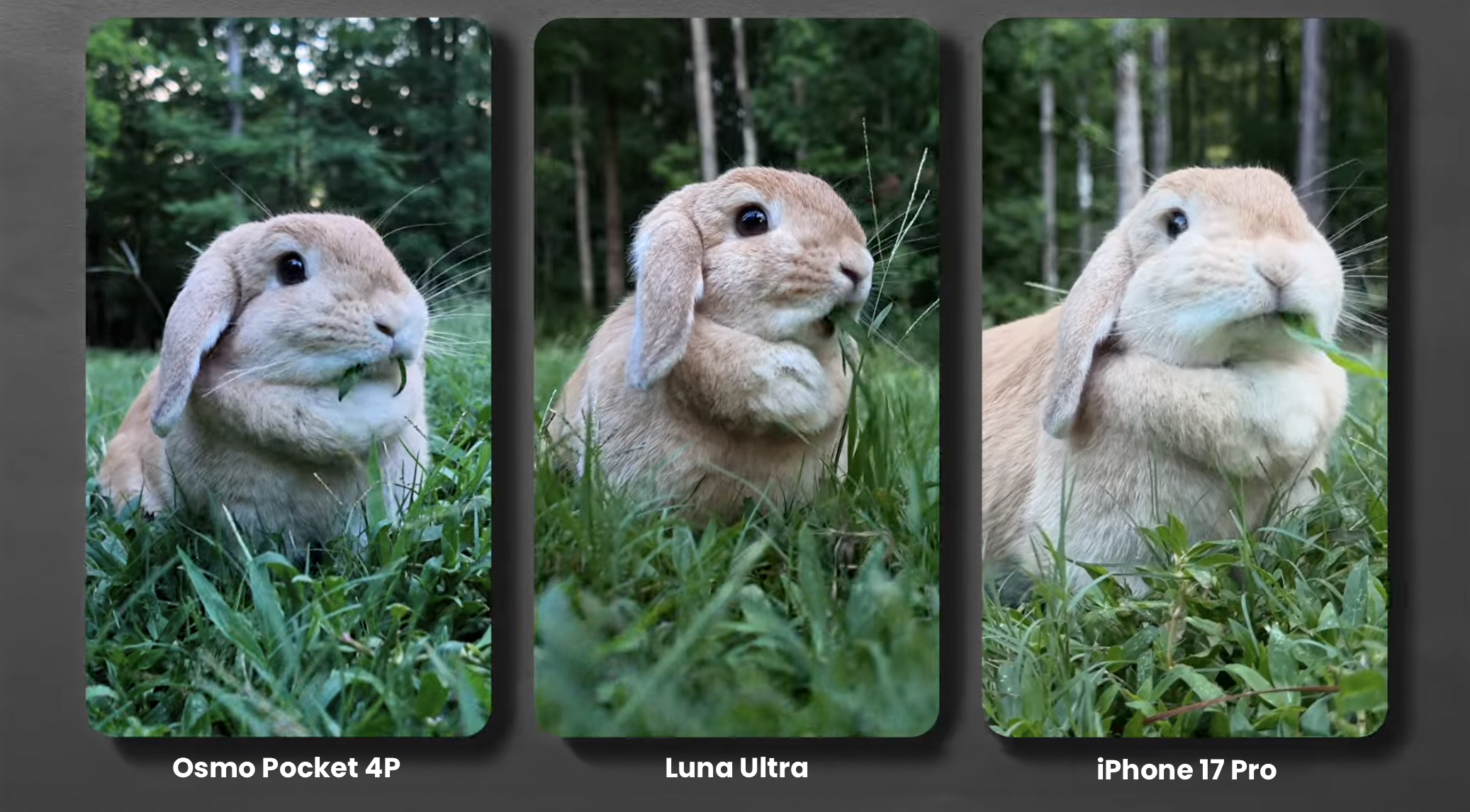
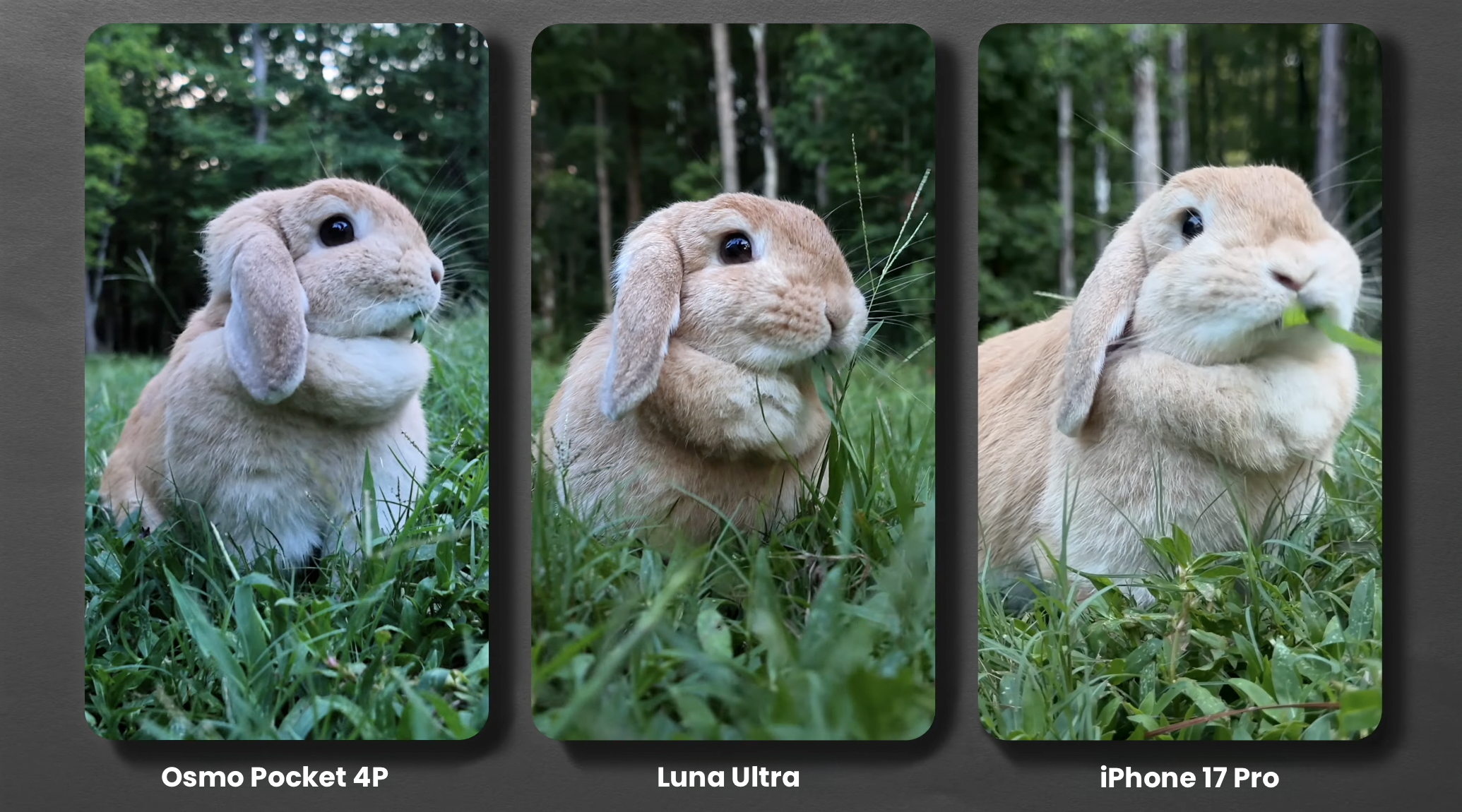
Even at 4K120, I found that the Pocket 4P maintained clean detail in grass, animal fur, and fine textures.
Being able to record extremely slow motion without dropping to 1080p gives me more creative freedom for product shots, wildlife, movement, sports, water, smoke, and cinematic B-roll.
Luna Ultra Slow Motion
The Luna Ultra also produced strong 4K120 footage.
Its greens looked slightly richer and more saturated than the Pocket 4P. Depending on personal preference, that may make the footage look more vibrant straight out of the camera.
The image still held good detail, although the Pocket 4P provides more flexibility for extreme slow motion.
iPhone 17 Pro Slow Motion
The iPhone produced a clean and usable slow-motion image.
However, colors often looked slightly brighter and more processed, especially in grass, foliage, and fur.
For quick slow-motion clips, the convenience is excellent. For more controlled cinematic work, I preferred the Pocket 4P.
Lens Options and Background Blur
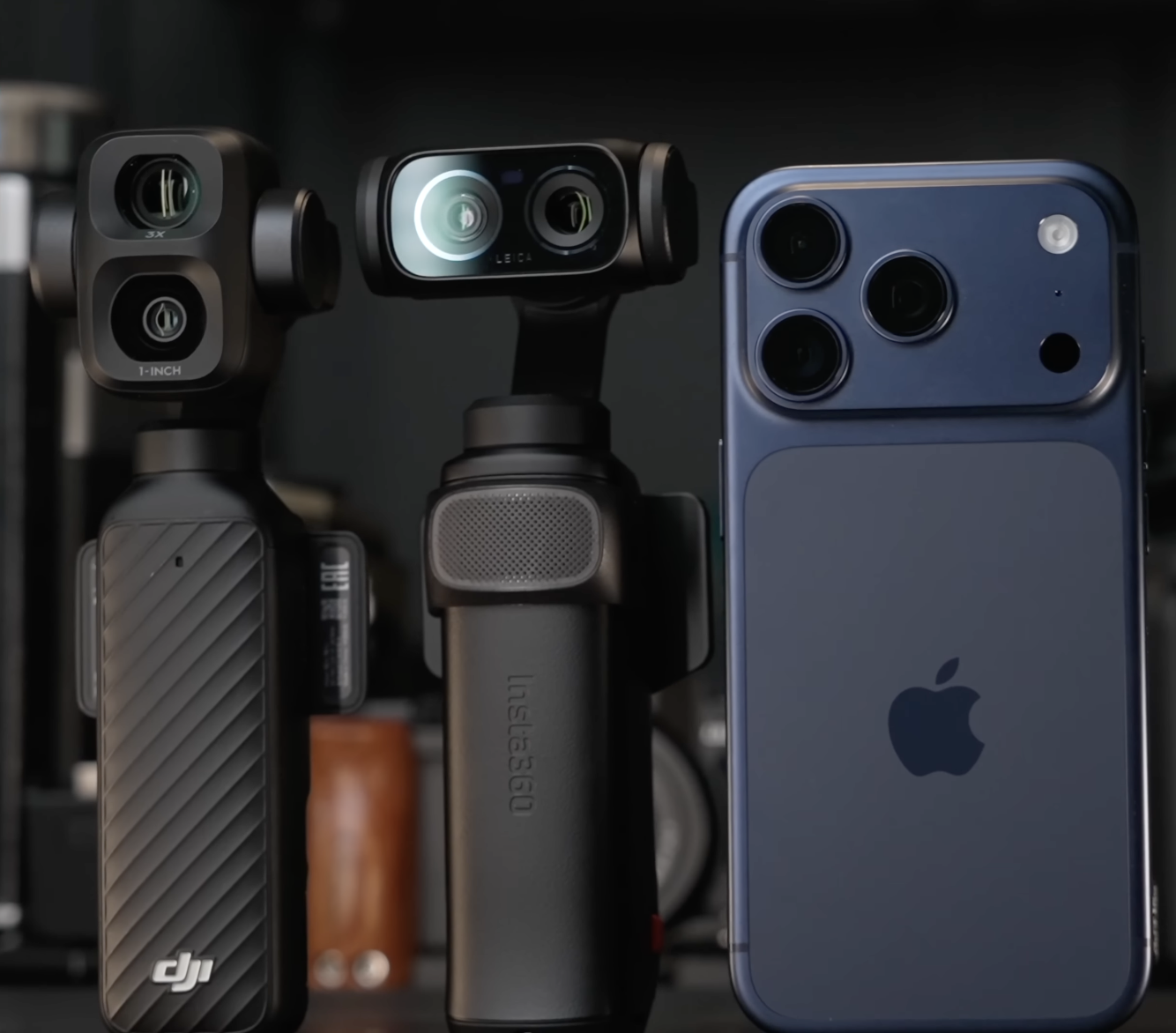
The Pocket 4P and Luna Ultra both include 1x and 3x camera options.
That 3x lens is extremely useful because it gives the image more compression and makes it easier to create background separation.
The iPhone 17 Pro offers multiple focal lengths as well, although its processing and smaller camera modules can create a different visual character.
[IMAGE PLACEHOLDER]
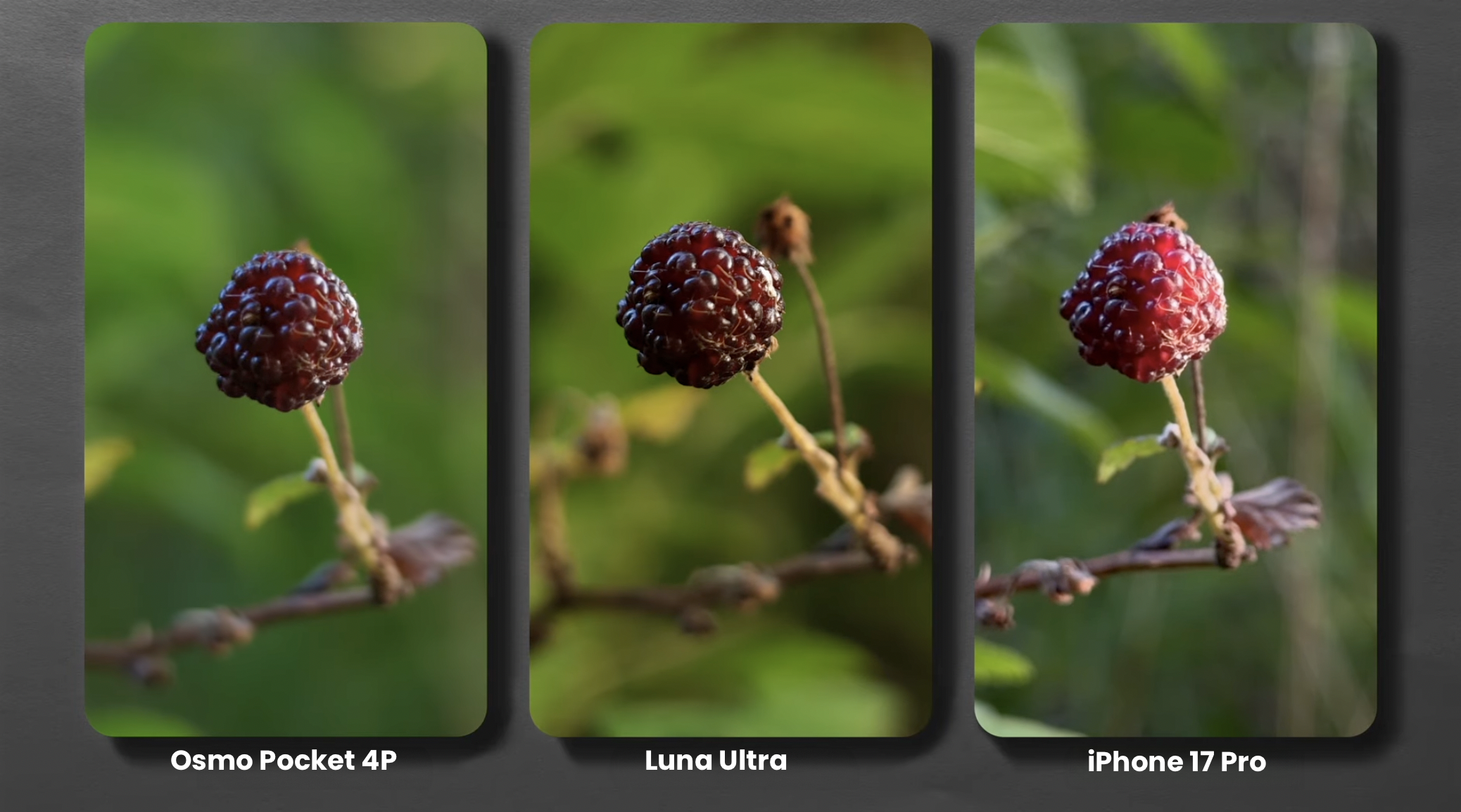
For a close-up outdoor shot, I used the 3x lenses on the Pocket 4P and Luna Ultra and the 2x option on the iPhone.
The Pocket 4P produced smooth background blur and made the subject stand out naturally.
The Luna Ultra created a beautiful result as well. Its 3x lens compressed the background in a way that felt cinematic.
The iPhone still created good separation, but the brighter highlights in the background made the blur feel more like a phone image.
This is not necessarily caused by the blur alone. Exposure, sharpening, highlight processing, and tonal rendering all contribute to how natural the background appears.
For close-ups and cinematic detail shots, I preferred the dedicated 3x lenses.
Ease of Use and Creative Experience
Image quality is important, but a camera also needs to make me want to use it.
The Osmo Pocket 4P and Luna Ultra feel like creative tools. When I pick them up, I immediately begin thinking about movement, composition, lighting, and cinematic shots.
The mechanical gimbal encourages me to experiment with camera placement and motion.
The iPhone is more convenient, but it feels more familiar and automatic. I use it constantly for everyday moments, but it does not always activate the same creative part of my brain.
That difference is difficult to measure in specifications, but it matters.
The best camera is not always the camera with the highest resolution or most advanced sensor. Sometimes, it is the one that makes you excited to go outside and create something.
Audio and Everyday Practicality
The iPhone 17 Pro has an advantage in everyday practicality.
I can record a clip, edit it, add music, send it, and upload it without transferring files to another device.
That workflow is difficult for a dedicated camera to match.
The Pocket 4P and Luna Ultra are better suited for intentional production. They give me more control over composition and movement, but I may need to transfer footage before editing or publishing it.
Audio quality will also depend heavily on the shooting situation.
Built-in microphones can work for casual vlogging, environmental sound, and quick clips. For professional talking-head videos or important dialogue, I would still prefer using an external wireless microphone or dedicated audio recorder whenever possible.
Wind, distance, room echo, and background noise can affect all three cameras more than the small differences between their internal microphones.
Who Should Buy the Osmo Pocket 4P?
The Osmo Pocket 4P is best for creators who prioritize image quality, dynamic range, smooth movement, and slow motion.
It makes the most sense for:
-
Travel filmmakers
-
Vloggers
-
YouTube creators
-
Solo filmmakers
-
Cinematic B-roll shooters
-
Creators who enjoy color grading
-
Anyone who frequently uses slow motion
-
People who want both 1x and 3x perspectives
You may want to skip it if you live in the United States and can only find it at a heavily inflated price.
Its D-Log 2 limitation on the 1x lens is also worth understanding before buying.
Who Should Buy the Insta360 Luna Ultra?
The Luna Ultra is a strong option for someone who wants a dedicated compact gimbal camera with good image quality and easier availability.
It may be best for:
-
Vloggers who want a detachable display
-
Creators who want 8K recording
-
Travelers
-
Solo shooters
-
Buyers in the United States
-
People who prefer a slightly punchier image
-
Creators who want both 1x and 3x lenses
You may want to skip it if your main priority is maximum dynamic-range flexibility or the most neutral color straight out of the camera.
I also found that I needed to pay closer attention to exposure, often underexposing it slightly more than the Pocket 4P.
Who Should Buy the iPhone 17 Pro?
The iPhone 17 Pro is best for people who value convenience above everything else.
It makes sense for:
-
Parents recording everyday memories
-
Travelers who do not want to carry another camera
-
Social media creators
-
Mobile editors
-
People who want to shoot and upload quickly
-
Creators who already need a new phone
-
Anyone who values Apple Log 2
You may want to skip relying on it as your only camera if you dislike computational processing, frequently shoot controlled talking-head videos, or want mechanical gimbal movement.
It is extremely capable, but it does not always deliver the same dedicated-camera look.
Final Verdict: Which Camera Has the Best Image Quality?
After comparing the Osmo Pocket 4P, Insta360 Luna Ultra, and iPhone 17 Pro, I personally prefer the Osmo Pocket 4P for overall image quality.
It gave me the most natural colors, the most controlled exposure, strong low-light performance, excellent mechanical stabilization, and the greatest slow-motion flexibility.
D-Log 2 also provided the most room for me to work when balancing difficult highlights and shadows.
The Insta360 Luna Ultra is still an excellent camera. It produces a detailed, punchy image, includes a useful 3x camera, offers 8K recording, and may be a much more practical option for buyers in the United States.
The iPhone 17 Pro remains the best everyday camera of the three. It is always with me, Apple Log 2 grades extremely well, and the ability to shoot, edit, and upload from the same device is incredibly valuable.
However, the iPhone does not give me the same creative feeling as the Pocket 4P and Luna Ultra.
For everyday memories and convenience, I would choose the iPhone 17 Pro. For buyers in the United States who want a dedicated compact camera, I would seriously consider the Luna Ultra. For my own creative work and the best overall image quality, I would choose the Osmo Pocket 4P.
Author