
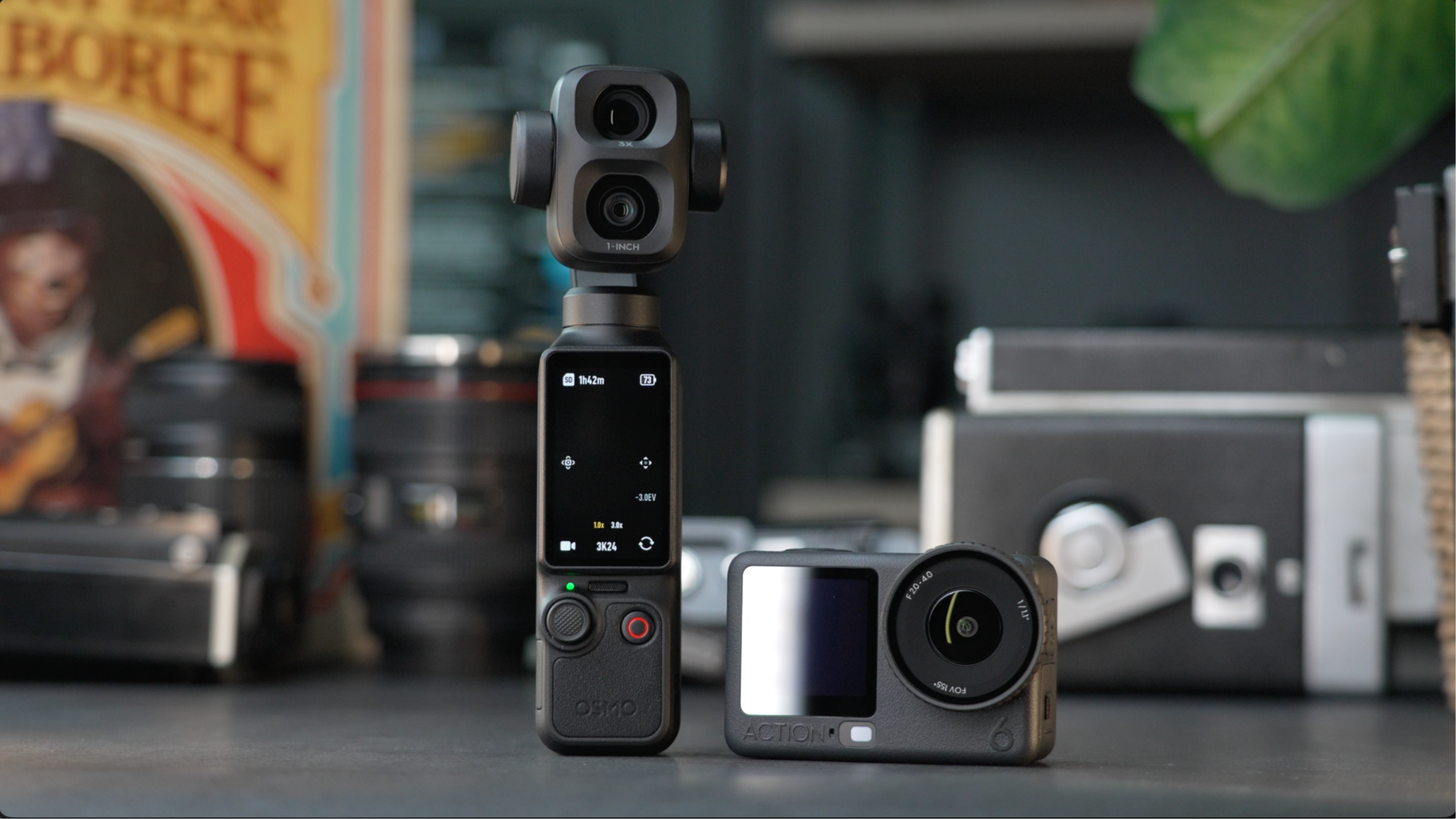
Don't Buy the Osmo Pocket 4P Until You Watch This: Osmo Pocket 4P vs Osmo Action 6
Jul 13, 2026Get the full story watching the video above ⬆️
Purchase:
Osmo Action 6 - https://geni.us/b7uPvt
If I showed you two different shots, one filmed with the DJI Osmo Pocket 4P and the other filmed with the DJI Osmo Action 6, do you think you could tell which camera was which?
Both cameras are excellent options for creators who want to step up from filming everything on a smartphone. However, after testing the Osmo Pocket 4P and Osmo Action 6 in real-world situations, I found that they produce noticeably different results depending on the type of shot, lighting conditions, stabilization, and video resolution you choose.
In this Osmo Pocket 4P vs Osmo Action 6 comparison, I tested both cameras while walking, vlogging, driving, shooting in low light, recording slow motion, filming backlit scenes, and working in a controlled studio environment.
Neither company sponsored this comparison. I purchased the Osmo Pocket 4P on eBay and the Osmo Action 6 on Amazon with my own money, so everything here is based on my honest experience using both cameras.
Osmo Pocket 4P vs Osmo Action 6 Specifications
Before getting into the footage, here is a quick overview of the biggest differences between the two cameras.
The Osmo Pocket 4P starts at around $599 in mainland China, although it can be difficult to find in the United States. Because of its limited availability, I had to purchase mine through eBay and pay a premium.
The Osmo Action 6 costs just over $400 on Amazon, making it the more affordable and readily available option.
The Osmo Pocket 4P can shoot 4K slow motion at up to 240 frames per second, while the Osmo Action 6 tops out at 4K 120fps. However, the Action 6 can also record 8K video at up to 30fps.
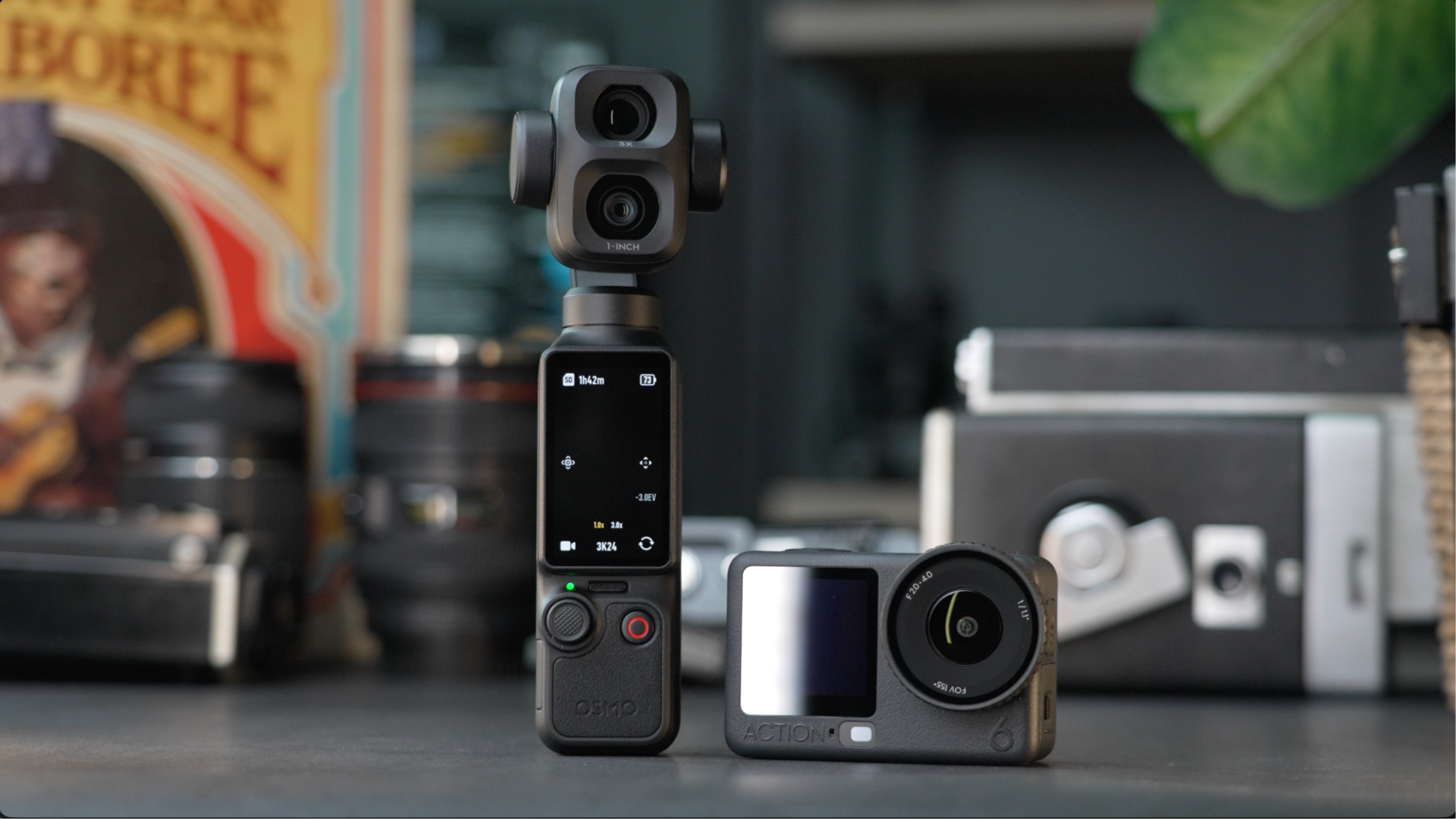
The Pocket 4P feels more like a miniature cinema camera. It has a 1-inch main sensor, a second smaller telephoto sensor, and two equivalent focal lengths: approximately 20mm and 60mm.
The Action 6 has a smaller sensor, but it provides a much wider 155-degree field of view. That makes it a better fit for action sports, POV footage, biking, running, travel, and super-wide environmental shots.
Stabilization: Mechanical Gimbal vs Digital Stabilization
One of the biggest differences between the Osmo Pocket 4P and Osmo Action 6 is how each camera stabilizes footage.
The Pocket 4P uses a true mechanical gimbal. This produces the smooth, floating movement that has made the Osmo Pocket camera line so popular with filmmakers and vloggers.
The Osmo Action 6 uses digital stabilization through modes such as RockSteady and HorizonSteady. Digital stabilization can be extremely effective during intense movement, especially when running, biking, hiking, or mounting the camera to a vehicle.
In bright, well-lit environments, both cameras provide excellent stabilization. However, I noticed a bigger difference once I started filming in low light.
During my low-light stabilization test, the Osmo Pocket 4P maintained its smooth, floating appearance. The Action 6 introduced more wobbling and distortion around the edges of the frame.
This is one of the situations where the mechanical gimbal becomes extremely valuable. Digital stabilization needs enough light and image information to correct movement properly. As the available light decreases, the stabilization can begin to struggle.
You could apply additional stabilization to the Action 6 footage during editing, but straight out of the camera, I preferred the Osmo Pocket 4P for low-light stabilization.
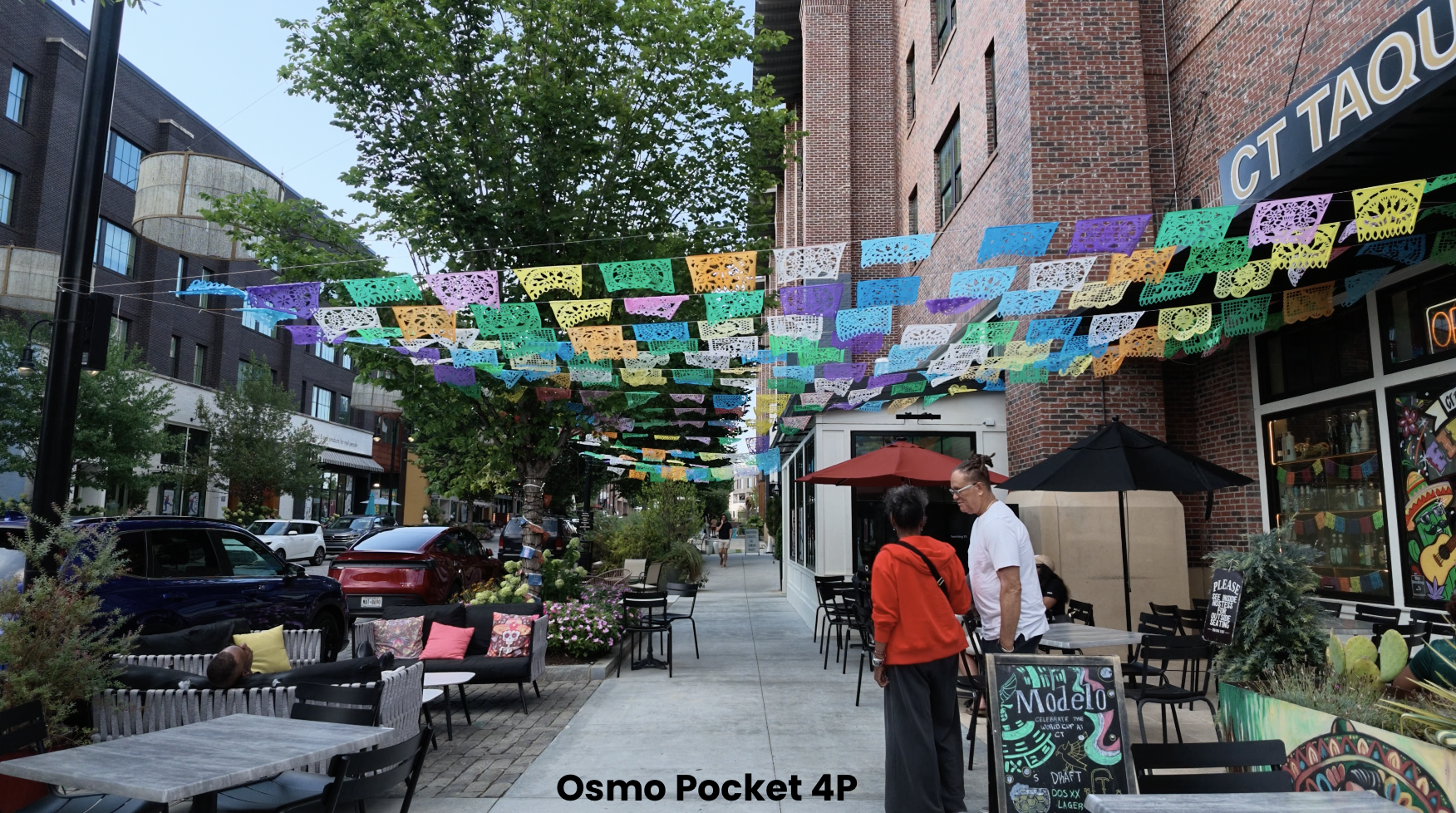
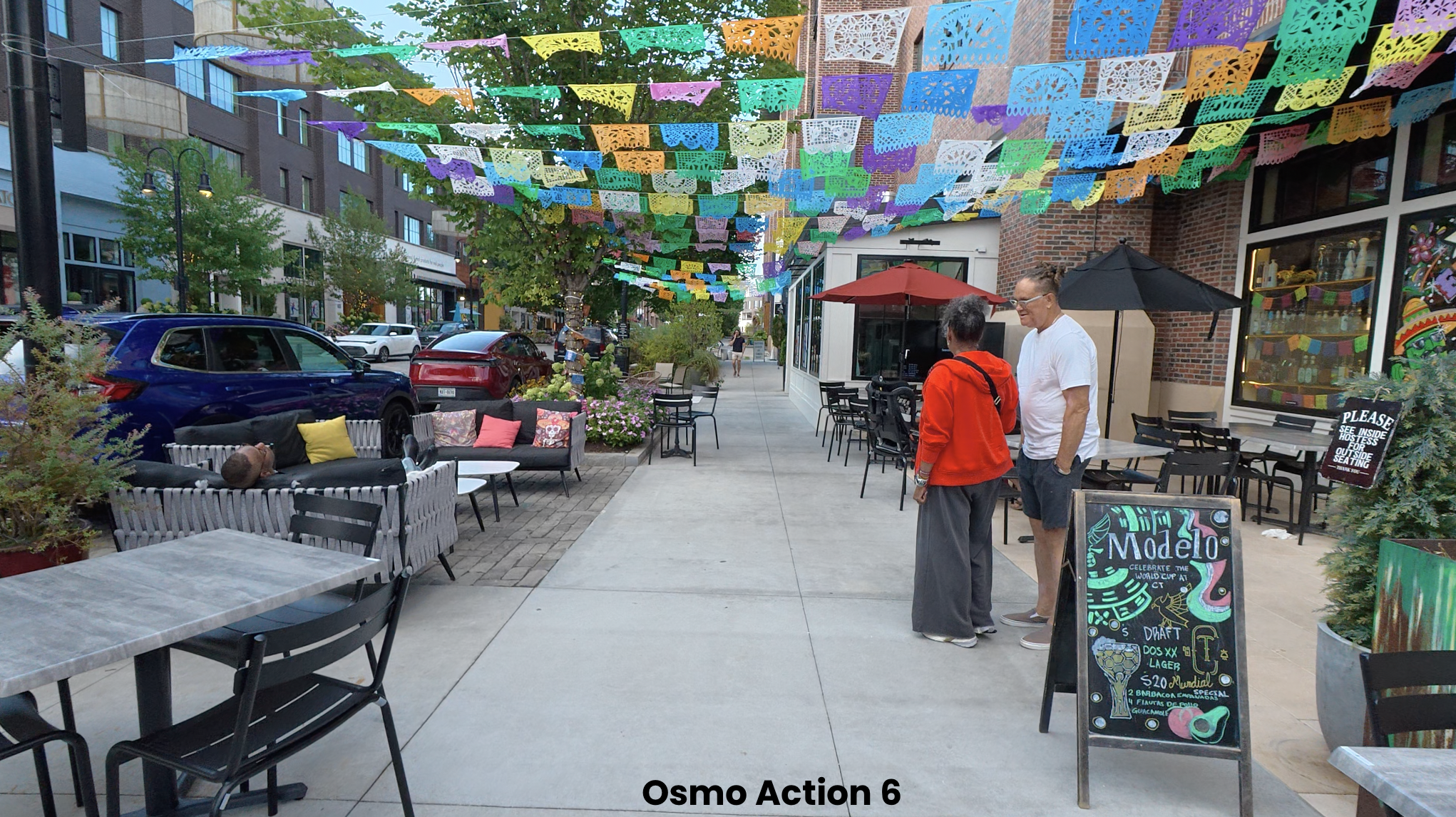
Field of View and Perceived Movement
The wider field of view on the Osmo Action 6 can make movement appear faster than it actually is.
I filmed the same forward-moving shot with both cameras while walking at approximately the same speed. When I compared the footage, the Action 6 shot looked noticeably faster.
That does not mean the Action 6 was recording movement incorrectly. It is simply a visual result of the wider lens and greater amount of environmental movement near the edges of the frame.
This can be an advantage when filming action footage because it creates a greater sense of speed and energy. However, it is something to be aware of when filming cinematic camera movements. Even if you are walking slowly, the footage may look faster or more aggressive than you intended.
The Osmo Pocket 4P provides a more controlled, traditional cinematic perspective, while the Action 6 creates a wider and more immersive action-camera look.
Image Quality and Dynamic Range
The differences in image quality became more noticeable when I filmed scenes containing both dark shadows and bright highlights.
In these demanding lighting situations, the Osmo Pocket 4P retained more information across the image. I could see additional detail inside darker areas while still preserving more of the bright outdoor foliage and sky.
The Osmo Action 6 still produced a usable image, especially when viewed by itself. However, during direct side-by-side comparisons, the Pocket 4P’s larger main sensor provided better highlight retention, shadow detail, and overall color separation.
I noticed the same thing during a backlit shot.
Both cameras were exposed using similar settings, but the Action 6 allowed more of the colors in my clothing and surrounding environment to become washed out by the bright background.
The Pocket 4P retained more detail and color, which made the image feel deeper and more balanced.
For easy, evenly lit scenes, the difference may not always be obvious. Once the lighting becomes more challenging, though, the larger sensor inside the Osmo Pocket 4P begins to show its advantage.
Skin Tones and Standard Color Profiles
I tested both cameras using their standard color profiles because many creators do not want to shoot in log or spend time color grading every clip.
The Osmo Action 6 performed better than I expected in several outdoor vlogging shots. In soft or evenly distributed light, both cameras produced footage that could be used immediately.
The biggest differences appeared when I moved into direct sunlight or controlled studio lighting.
The Osmo Pocket 4P generally produced more realistic-looking skin tones. The colors appeared more natural and less aggressively processed.
The Osmo Action 6 often introduced a warmer, slightly orange appearance to skin tones. That look remained fairly consistent whether I was filming outdoors or under studio lighting.
I also filmed a color checker chart under controlled lighting. The Pocket 4P reproduced the chart’s colors more accurately, while the Action 6 added more saturation.
Some creators may actually prefer the brighter, more vibrant look from the Action 6 because the footage can appear ready for social media without much editing. Personally, I prefer having a more accurate image that I can adjust later.
For my style of filmmaking, the Osmo Pocket 4P produces better skin tones and more natural colors.
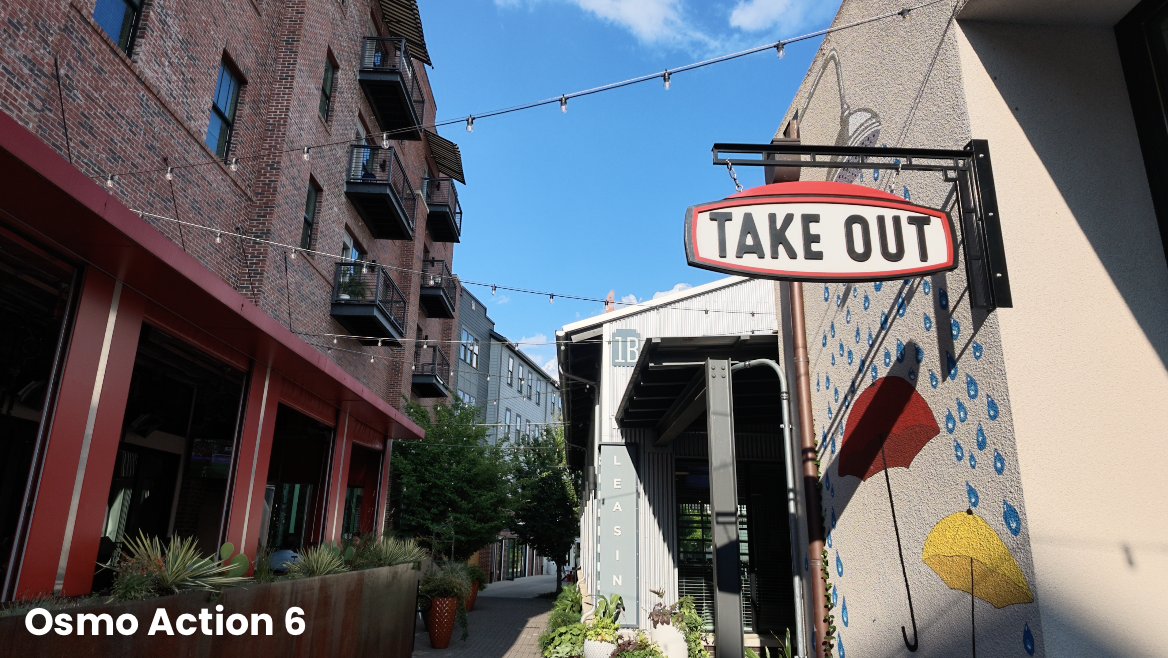
Focus and Background Blur
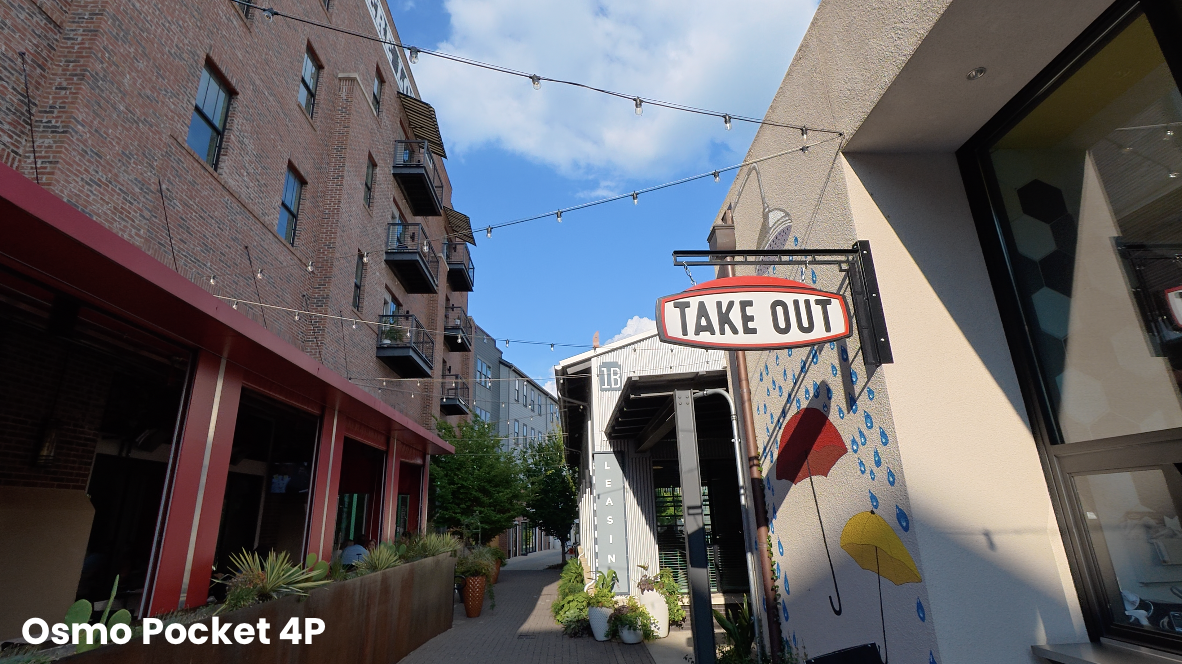
The Osmo Pocket 4P can create a more mirrorless-camera-style image because of its larger sensor and shallower depth of field.
During several shots, the background became noticeably softer when I entered the frame. This helped separate me from the environment and gave the footage a more cinematic appearance.
However, the shallower depth of field also means focus becomes more important.
During one of my walking shots, I noticed some focus pumping from the Pocket 4P. I could have used a single-focus mode to prevent this, but I was concentrating on filming and forgot to change the setting.
The Action 6 keeps considerably more of the scene in focus. That may not create the same cinematic background blur, but it also means you do not need to worry as much about the camera focusing on the wrong subject.
I noticed this during a driving shot. The Pocket 4P focused on the rearview mirror and allowed the background to blur. It was not intentional, but I actually liked how the shot looked.
With the Action 6, the mirror and background remained much sharper.
The Pocket 4P gives you more subject separation and a more traditional camera look. The Action 6 gives you a deeper depth of field and a more dependable point-and-shoot experience.
D-Log M vs D-Log vs D-Log 2
The Osmo Action 6 provides D-Log M, while the Osmo Pocket 4P provides both D-Log and D-Log 2.
When I examined the waveforms from the different profiles, D-Log M produced a more contrast-heavy image. Its highlights and shadows were spread farther apart, giving me less room to recover information when applying a strong LUT or aggressive color grade.
The regular D-Log profile on the Pocket 4P compressed more of the highlight and shadow information into a flatter image. That gave me more flexibility when color grading and applying LUTs.
D-Log 2 produced the flattest and most contained waveform of the three profiles. By keeping the highlights and shadows closer together, the profile preserved more of the scene’s dynamic range for post-production.
In practical terms, D-Log M looks slightly more finished straight out of the camera. However, the image may begin to fall apart sooner when pushed heavily, especially in bright skies or extremely dark shadows.
D-Log and D-Log 2 initially look flatter, but they provide more room for grading. A LUT can be applied more aggressively while maintaining better highlight and shadow information.
One important limitation is that D-Log 2 on the Pocket 4P is only available when using the 1x main camera.
The Action 6 standard color profile still performs well enough that I would probably use it frequently rather than always recording in D-Log M.
For creators who enjoy color grading and want maximum flexibility, though, the Osmo Pocket 4P has the stronger log profiles.
Low-Light Video Performance
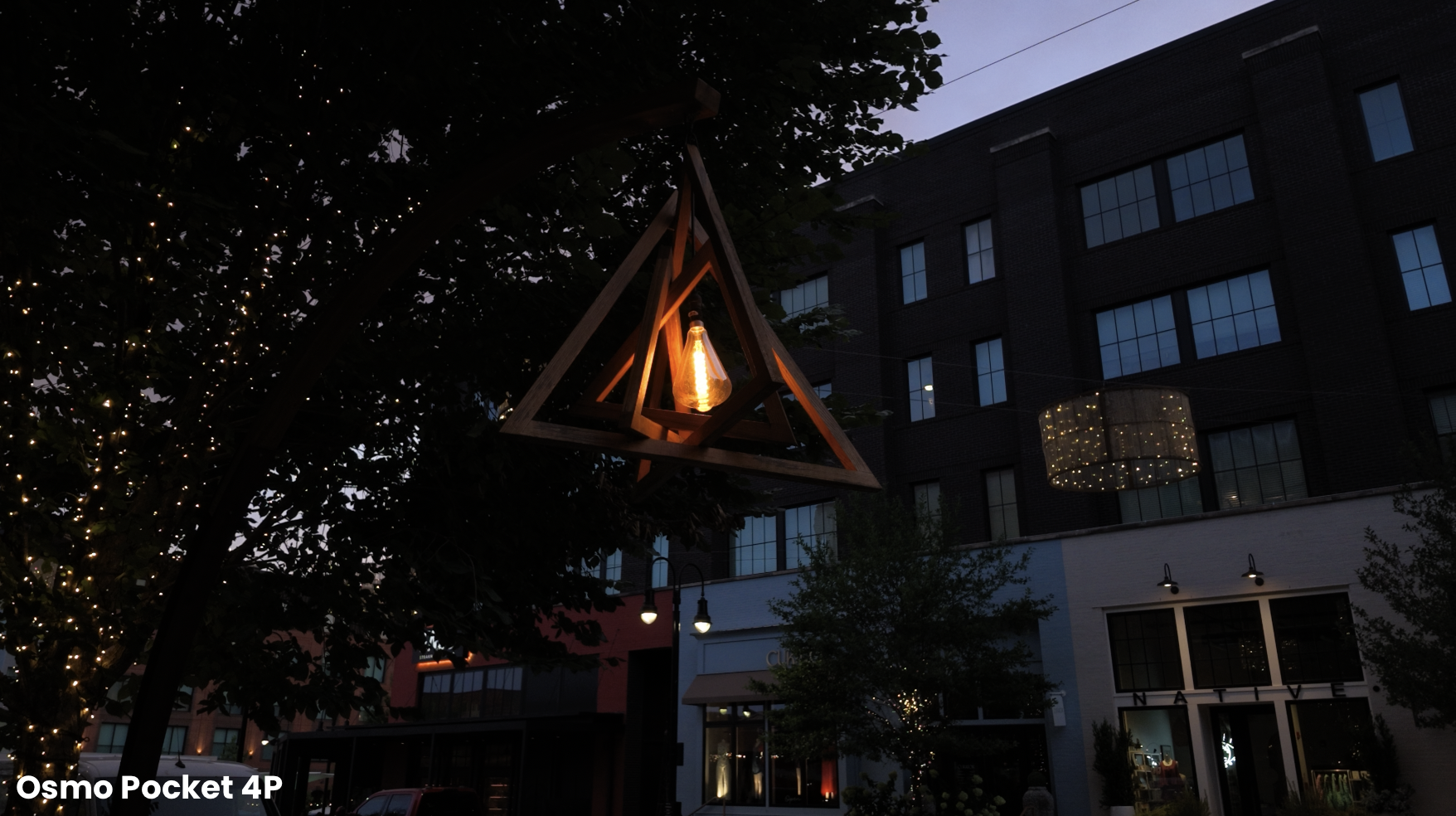
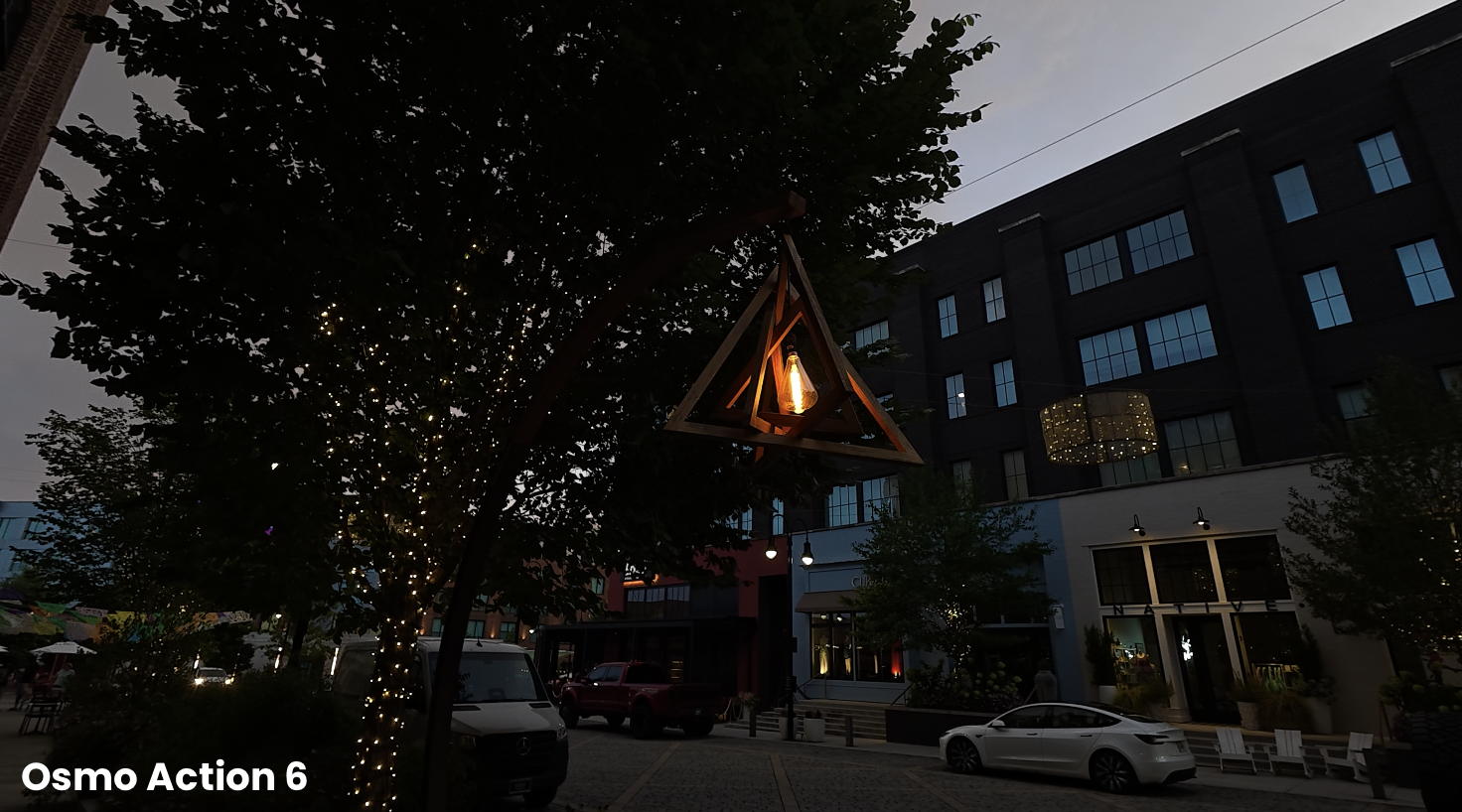
The Osmo Pocket 4P produced the better image in most of my low-light tests.
Its mechanical gimbal continued to provide smooth footage, and the larger sensor retained better colors and cleaner details.
That does not mean the Action 6 performed badly. In several scenes with adequate environmental lighting, I was surprised by how well it held up. Some shots contained less visible noise than I expected.
The Action 6 began falling behind when I introduced strong backlighting or extreme differences between bright and dark areas. The Pocket 4P retained more color in the sky and additional texture inside darker buildings.
The Action 6 tended to lose some of those colors and details.
For nighttime action footage, the Action 6 can still be useful, especially when you need a rugged or mountable camera. For smooth cinematic low-light footage, I would choose the Pocket 4P.
4K Slow Motion Comparison
The Osmo Pocket 4P clearly separated itself from the Action 6 during my 4K 120fps slow-motion test.
The Pocket 4P footage contained noticeably more detail, stronger color, and greater clarity. The Action 6 footage looked softer when placed directly beside it.
I adjusted texture and noise reduction to negative two inside both cameras to create a fairer comparison, but the Pocket 4P still delivered the more detailed result.
The Pocket 4P can also record 4K at up to 240fps, giving creators even more flexibility for extreme slow motion.
For cinematic slow-motion footage, product shots, water, wildlife, sports details, or dramatic B-roll, the Osmo Pocket 4P is the stronger camera.
Osmo Action 6 8K Video Quality
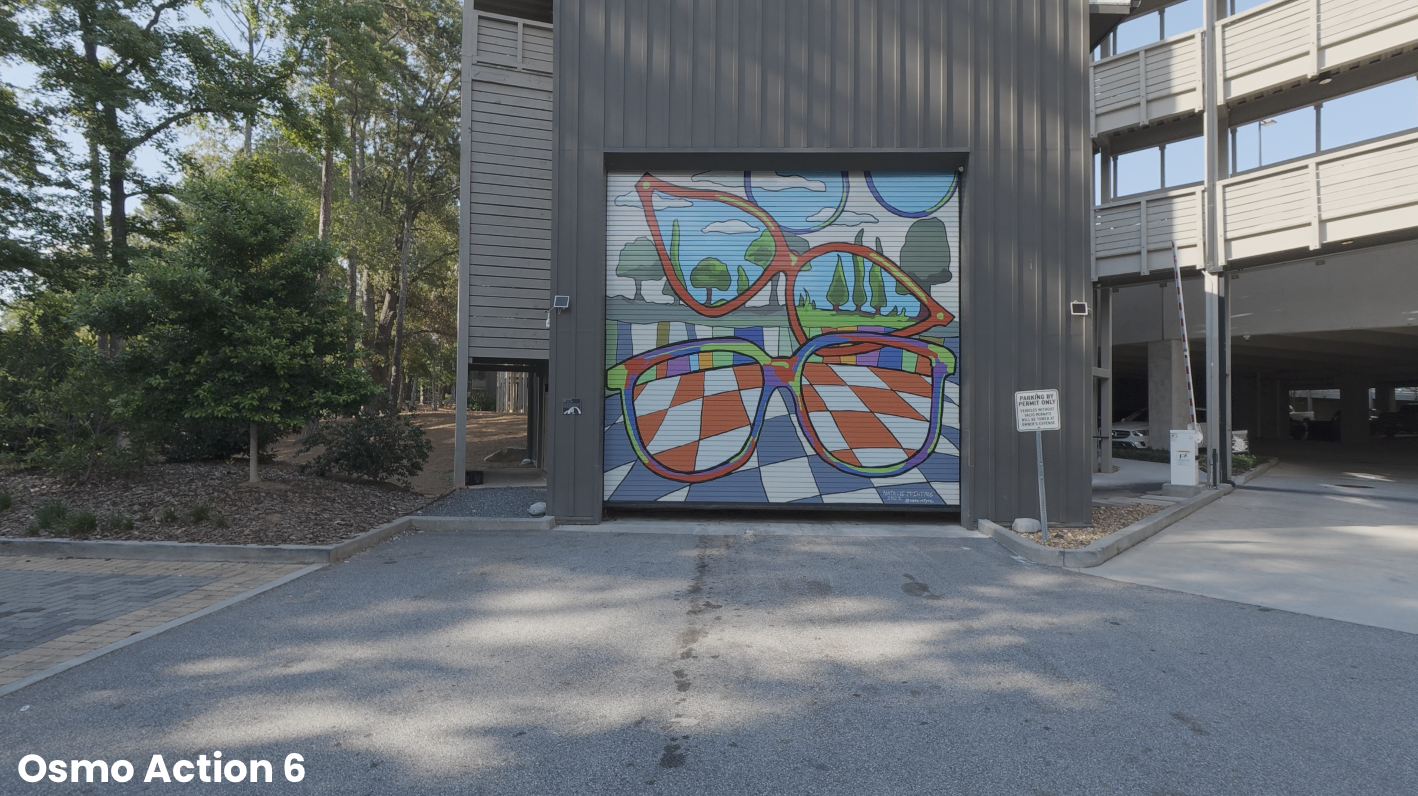
The Osmo Action 6 has one major resolution advantage: it can record 8K video at up to 30fps.
When I switched from 4K to 8K, I saw a noticeable increase in detail. In certain shots, the Action 6’s colors also appeared more vibrant and competitive with the Pocket 4P.
The 8K footage looked impressive, with controlled exposure and strong overall image quality.
However, recording in 8K comes with some disadvantages. The camera became warm during longer recording sessions, and 8K files take up considerably more storage space.
Editing 8K footage also requires a more powerful computer and additional storage capacity.
I would not use 8K for every project, but it is a valuable feature when I need extra resolution for cropping, reframing, stabilization, or delivering high-resolution footage.
Battery, Storage and Durability
The Osmo Pocket 4P has a built-in battery and approximately 103GB of internal storage. It also supports microSD cards.
The Osmo Action 6 has a removable battery, approximately 64GB of built-in storage, and microSD card support.
The removable battery gives the Action 6 a major advantage for long filming days. Instead of stopping to recharge the camera, you can carry additional batteries and swap them as needed.
The Action 6 is also waterproof, rugged, and easier to mount in situations where I would not feel comfortable using the Pocket 4P.
The Pocket 4P’s mechanical gimbal requires more care. It is not the camera I would throw into a bag without protection or mount to a bike during an intense trail ride.
The Action 6 is designed to handle more abuse.

Who Should Buy the Osmo Action 6?
The Osmo Action 6 is the better option for creators who need a camera that is:
-
Rugged and waterproof
-
Easy to mount
-
Suitable for biking, running and action sports
-
Capable of filming immersive POV footage
-
Wide enough for handheld vlogging
-
Equipped with removable batteries
-
Able to shoot 8K video
-
Less expensive and easier to purchase
This is the camera I would choose when durability and convenience matter more than achieving the absolute best image quality.
You can mount it, take it underwater, carry extra batteries, and focus on the experience instead of worrying about protecting a mechanical gimbal.
Who Should Buy the Osmo Pocket 4P?
The Osmo Pocket 4P is the better option for creators who prioritize:
-
Cinematic image quality
-
Natural-looking skin tones
-
Mechanical gimbal stabilization
-
Smooth low-light footage
-
Better highlight and shadow retention
-
Stronger D-Log profiles
-
Detailed 4K slow motion
-
Background separation
-
A more mirrorless-camera-style image
This is the camera I would choose for cinematic travel videos, walking B-roll, filmmaking, talking-head footage, controlled camera movements, and any situation where I want the image to look its best.
Osmo Pocket 4P vs Osmo Action 6: Which One Would I Choose?
The Osmo Pocket 4P and Osmo Action 6 are not really trying to solve the exact same problem.
The Action 6 is the camera I would throw into the action. It is wider, tougher, waterproof, easier to mount, and more dependable when I do not want to worry about focus or damaging a gimbal.
The Pocket 4P is the camera I would use when image quality matters most. It provides smoother cinematic movement, better skin tones, stronger log profiles, more detailed slow motion, and better performance in difficult lighting situations.
Honestly, many creators could benefit from owning both cameras because they complement each other extremely well.
However, if I could only choose one for the way I personally like to film, I would choose the Osmo Pocket 4P.
The Action 6 surprised me and produced several shots that looked fantastic, but the Pocket 4P gave me the better-looking image more consistently. At the end of the day, image quality is still the thing I care about most.
Final Thoughts
The Osmo Action 6 is an excellent action camera and a strong option for creators who need durability, width, waterproofing, removable batteries, and 8K recording.
The Osmo Pocket 4P is closer to a tiny cinema camera. Its larger sensor, mechanical gimbal, realistic skin tones, detailed slow motion, and stronger color profiles make it the more cinematic choice.
Your decision should ultimately come down to what and how you film.
Choose the Osmo Action 6 if you want to capture the experience without worrying about the camera.
Choose the Osmo Pocket 4P if you want to make the experience look as cinematic as possible.
Author