
Osmo Pocket 4P vs Sony ZV-E10 II: Which Camera Is Better?
Jul 28, 2026Get the full story watching the video above ⬆️
Purchase:
Sony ZV-E10 II - https://geni.us/FSQ1aM
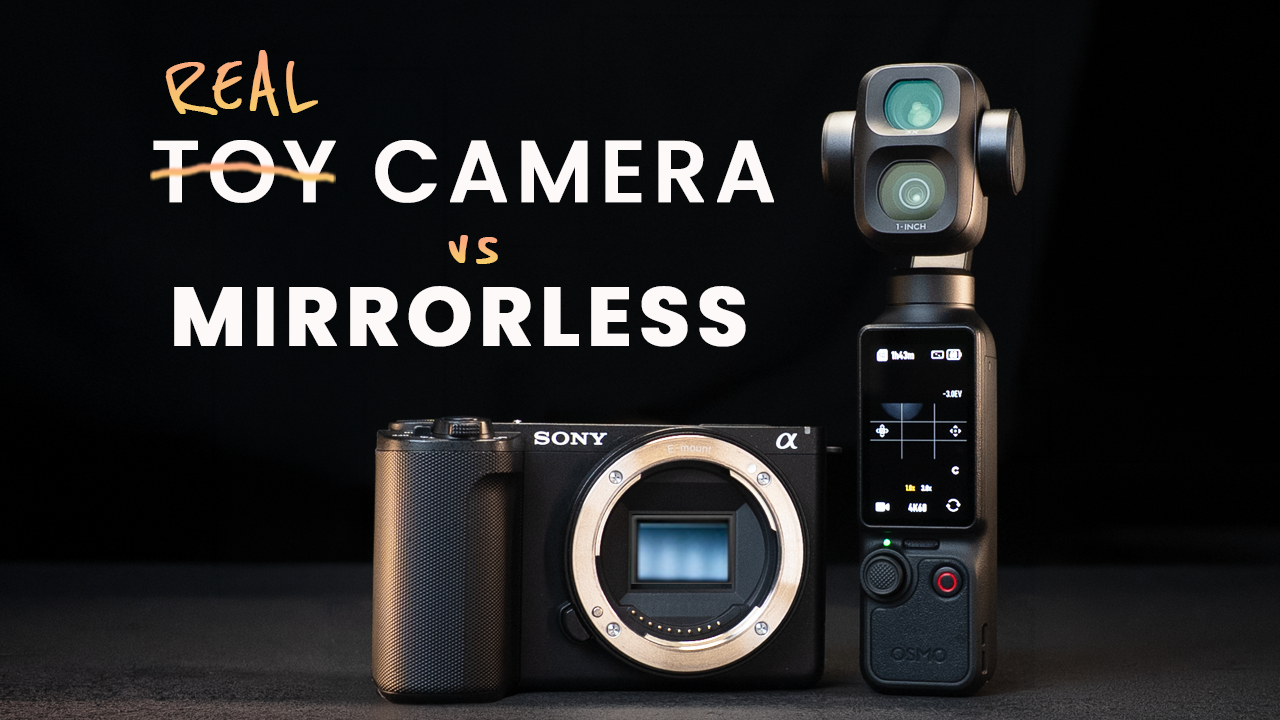
The Sony ZV-E10 II is the better overall camera system, but the Osmo Pocket 4P comes surprisingly close in image quality and completely outperforms it when it comes to portability and stabilization.
After using both cameras in daylight, low light, slow motion, photography, standard color profiles, and Log recording, I found that the difference is not always as obvious as the price or sensor size might suggest.
The Sony ZV-E10 II gives me an APS-C sensor, interchangeable lenses, better photography, professional connections, and more room to grow. The Pocket 4P gives me a dual-camera system, a built-in mechanical gimbal, 4K240 slow motion, and a body small enough to carry almost anywhere.
For serious long-term use, I would choose the Sony ZV-E10 II. For quick filming, travel, walking shots, and everyday creativity, the Pocket 4P may be the camera I would actually bring with me more often.
Osmo Pocket 4P vs Sony ZV-E10 II Overview
The Osmo Pocket 4P starts at around $575 in some international markets, but it is not officially sold in the United States. Imported models can be difficult to find for under $1,000.
It has two cameras:
- A 1-inch main sensor with a 20mm-equivalent 1x lens
- A smaller sensor with a 60mm-equivalent 3x lens
It can record up to 4K240 and includes a built-in mechanical gimbal.
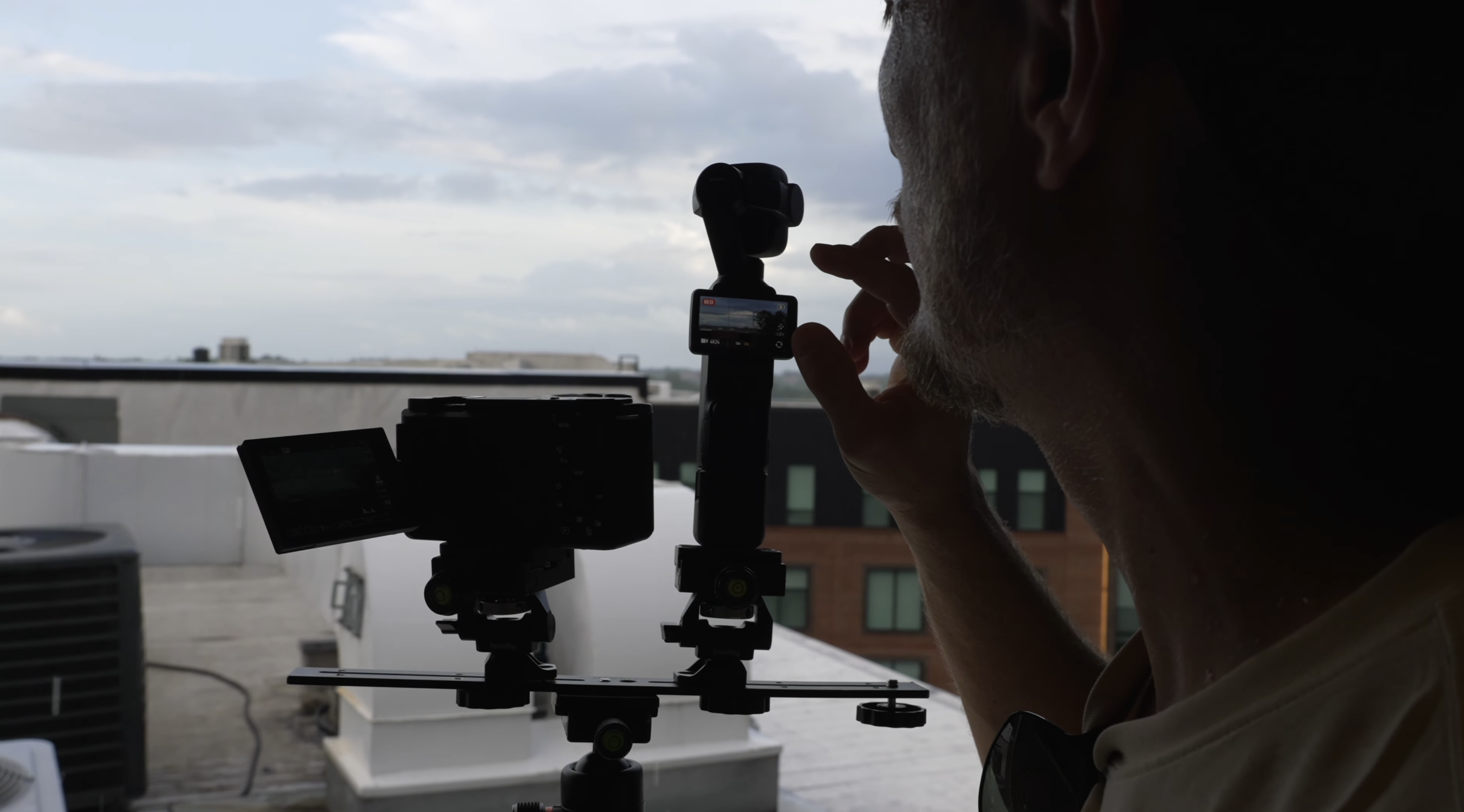
The Sony ZV-E10 II starts at approximately $998 for the body and uses a much larger APS-C sensor. It accepts interchangeable lenses and can record up to 4K120.
For this comparison, I used the Viltrox 13mm f/1.4 to create a field of view close to the Pocket 4P’s 1x lens. I used the Sigma 18-50mm f/2.8 around 40mm to create framing similar to the Pocket 4P’s 3x camera.
Can the Pocket 4P Compete With the ZV-E10 II?
Before testing them side by side, I expected the Sony to look clearly better in almost every scene.
That was not always the case.
In several low-light and outdoor shots, the image quality was close enough that I would have had difficulty identifying which camera was which.
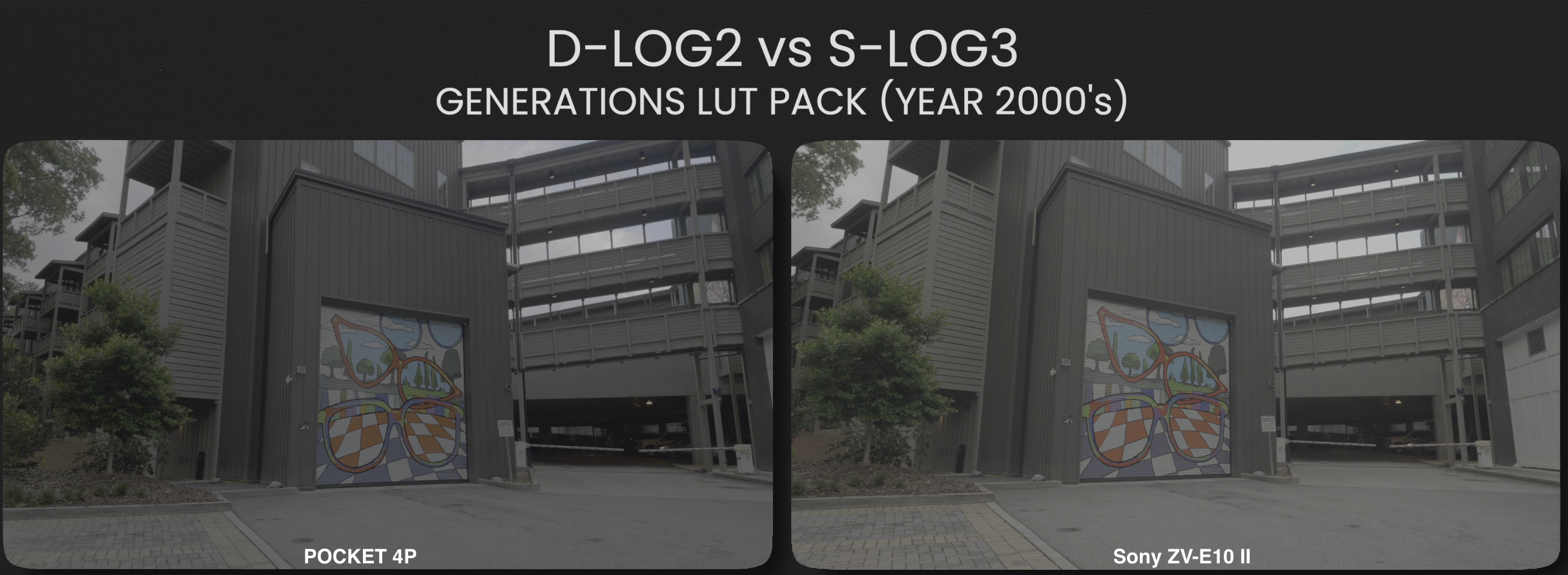
The difference became even smaller when I compared D-Log 2 from the Pocket 4P against S-Log3 from the Sony.
Once both clips were graded with matching LUTs, the footage looked similar enough that I could realistically use these cameras together as an A-camera and B-camera setup.
That is impressive considering the Pocket 4P is a small gimbal camera competing against a larger APS-C system.
Lens Flexibility
The Sony ZV-E10 II has the clear advantage when it comes to lenses.
I can attach wide-angle, telephoto, macro, portrait, and zoom lenses depending on the type of shot I need.
The Pocket 4P limits me to its built-in 1x and 3x cameras.
However, the 3x camera is one of my favorite features.
Its 60mm-equivalent perspective works extremely well for:
- Product shots
- Close details
- Talking-head videos
- Nature
- Portraits
- Cinematic B-roll
In one close-up shot of an acorn, the Pocket 4P’s 3x camera created a tight, cinematic image where I could even see a small ant moving across it.
The Sony ZV-E10 II with the Sigma 18-50mm f/2.8 created a very similar result.
The Sony offers more creative control, but the Pocket 4P gives me two extremely useful focal lengths without needing to change lenses.
Standard Color Profiles
The standard color profiles created some of the biggest differences between these cameras.
The Pocket 4P generally produced more saturation and stronger color straight out of the camera.
The Sony ZV-E10 II usually gave me a more muted and neutral image.
In several landscape shots, the Pocket 4P produced a brighter, slightly purplish sky with more pop.
The Sony rendered the sky with less saturation and more natural-looking colors, although it occasionally leaned slightly green.
This tells me that the Pocket 4P is more likely to create an immediately finished-looking image in Standard.
The Sony gives me a calmer starting point that may require a small amount of saturation or color correction in post.
White Balance
The Sony ZV-E10 II generally handled automatic white balance better during my tests.
In one scene where I exposed for the background, the Pocket 4P introduced a cooler, bluish color near the center of the frame.
The Sony produced a more natural result.
I noticed similar behavior in other difficult lighting environments.
The Pocket 4P can occasionally shift cooler, purple, or blue depending on the light.
The Sony is not perfect either, but its automatic white balance felt more consistent in several of the scenes I tested.
For important work, I would lock the white balance on either camera rather than relying on Auto.
Backlit Color
The Pocket 4P did not always produce the more saturated image.
In a strongly backlit shot containing a red flag, the Sony maintained noticeably richer red color.
The Pocket 4P became more muted while shooting directly into the light.
The Sony held onto the saturation better and gave the flag a stronger, more vibrant appearance.
This is a good reminder that camera color can change depending on the direction and quality of the light.
Dynamic Range
The Sony ZV-E10 II has the advantage on paper because of its larger APS-C sensor.
In photography, that difference was easy to see.
In a motorcycle photo, the Pocket 4P produced much deeper shadows and lost a significant amount of detail inside the engine.
The Sony retained a wider tonal range and allowed me to see much more information in the darker mechanical components.
For serious photography, the Sony is clearly the stronger choice.
In video, however, the Pocket 4P can sometimes perform much closer than expected, especially while shooting D-Log 2.
D-Log 2 vs S-Log3
One of the most surprising parts of this comparison was how closely D-Log 2 and S-Log3 behaved.
Their waveform exposure looked similar, which made it much easier to match the cameras in post.
With the Pocket 4P, I could apply a LUT designed specifically for D-Log 2 and get close to the Sony footage with only minor adjustments.
With the Sony, I could use the S-Log3 version of the same look.
This is why camera-specific LUTs are useful. Applying the exact same LUT to different Log formats does not always produce a proper match.
Both cameras created cinematic footage once graded correctly.
Exposure for Log
With the Pocket 4P, I found that exposing D-Log 2 around 0.0 gave me the best balance between highlight retention, shadow detail, and noise.
I had a similar experience with S-Log3 on the Sony ZV-E10 II.
For these tests, keeping both cameras around 0.0 exposure gave me a strong starting point.
The exact setting may change depending on the scene, but underexposing Log footage too heavily can create noise and color problems.
Locking White Balance in Log
One of the most important things I can recommend when shooting Log is to lock the white balance.
Small color shifts can make matching two cameras much harder.
Even though I can repair some white-balance mistakes in post, it is much easier to begin with consistent footage.
In fast run-and-gun situations, I cannot always control everything perfectly. However, getting white balance and exposure correct in the camera saves a lot of time later.
Low-Light Performance
The Sony ZV-E10 II has the stronger low-light potential because of its larger sensor and ability to use fast lenses.
However, the Pocket 4P performed much better than I expected.
In a parking garage lit only by the existing lights, the two cameras looked surprisingly close.
The Sony can produce cleaner results when paired with a fast lens such as the Viltrox 13mm f/1.4.
The Pocket 4P does not have the same aperture control, but D-Log 2 and the built-in gimbal make it a very capable low-light tool.
The Pocket 4P’s gimbal is especially useful because I can move with the camera without introducing as much shake.
Nightlapse Performance
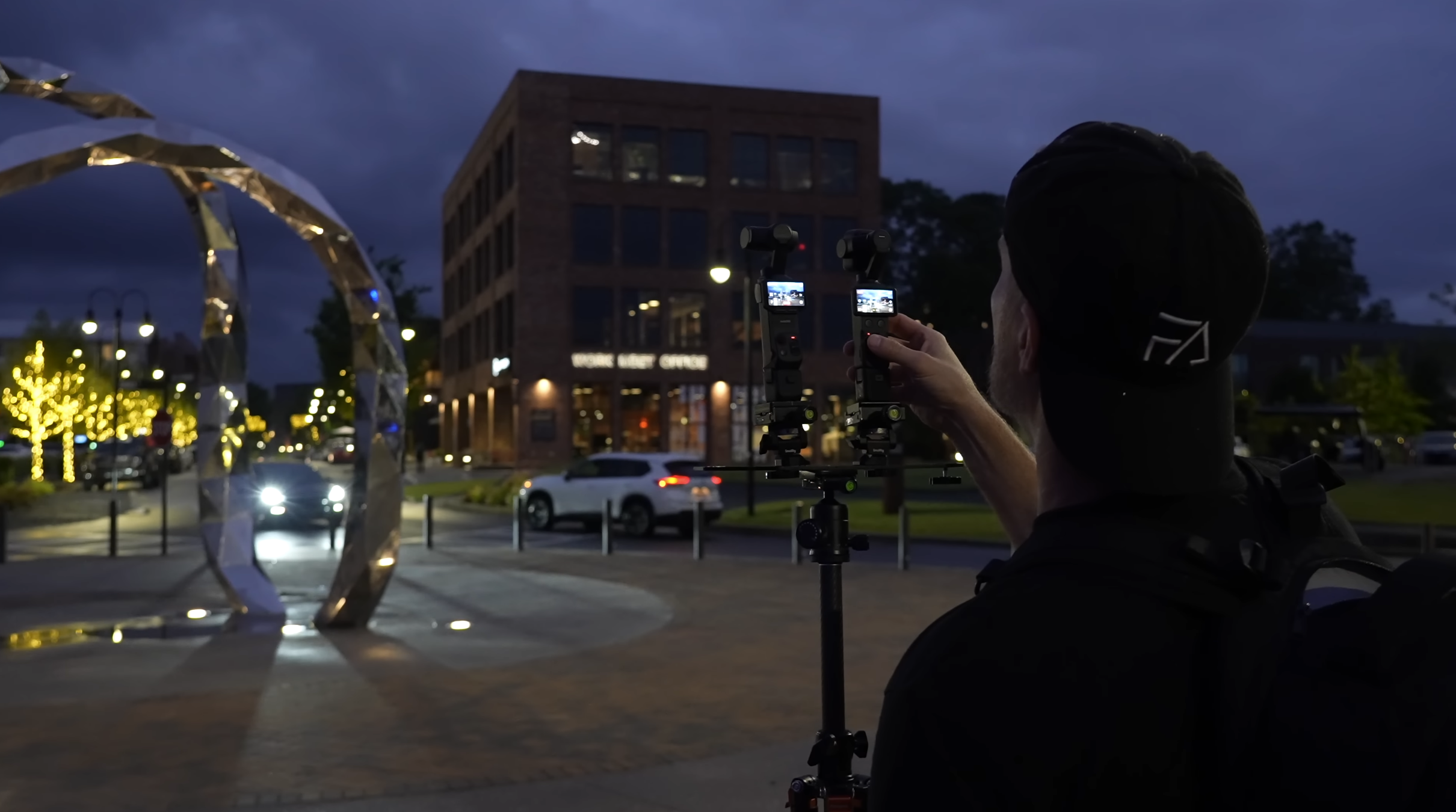
For a nightlapse test, I lowered the shutter speed significantly.
Both cameras handled the scene well.
The Pocket 4P impressed me with how much highlight detail it retained, especially considering its fixed aperture.
The Sony ZV-E10 II had the Viltrox lens opened to f/1.4, so I expected it to have a much larger advantage.
The Pocket 4P’s performance showed that a smaller fixed-lens camera can still produce strong nighttime footage when the exposure is handled correctly.
Slow Motion
The Pocket 4P has a clear advantage for slow motion.
It can record up to 4K240, while the Sony ZV-E10 II tops out at 4K120.
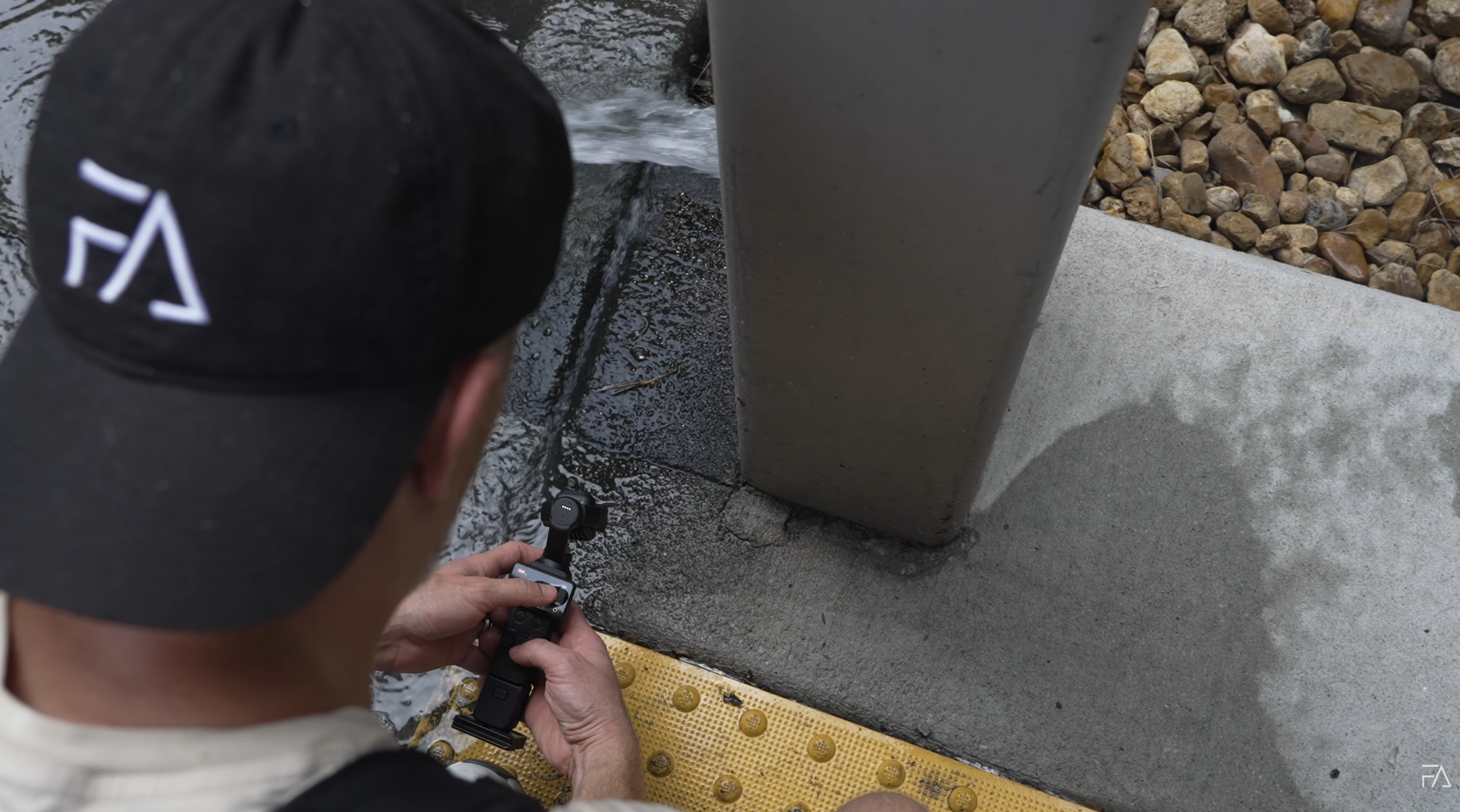
Both cameras performed well during my water test.
The Pocket 4P produced cleaner and more clearly defined movement. Some of that may have come from the higher shutter speed I used, but the footage still looked impressive.
The Sony footage appeared slightly more muted, and parts of the water blended together more.
For creators who frequently shoot extreme slow motion, the Pocket 4P is the stronger option.
Skin Tones
I tested both cameras in their standard color profiles at 4K24 using natural light.
The Pocket 4P produced a more saturated skin tone that looked ready to export.
The Sony gave me a more neutral result.
The Sony image may be better for someone who wants to make their own adjustments in post.
For a quick turnaround without color grading, I preferred the Pocket 4P’s skin tone in this particular lighting environment.
Skin-tone results can change depending on white balance, exposure, profile, and the quality of the light.
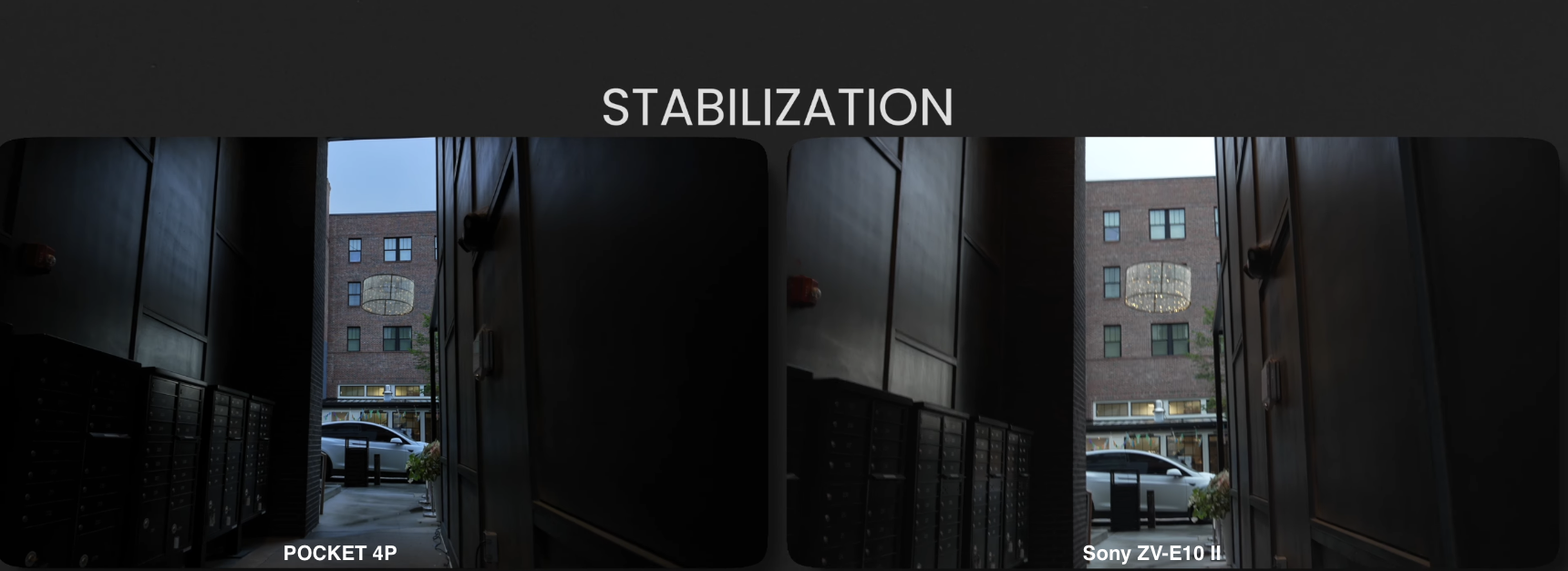
Stabilization
Stabilization is the biggest advantage of the Pocket 4P.
Its built-in mechanical gimbal gives me smooth walking footage immediately.
The Sony ZV-E10 II offers Active Stabilization, but it cannot match a physical gimbal.
To get similarly smooth movement from the Sony, I would likely need:
- A stabilized lens
- Active digital stabilization
- Post-production stabilization
- An external gimbal
The Pocket 4P gives me all of that movement control in a much smaller package.
For walking shots, tracking shots, travel videos, and cinematic movement, it is much easier to use.
Photography
The Sony ZV-E10 II is the stronger photography camera.
Its larger APS-C sensor gives me better tonal range, more control over depth of field, and access to interchangeable lenses.
The Pocket 4P can capture good everyday photos, but I am limited to its built-in focal lengths and much smaller screen.
For family memories and casual photography, the Pocket 4P works well.
For portraits, products, sports, wildlife, or serious photography, I would choose the Sony.
Ports and Expandability
The Sony ZV-E10 II is a much more expandable camera.
It allows me to connect:
- External microphones
- Headphones
- External monitors
- External recorders
- Different lenses
- Cages and accessories
Its larger screen also makes it easier to frame shots, confirm focus, and review footage.
The Pocket 4P is designed around simplicity rather than expansion.
That simplicity is useful, but it also limits how much I can build around it.
Activation and Ease of Use
The Sony ZV-E10 II can be taken out of the box, configured, and used as a normal standalone camera.
The Pocket 4P requires smartphone activation during the initial setup process.
That may not be a major problem for most users, but it is another example of the Sony feeling like a more independent and complete camera system.
Once the Pocket 4P is activated, it is incredibly fast and convenient to use.
Who Should Buy the Osmo Pocket 4P?
The Pocket 4P is best for:
- Travel filmmakers
- Vloggers
- Run-and-gun creators
- People who value stabilization
- Creators who shoot slow motion
- Solo filmmakers
- Anyone who wants a tiny camera
- People who do not want to carry a gimbal
It is also a strong B-camera for someone already using a larger Sony system.
Who Should Buy the Sony ZV-E10 II?
The Sony ZV-E10 II is best for:
- Creators building a long-term camera system
- Talking-head creators
- Product filmmakers
- Photographers
- Low-light shooters
- People who want interchangeable lenses
- Users who need professional audio connections
- Creators who use external monitors or recorders
It costs more once lenses and accessories are included, but it also provides much more room to grow.
Final Verdict
After spending time with both cameras, I am choosing the Sony ZV-E10 II as the better overall camera.
Its APS-C sensor, interchangeable lenses, better photography, professional ports, larger display, and expandability make it the more complete system.
It gives me far more control over focal length, background blur, audio, monitoring, and the final look of the image.
However, the Pocket 4P is ridiculously convenient.
Its built-in mechanical gimbal, small size, 3x camera, 4K240 recording, and surprisingly strong image quality make it a camera I am much more likely to grab when I simply want to go out and shoot.
The Sony ZV-E10 II is the camera I would build a system around.
The Osmo Pocket 4P is the camera I would carry when I do not want the camera system getting in the way of creating.
Author