

Sony a6700 vs. RX100 VII: The Pro's Dilemma System Versatility or Pocket Power?
Nov 05, 2025
Get the full story watching the video above ⬆️
Sony a6700 vs. RX100 VII: The Pro's Dilemma—System Versatility or Pocket Power?
Joe here, from The Film Alliance. In the world of professional creative tools, it's rare to face a choice as compelling and challenging as the one Sony presents with the a6700 and the RX100 VII. Occupying a similar price bracket, these two cameras are both exceptionally capable, yet they represent fundamentally different philosophies of image-making. One is an all-in-one marvel that packs a studio's worth of lenses into a jacket pocket. The other is a purpose-built system camera, a versatile hub for a vast ecosystem of professional optics. For any creative professional, from videographer to hybrid shooter, choosing between them is a strategic decision that will shape your entire workflow. I'm going to put these cameras through their paces on paper, dissecting them not just by specs, but by how they'd actually perform on a job, so you can decide which tool deserves a place in your kit.
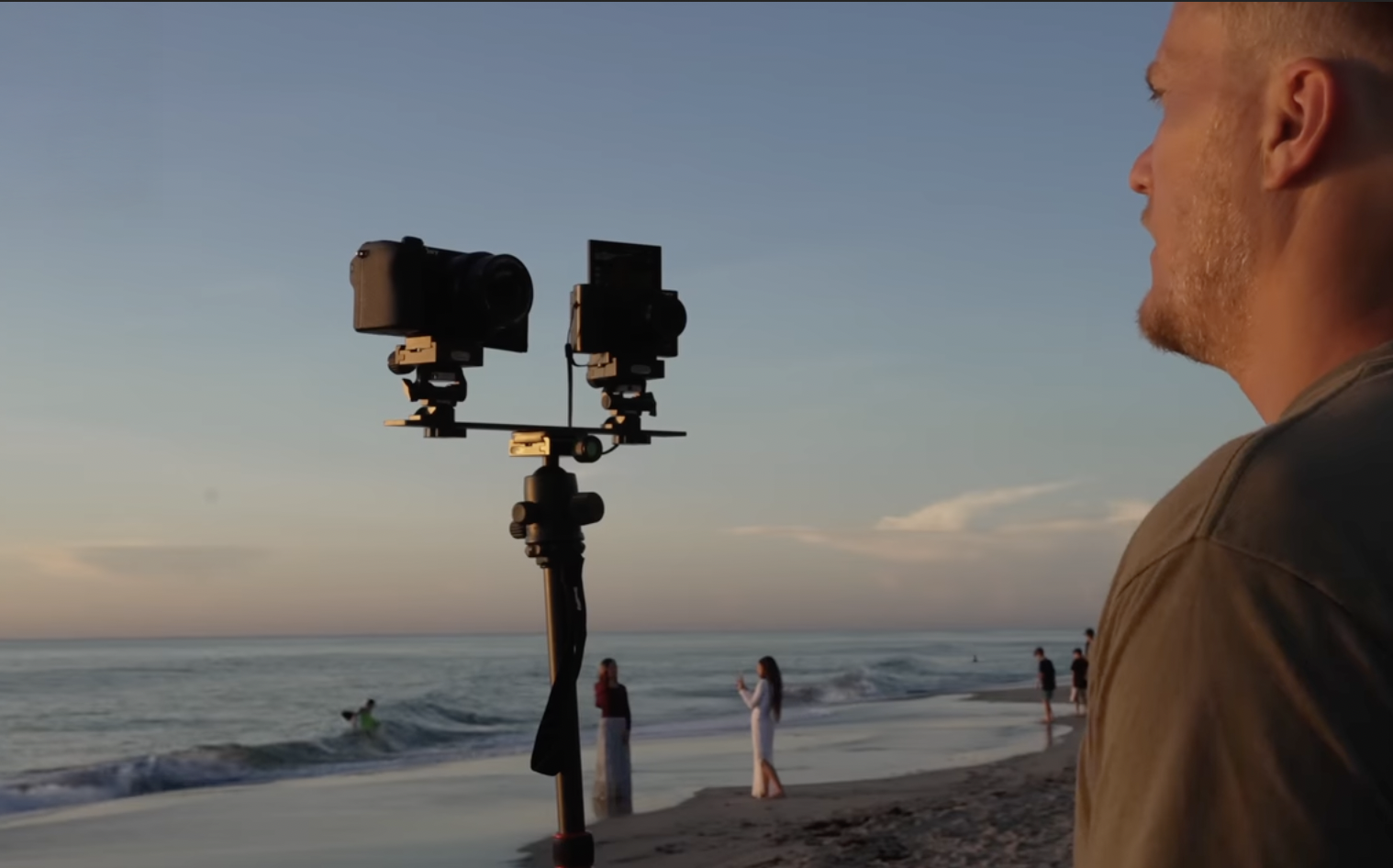
The core question we aim to answer is this: Should a professional invest in the ultimate all-in-one compact powerhouse or the versatile, system-based APS-C mirrorless?
Core Philosophy: Form Factor, Sensor Size, and Handling
Beyond the spec sheets, the physical nature of a camera—its size, sensor, and ergonomics—is a strategic choice that dictates how, when, and where it can be effectively used. This core design philosophy is the foundation upon which all other features are built, influencing everything from portability on a remote shoot to stability during a critical take. The RX100 VII and a6700 present two distinct approaches to this fundamental aspect of camera engineering.
|
Sony RX100 VII: The "Pocket-Full of Lenses" |
Sony a6700: The Enthusiast's System Camera |
|
Premium Compact Camera: A self-contained unit with a permanently attached lens, designed for maximum portability and convenience without sacrificing pro-level features. |
Interchangeable-lens Camera: A system camera built around the E-mount, designed for ultimate versatility and creative control through a wide range of attachable lenses. |
|
1.0-type 20.1 MP stacked CMOS sensor: A smaller, yet highly advanced sensor designed for incredible speed and high-quality imaging within a compact footprint. |
APS-C 26.0 MP BSI CMOS sensor: A significantly larger sensor that offers superior light-gathering capability, shallow depth-of-field control, and higher resolution. |
|
Dimensions & Weight: Approx. 302g. This featherweight build makes it the ultimate travel, vlogging, or "go-anywhere" camera. Its pocketable size allows for unparalleled discretion and ease of transport. |
Dimensions & Weight: Approx. 493g. Heavier and larger, the a6700's magnesium alloy body provides a more substantial, stable platform for larger lenses and professional rigging. |
|
Ergonomics: Features a minimal grip, a pop-up electronic viewfinder (EVF), and a tilting selfie screen. It prioritizes compactness over extensive physical controls. |
Ergonomics: A deeper, more pronounced grip offers superior handling. The addition of a front command dial provides dual-dial control. This aligns its muscle memory with larger pro bodies like the a7 series, making it a seamless B-camera or a more intuitive primary tool for those used to professional layouts. |
This fundamental difference in design philosophy finds its most significant expression in the cameras' approach to optics.
Optics: Integrated Convenience vs. Creative Versatility
A camera's optical system is the primary determinant of its creative potential, the very window through which it sees the world. The choice between the RX100 VII and the a6700 presents a classic professional trade-off: the unmatched convenience of an integrated, high-quality zoom versus the boundless creative freedom of an interchangeable lens mount.
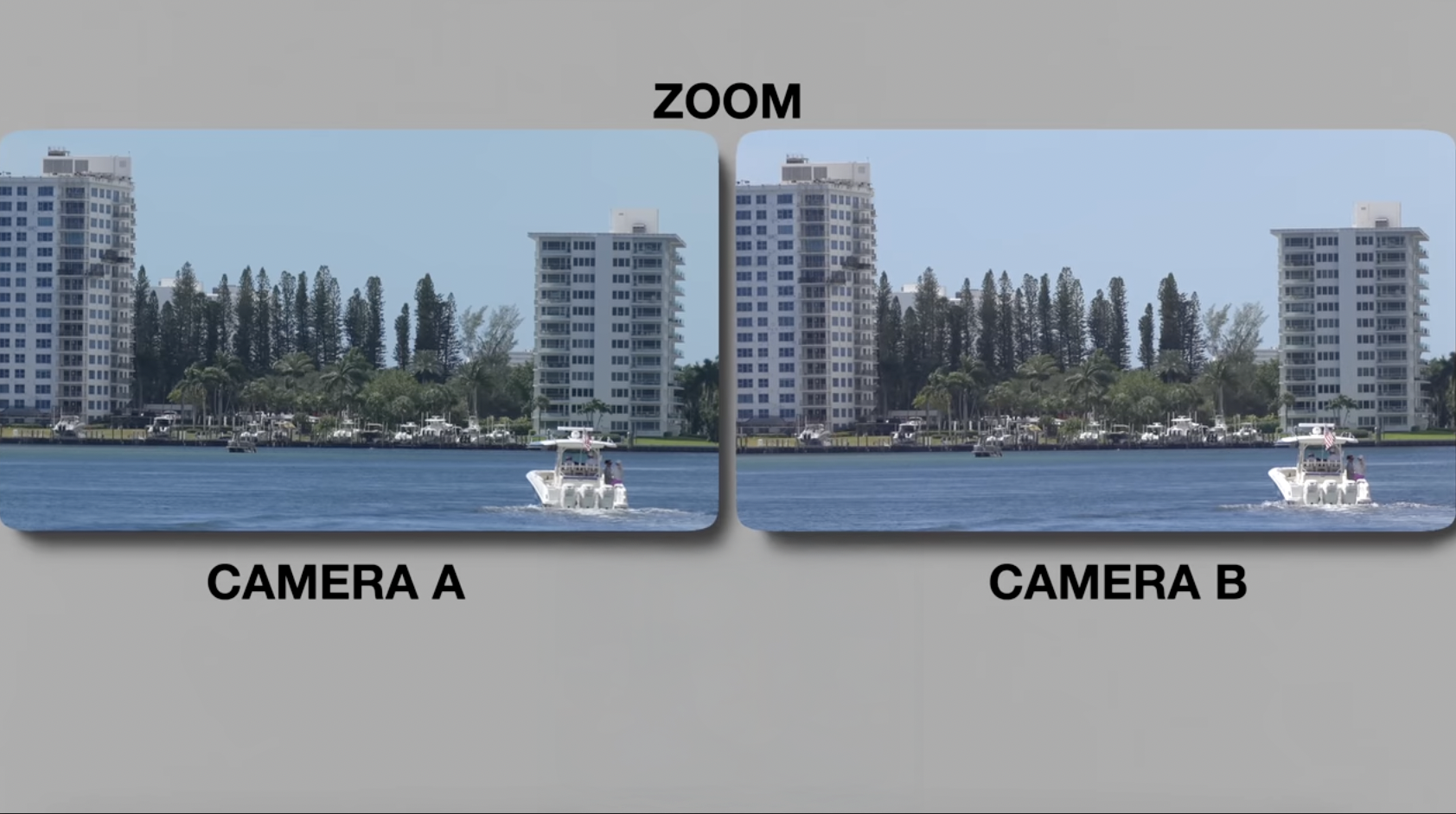
Sony RX100 VII: The Integrated Zoom Marvel
The RX100 VII's defining feature is its built-in 24-200mm F2.8-4.5 zoom lens*. This is not merely a convenience; it's a feat of engineering.
• Value Proposition: In a single, pocket-sized package, this lens provides the equivalent focal range of two professional standard zoom lenses: a 24-70mm and a 70-200mm. This covers everything from wide landscapes to tight portraits and telephoto action shots without ever needing to change lenses.
• Macro Capability: It offers impressive close-focusing capabilities, able to focus as close as 8cm from the subject at its widest setting, making it a versatile tool for detailed shots.
Sony a6700: The E-Mount Ecosystem
As an interchangeable-lens camera, the a6700's optical capabilities are not defined by a single lens but by the entire Sony E-mount system.
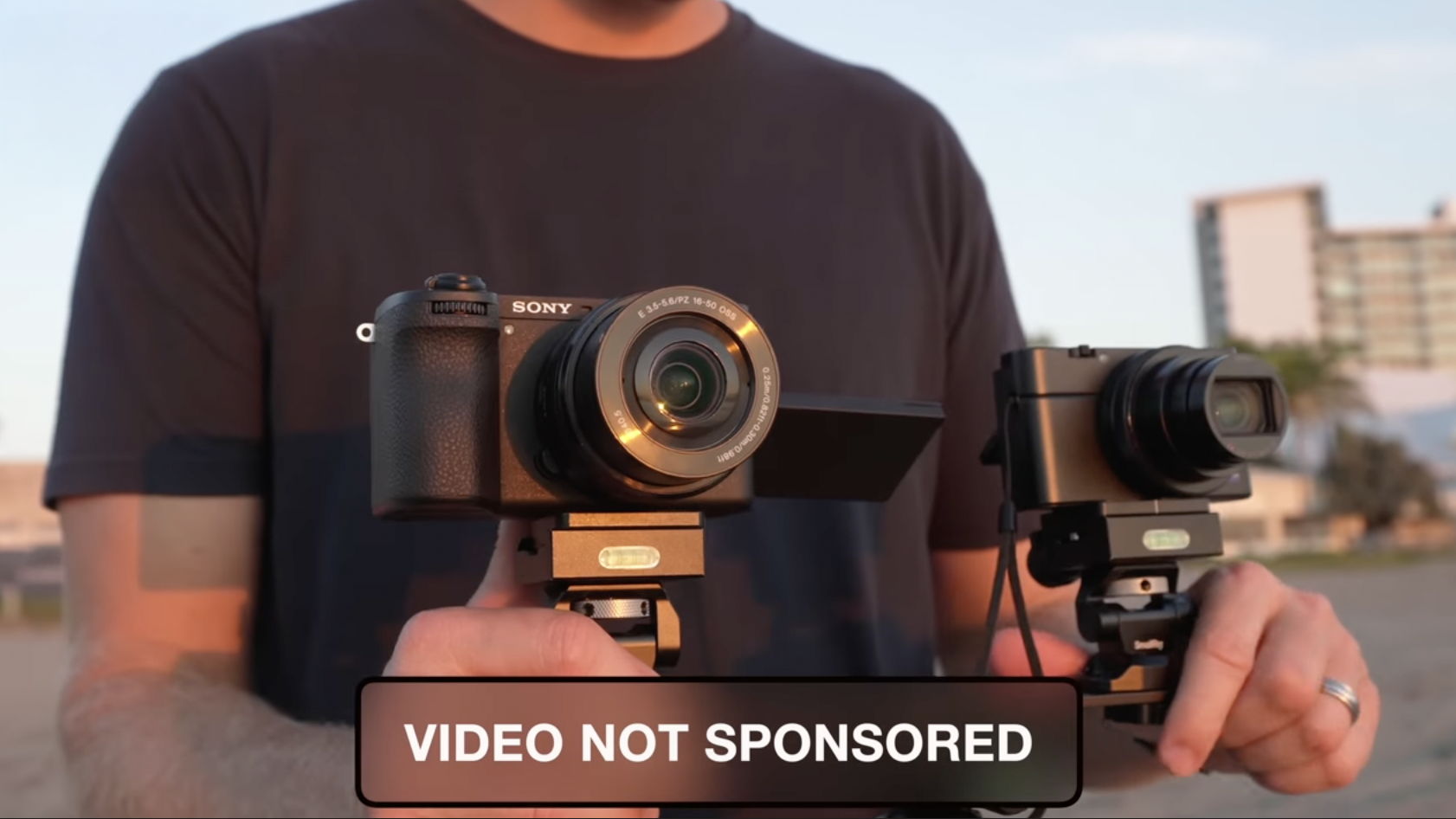
• Strategic Advantage: This gives professionals the ultimate freedom to adapt the camera to any project. Need shallow depth of field and beautiful bokeh for a portrait? Attach a fast prime lens. Filming a documentary? Use a high-end G Master zoom. Working on a tight budget? Choose from a wide array of affordable, high-quality zooms.
• The Trade-Off: This versatility comes with the associated costs of building a lens collection and a significant increase in the size and weight of your total camera kit.
But a world-class optical system is only as good as the sensor and processor capturing the light. This is where Sony's investment in bleeding-edge processing and autofocus technology creates a fierce, and surprisingly close, competition.
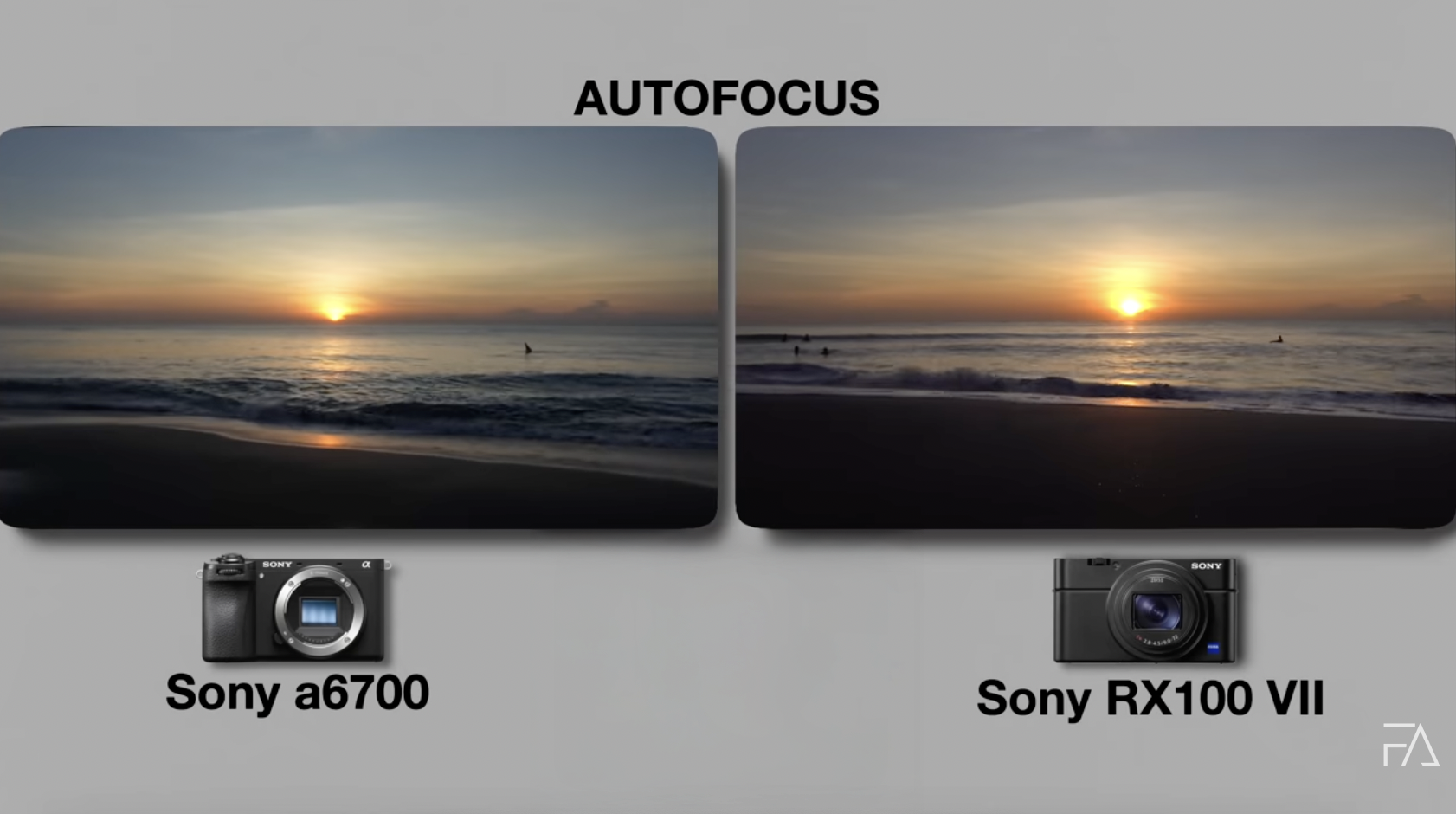
Autofocus and Speed: A Battle of Pro-Level Performance
Both the RX100 VII and a6700 are absolute leaders in autofocus and speed, inheriting bleeding-edge technology from Sony's high-end Alpha professional bodies. While both cameras deliver blistering performance, a closer look reveals nuanced differences in their AF systems and burst shooting capabilities, making each better suited for specific fast-action scenarios.
|
Feature |
Sony RX100 VII |
Sony a6700 |
Professional "So What?" |
|
AF System |
Hybrid AF: 357 focal-plane phase-detection & 425 contrast-detection points. |
Fast Hybrid AF: 759 phase-detection points covering 93% of the image area. |
While both are incredibly fast, the a6700's greater number of phase-detection points and its newer Bionz XR processor with a dedicated AI Processing Engine give it a clear advantage in tracking complex, erratic subjects across a wider portion of the frame. |
|
AF Acquisition Speed |
0.02 seconds. |
Not explicitly stated, but part of the latest generation featuring a Bionz XR processor. |
The RX100 VII's acquisition speed is a flagship feature, putting a pocket-sized camera into a professional league and making it a world-class tool for capturing fleeting moments. |
|
Subject Recognition |
Real-time Tracking, Real-time Eye AF (Human & Animal). |
Real-time Tracking with a dedicated 'AI Processing Engine' for Human, Animal, Bird, Insect, Car, Train, and Airplane. |
The a6700's advantage here is undeniable and a game-changer for specific jobs. Its dedicated AI chip makes it a far more reliable 'get the shot' tool for paid gigs in wildlife, aviation, or motorsports. |
|
Burst Shooting (Stills) |
Up to 20fps blackout-free shooting. A special 90fps Single Burst Shooting mode for 7 frames. |
Up to 11fps with mechanical or electronic shutter. |
The RX100 VII's blackout-free experience—a technology inherited directly from the pro-sports Alpha A9—is phenomenal for capturing the single decisive moment without losing sight of the subject. The a6700's 11fps is highly capable for most action and benefits from a larger buffer, but lacks that uninterrupted viewing experience. |
The ability to capture the perfect still image at high speed is critical, but for the modern hybrid creative, the story truly unfolds when we switch to motion
• The Videographer's Verdict: Analyzing a Clear Divide
For the professional videographer or filmmaker, the comparison between these two cameras reveals the most significant differentiator. While the RX100 VII is an incredibly capable vlogging and B-camera video tool, the a6700's feature set elevates it to a far more serious and flexible filmmaking machine, designed with professional post-production and on-set workflows in mind.
• 4K Video Quality & Framerates:
• a6700: Delivers superior 4K/60p from a full 6K oversample and offers a professional 4K/120p slow-motion option (from a 1.58x crop), providing immense creative flexibility.
• RX100 VII: Records sharp, high-quality 4K (QFHD:3840×2160) video with a full pixel readout, ensuring excellent detail without pixel binning.
• Color & Bit Depth:
• a6700: Records in professional-grade 10-bit with 4:2:2 or 4:2:0 color sampling. It includes the cinema-ready S-Cinetone profile, deep S-Log3 grading options, and the ability to upload custom LUTs. For a professional colorist, the a6700's 10-bit 4:2:2 files provide the latitude to push and pull colors, correct skin tones, and match footage with other professional cinema cameras without the image breaking down—a flexibility the RX100 VII's 8-bit files simply cannot offer.
• RX100 VII: Provides strong options for a compact, including S-Log3, S-Log2, and 4K HDR (HLG) recording, but lacks the 10-bit color depth of its larger sibling.
• Audio Monitoring:
• a6700: Critically for professional work, it includes both a 3.5mm microphone input and a separate 3.5mm headphone output, allowing for simultaneous audio capture and monitoring.
• RX100 VII: Features a 3.5mm microphone input—a huge asset for a compact camera—but lacks a headphone jack for on-the-fly audio monitoring.
• Stabilization:
• a6700: Features a 5-axis sensor-shift image stabilization system, which provides up to 5.0 stops of compensation (CIPA standard) and works with any lens attached.
• RX100 VII: Offers an effective "Active" mode image stabilization system designed to produce smooth 4K video, especially while walking.
For any serious video production that demands maximum flexibility in post-production, precise color grading, and professional audio monitoring, the Sony a6700 holds a decisive and undeniable advantage.
The Final Decision: Matching the Camera to the Creator
Ultimately, this analysis brings us to a clear conclusion: there is no single "better" camera, only the "right" camera for a specific job, a specific workflow, and a specific creator. The choice is not about which camera has more features, but which camera's features align perfectly with your professional needs. This final section provides clear, persona-based recommendations to help you make your investment decision.
Why You Should Choose the Sony RX100 VII:
• Unmatched Portability: You get pro-level features, including a world-class AF system and a versatile zoom, in a body that genuinely fits in a pocket.
• Incredible Speed: The 20fps blackout-free burst shooting is a game-changer for capturing peak action, rivaling cameras many times its size and price.
• All-in-One Convenience: The high-quality 24-200mm equivalent lens covers nearly every shooting situation, making it the perfect tool for creators who need to travel light without compromise.
• Excellent Vlogging Tool: With its tilting selfie screen, external mic input, and advanced Real-time Tracking AF, it is a premier go-anywhere vlogging setup.
Why You Should Choose the Sony a6700:
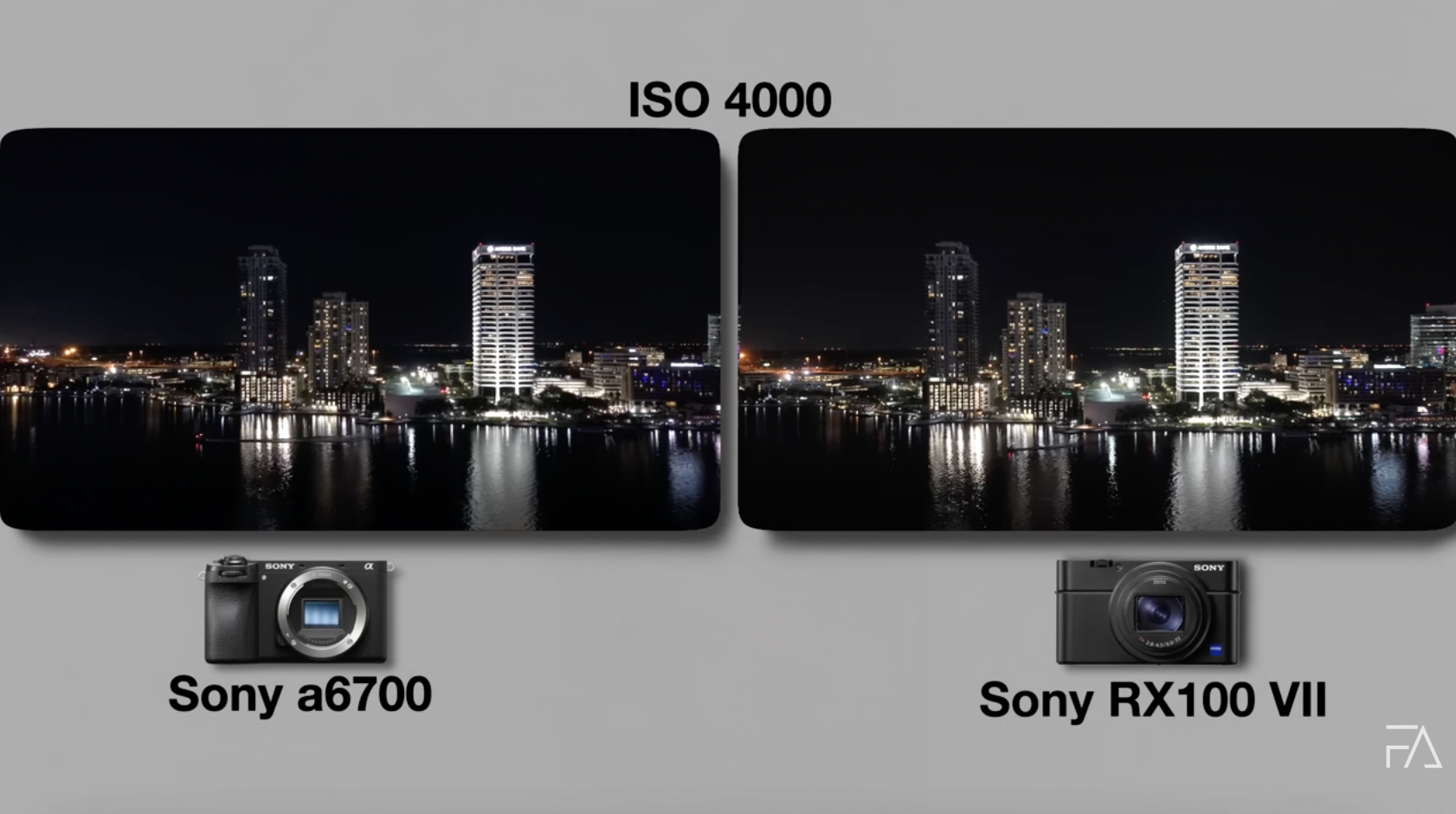
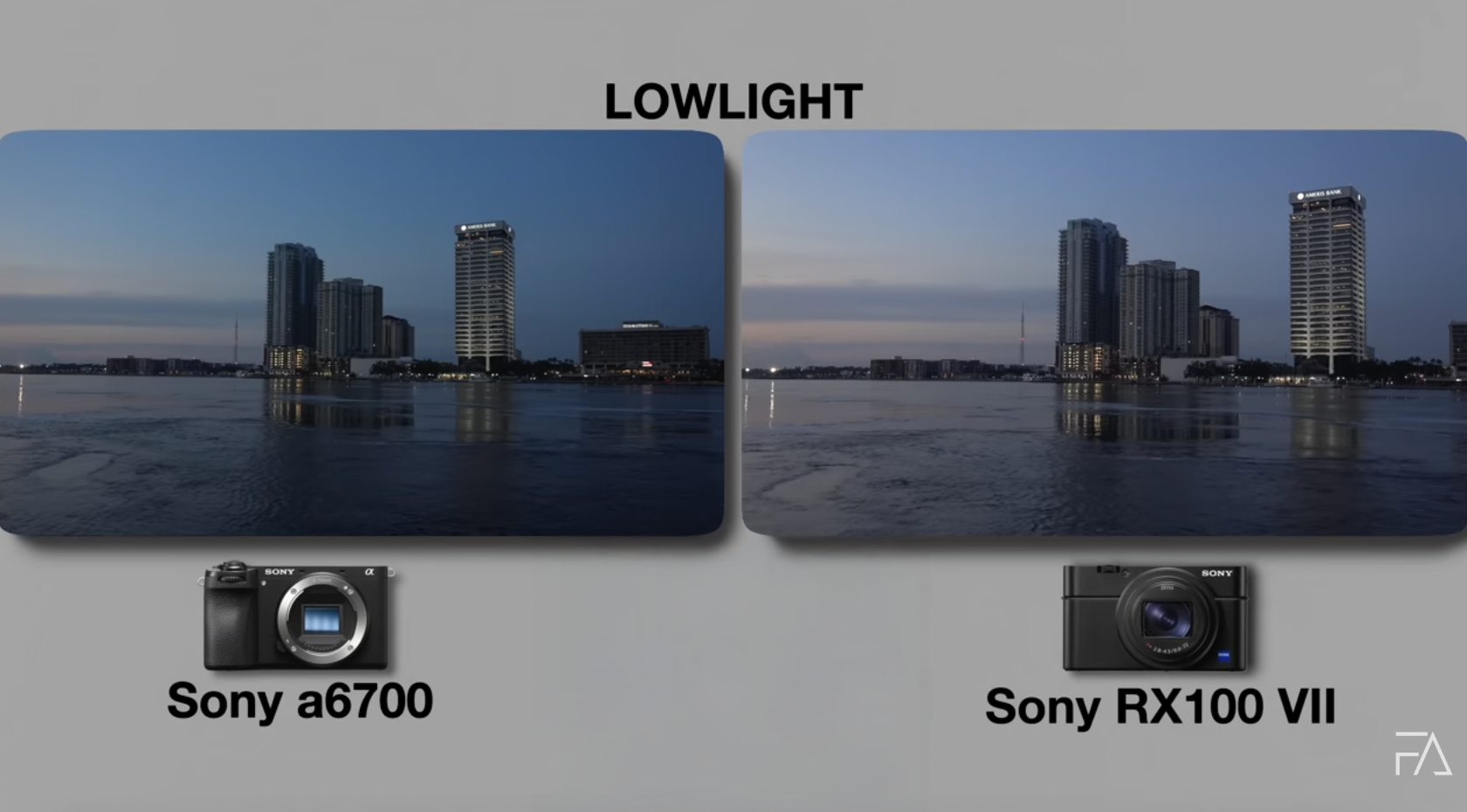
• Superior Image Quality & Control: The larger APS-C sensor delivers better low-light performance, excellent dynamic range for flexible RAW files, and greater creative control over depth of field.
• Ultimate Versatility: The E-mount system is your gateway to a world of creative possibilities, allowing you to use specialized prime lenses, exotic glass, and professional cinema lenses.
• Professional Video Powerhouse: 10-bit 4:2:2 video, 4K/120p slow motion, S-Cinetone, and dedicated headphone/mic jacks make it a serious and reliable filmmaking tool.
• Advanced AI Autofocus: Its next-generation subject recognition for birds, insects, cars, and planes provides a significant advantage for specialized professional work.
--------------------------------------------------------------------------------
From my desk at The Film Alliance, here's my final take. If your primary need is for an unbelievably capable B-camera, a discrete street or event camera, or a travel companion that compromises on virtually nothing in terms of speed and optical quality, the Sony RX100 VII is a modern marvel. However, if you are looking for a primary A-camera—the foundation of a powerful creative system intended for serious, flexible, and demanding hybrid photo and video production—the Sony a6700 is the clear professional choice. With the a6700, you're not just buying a camera; you're investing in a professional system that will grow with your ambitions.
NotebookLM can be inaccurate; please double check its responses.
Author