
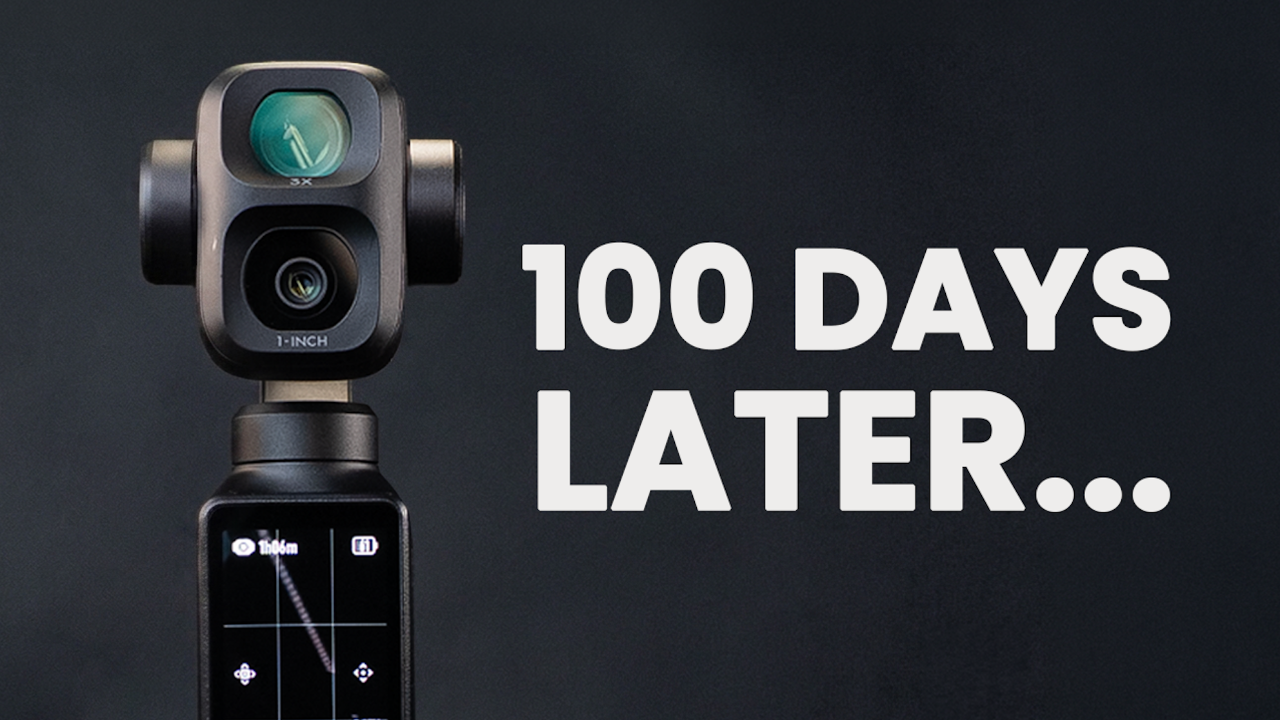
The Truth about the Osmo Pocket 4P
Oct 29, 2026Get the full story watching the video above ⬆️
After 100 days of shooting with the DJI Osmo Pocket 4P almost every single day, it has become my go-to camera, and I like it more now than when I wrote my 30-day review. That's the short version. The long version is below.
Since that first review, you've been leaving a lot of questions in the comments. Instead of answering them one at a time, I figured the best thing to do was a proper long-term Osmo Pocket 4P review that covers what I love, what still frustrates me, and whether I'd buy it again.
Over these 100 days I've shot cinematic b-roll, talking heads, vlogs, tracking shots, slow motion, product shots, photography, and even some wildlife. I've used it in backlit scenes, harsh midday sun, golden hour, indoor studio lighting, and some really dark nighttime spots. I pushed the 1x camera, the 3x camera, and the zoom all the way out to 12x to find where the image starts to fall apart.
To get a baseline, I also tested the Pocket 4P against:
- Pocket 4P vs iPhone 18 Pro - https://youtu.be/4UOgbVsmr2c
- Pocket 4P vs Vivo X500 Pro Max - https://youtu.be/BQI-9Cn2EKc
- Pocket 4P vs Sony ZV-E1 - https://youtu.be/kGAw4xSG7lg
- Pocket 4P vs Pocket 4 - https://youtu.be/2b29dcg-KdU
- Pocket 4P vs Luna Ultra - https://youtu.be/Imguv2ayCb0
- Pocket 4P vs Luna Ultra Lowlight Battle - https://youtu.be/ITqDDqfJXpA
- Pocket 4P vs iPhone 17 Pro - https://youtu.be/_6jmcxDjRgQ
- Pocket 4P vs Sony a6700 - https://youtu.be/XYDdKemaIWw
- Pocket 4P vs Sony ZV-E10 II - https://youtu.be/CZoAMhEwlek
- Pocket 4P vs Luna Ultra vs iPhone 17 Pro - https://youtu.be/VhPxp9YCi4Y
- Pocket 4P vs Pocket 3 - https://youtu.be/QZ1Yy8suhm0
- Pocket 4P vs Osmo Action 6 - https://youtu.be/3z2KQAYHa3Y
- Pocket 4P vs Luna Ultra vs GoPro Mission 1 Pro - https://youtu.be/d6kOIbzHaqE
A few quick disclosures before we get into it. I bought this camera with my own money. DJI is not sponsoring this review, and these are my honest opinions. None of the footage I reference was made with AI; every shot came straight off the Pocket 4P.
Picking one up? I put together free project files (D-Log 2, 4K 120fps, and more) so you can follow along with real Pocket 4P footage. I also built a full Osmo Pocket 4P course with color LUTs. Links are at the end of this post.
DJI Osmo Pocket 4P specs
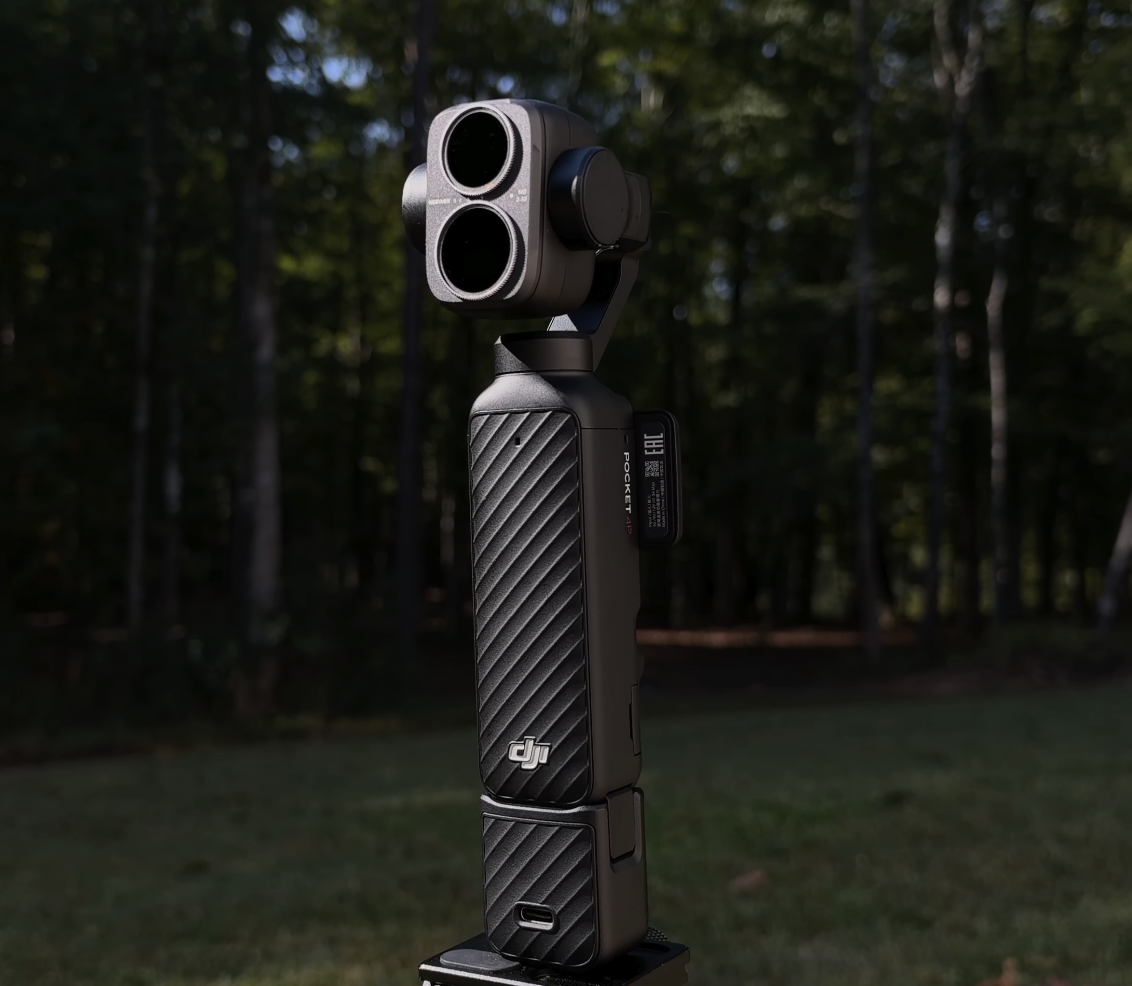
The Pocket 4P is the first Osmo Pocket with two cameras: a 1-inch main camera and a separate 3x medium-telephoto camera, both on a 3-axis mechanical gimbal.
|
Spec |
DJI Osmo Pocket 4P |
|
Main (1x) camera |
1-inch stacked CMOS with LOFIC, 20mm equivalent (DJI's figure), f/2.0 |
|
Telephoto (3x) camera |
1/1.28-inch CMOS, 60mm equivalent, f/1.8 |
|
Zoom |
3x optical, up to 12x digital |
|
Dynamic range |
Up to 17 stops (D-Log 2, 1x camera only) |
|
Color profiles |
Standard, 10-bit D-Log, 10-bit D-Log 2, 10-bit HDR (added by firmware), 6 film tones |
|
Max video |
4K/240fps on 1x, 4K/200fps on 3x |
|
Low-Light Video mode |
4K up to 30fps, ISO up to 51200 on 1x |
|
Photos |
37MP stills, 4K Live Photo |
|
Stabilization |
3-axis mechanical gimbal, ActiveTrack 8.0 |
|
Screen |
2.0-inch rotating OLED touchscreen, 1000 nits |
|
Storage |
103GB built-in + microSD up to 1TB |
|
Transfer |
USB 3.1 up to 800 MB/s, Wi-Fi up to 90 MB/s |
|
Battery |
1,545 mAh, up to 210 min (DJI lab figure), 0–80% in 18 min |
|
Weight / size |
230 g, 159.5 × 63.3 × 33.5 mm |
|
Price |
From €599 / £529 (Standard Combo); not officially sold in the US |
Specs from CineD and Man of Many.
What I love about the Osmo Pocket 4P
Image quality that looks like a mirrorless camera shot it
Every time I pull Pocket 4P footage onto my computer, I'm impressed. It's rare that I look at a clip and feel let down. With my phone's native camera, I often get home and notice noise or lifted mid-tones. With the Pocket 4P, the footage genuinely looks like it came from a mirrorless camera.
The stabilization is excellent, and 4K at up to 240fps gives me slow motion I actually use, not just a spec on a box.
The 3x camera is my favorite feature
The 60mm-equivalent 3x camera might be the best thing about the Pocket 4P. It's a separate sensor, not a crop. That's the big difference from the Osmo Pocket 4, where you shoot at 1x and digitally punch in.
It gives talking heads and portraits a more flattering perspective. Product shots and small details look more intentional. I can even get macro-style close-ups, like a shot of an acorn I'm really happy with.
Low-light performance
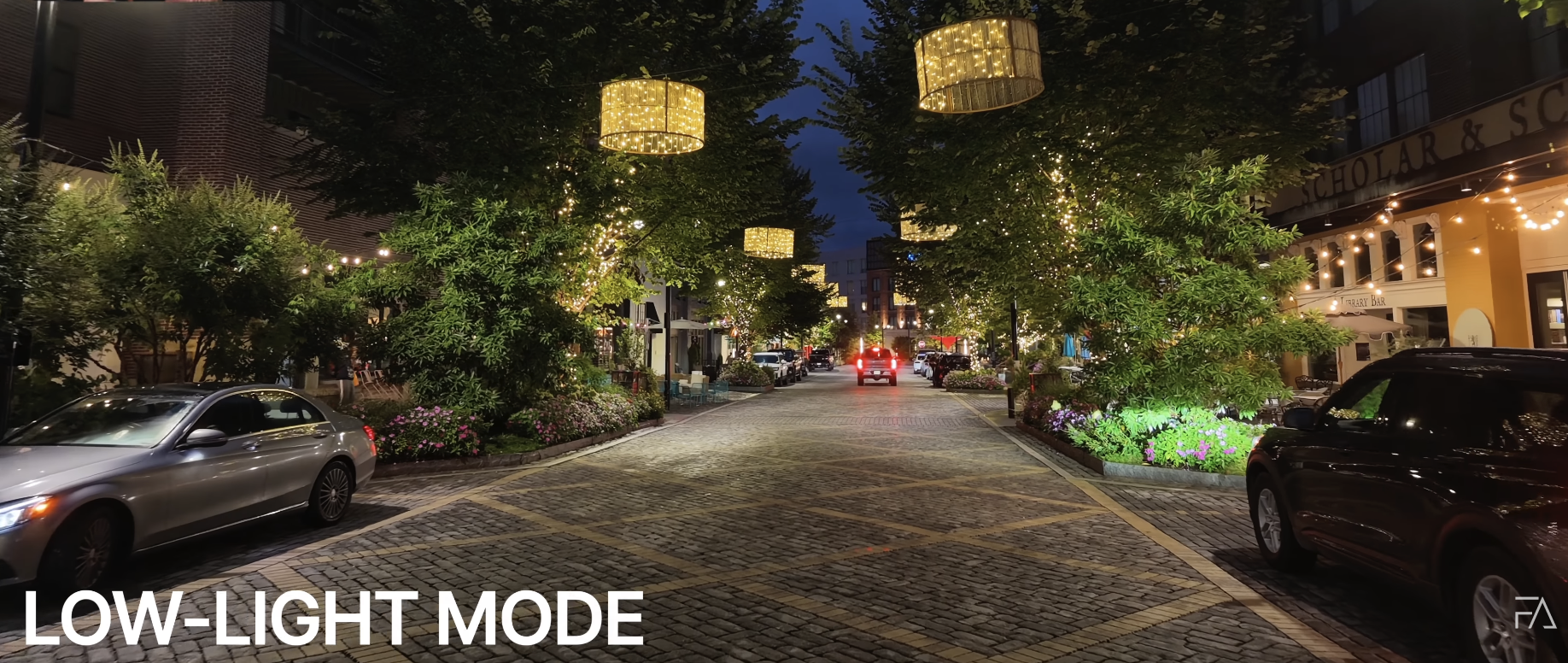
The bigger 1-inch sensor performs outstandingly in low light. I recently tested the Pocket 4P against the Insta360 Luna Ultra in a very dark environment, and I was honestly shocked at how well both held up. The Pocket 4P impressed me more in low light than I expected.
One camera, almost any shot
The biggest plus for me is variety. I wanted to see if the Pocket 4P could replace a mirrorless camera for story-driven shooting: wide establishing shots, low angles, foreground movement, slow motion, walking shots, and spots where a big camera simply won't fit.
It can. I don't need different lenses or setups. The only exceptions are anything near water and anything high up; you don't want this stuck in a tree. It makes ordinary moments look polished and cinematic. One of my favorite shots is literally water running out of a gutter.
Size, storage, and battery
When I'm walking out the door quickly, the Pocket 4P now beats some of my bigger cameras, mainly because of its image quality and its size. Compare a full mirrorless camera on a gimbal with this, and in most lighting you won't see a big difference in the footage.
The built-in 103GB storage is a great safety net. I record to a microSD card and use internal storage as backup if the card fills up. Battery life has been plenty for how I shoot; I haven't once felt like I ran out too quickly in the field.
What I don't like about the Osmo Pocket 4P
Living with the Pocket 4P every day has exposed some weak spots. None are deal-breakers for me, but you should know them before you buy.
- No proper hard case. There's still no real protective case. The gimbal head and screen are exposed, and you can't flip the screen inward to protect the glass. One drop could break either.
- The screen feels tiny. At 2 inches, it's small for checking focus and exposure in the field.
- D-Log 2 only works on the 1x camera. If you switch to the 3x camera, D-Log 2 isn't available.
- D-Log 2 and D-Log clips aren't labeled. When I mixed the two profiles, I couldn't tell which clip was which in post without eyeballing it. That became a real headache.
- Skin tones on the 1x camera. I'm not a fan of how skin looks on the main camera, so I switch to the 3x camera for people.
- The 1x lens is wider than advertised. DJI markets it as 20mm, but in my use it frames closer to 18mm. That's great for landscapes, but at that width your face looks small in talking-head shots.
- No adjustable aperture. In bright light you need ND filters to keep a natural shutter speed (more on that below).
- US availability. The Pocket 4P isn't officially sold in the US, so I had to buy mine on eBay. If I drop it, I honestly don't know how I'd get warranty support.
How I actually shoot with it after 100 days
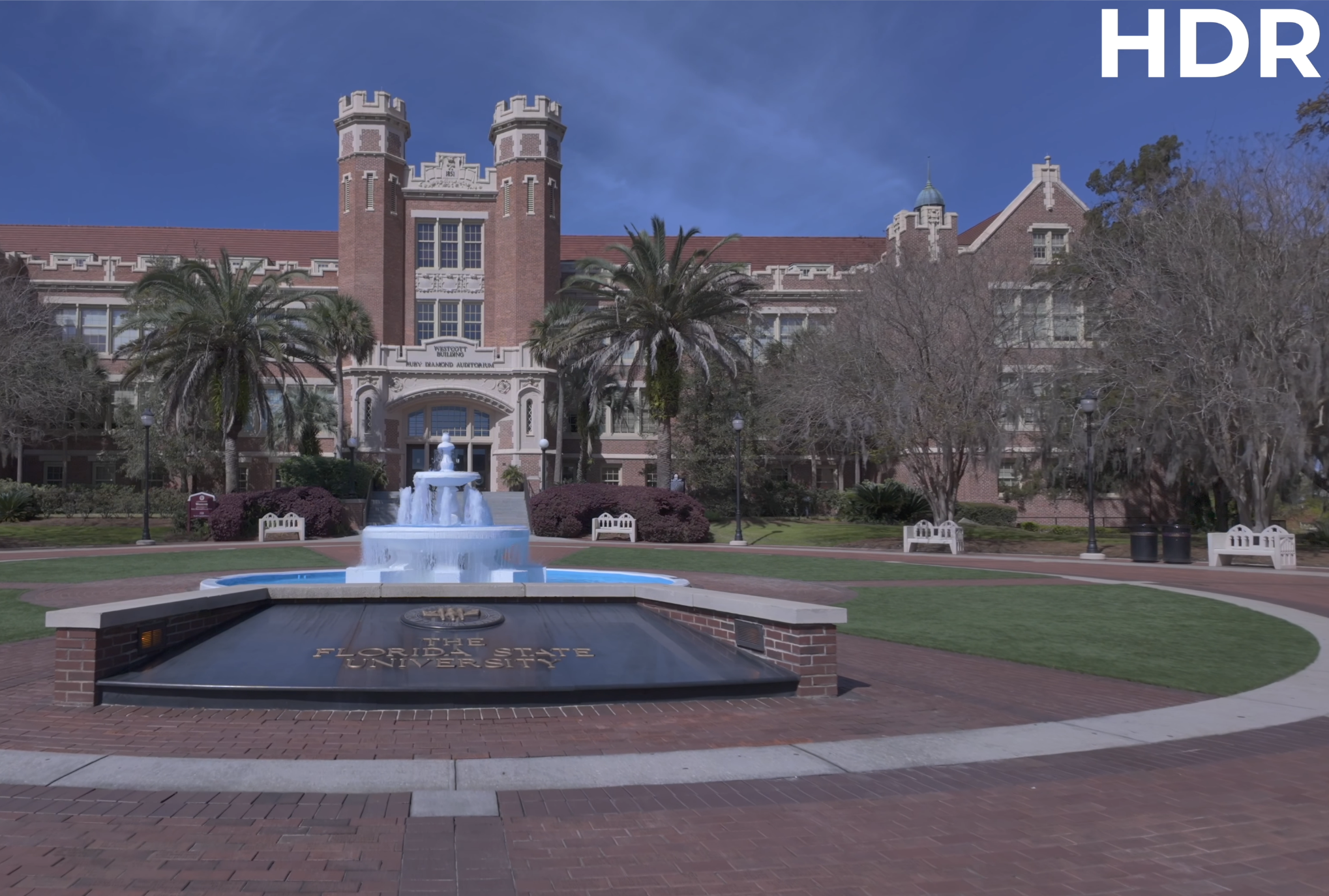
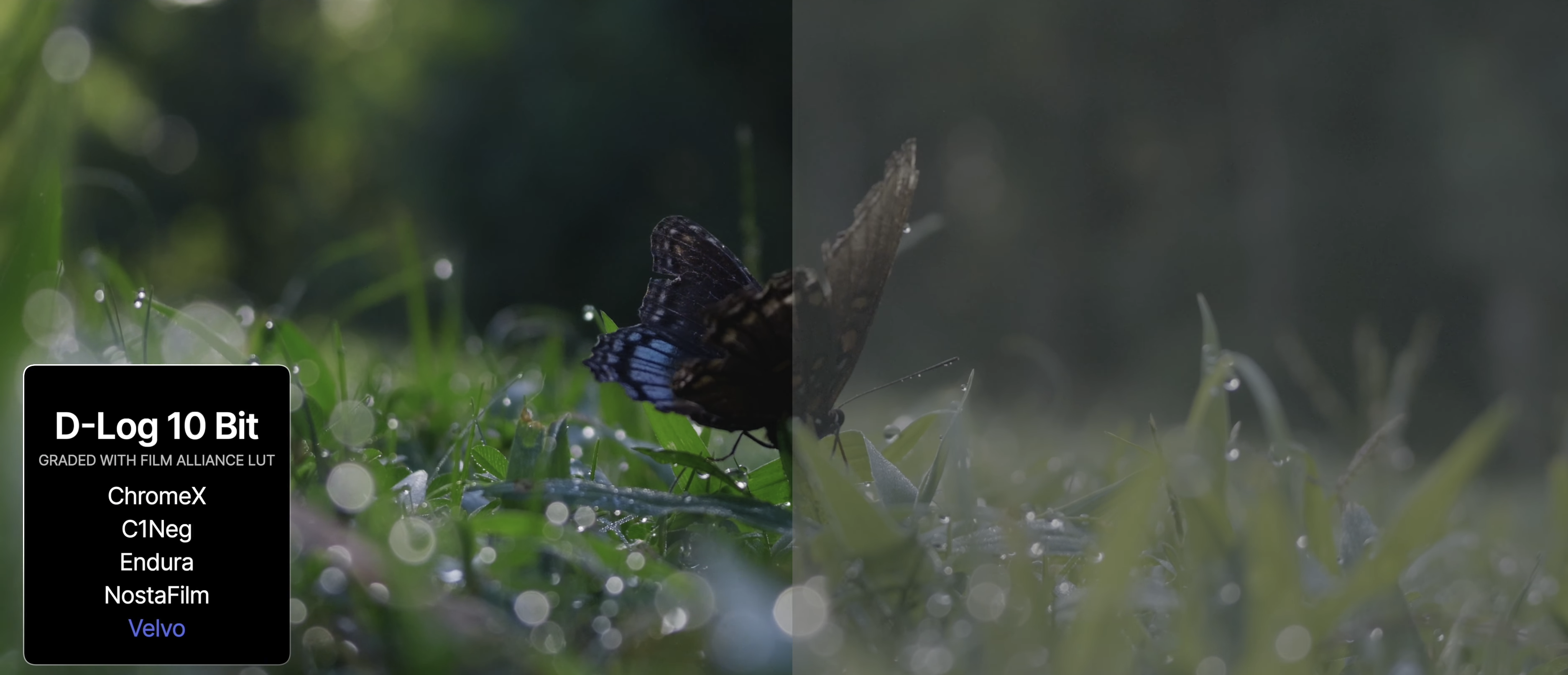
Color profiles: Standard vs D-Log vs D-Log 2 vs HDR
I shoot the Standard profile about 90% of the time because it's simply good enough. It's not oversaturated like a phone, and it doesn't look digital like a small-sensor camera.
|
Profile |
What you get |
When I use it |
|
Standard |
Finished look straight out of camera, good contrast, natural color |
90% of my shooting |
|
D-Log (10-bit) |
Flatter image, room to grade, works on 1x and 3x |
When I'll switch between cameras |
|
D-Log 2 (10-bit) |
Most dynamic range and grading flexibility; most post work |
Planned shoots on the 1x camera only |
|
HDR (10-bit) |
Looks fantastic on HDR screens |
Only when I know where it'll be viewed |
My rule for log: pick one and stick with it for the whole shoot. If you need both the 1x and 3x cameras, shoot D-Log. It's not quite as flexible as D-Log 2, but it's good enough, and every clip will match. If you shoot D-Log 2, you're committing to the 1x camera.
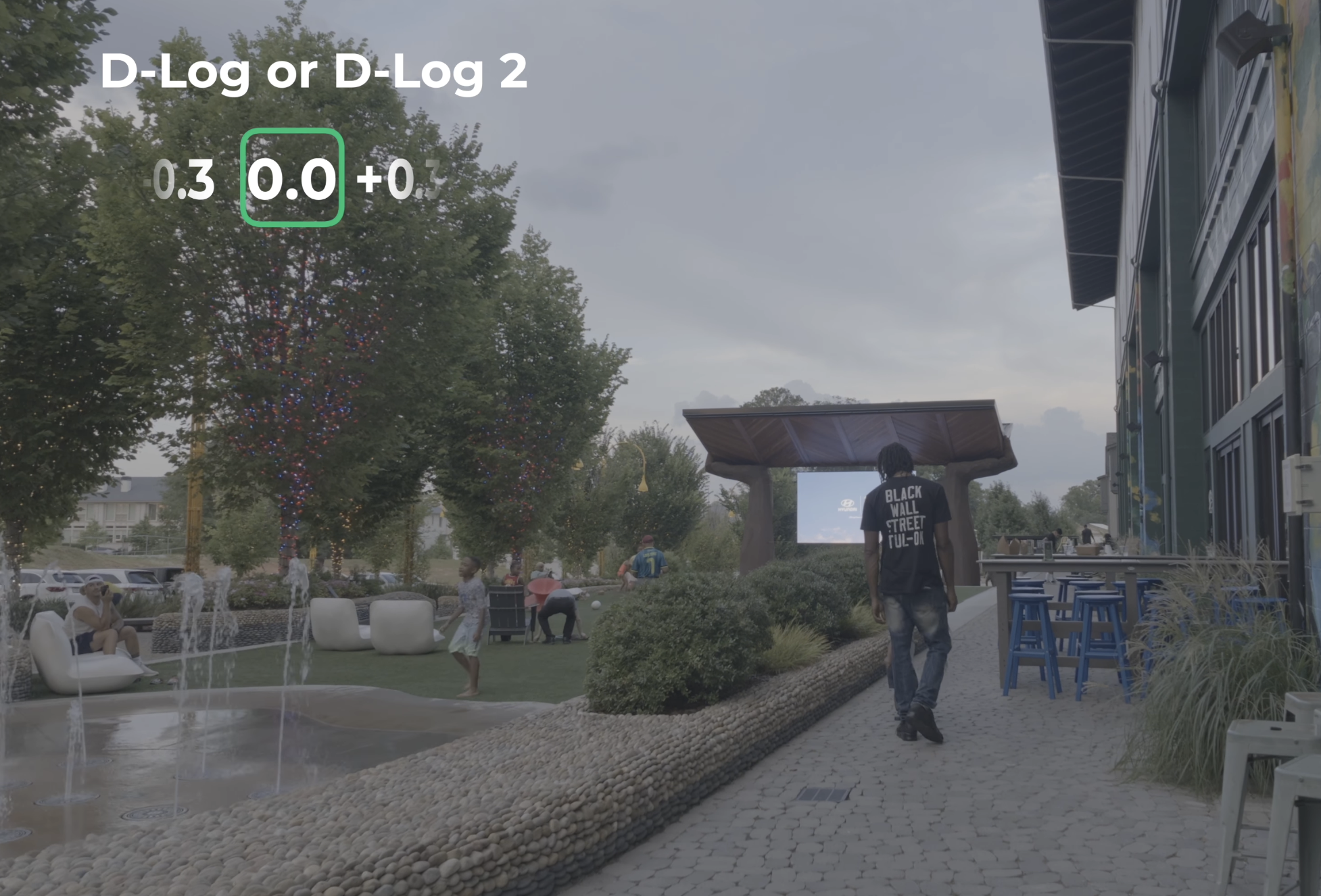
For exposure, I keep exposure compensation at about 0.0 in D-Log and D-Log 2. Some of you say you overexpose D-Log 2 by +1.7; if that's worked for you, tell me in the comments.
A warning on HDR: you need an HDR display to review it properly. I learned this the hard way after a long day of shooting. Send HDR clips to a phone or monitor without HDR support and they look overexposed. Know where your footage will be played back before you choose HDR.
To skip grading altogether, I made LUTs you can drag and drop onto D-Log footage.
Low light: manual video mode vs Low-Light mode
The Pocket 4P has a dedicated Low-Light Video mode. It's useful when you want the camera to handle settings while you focus on composition and story. In a run-and-gun situation, I'd use it without hesitation.
When I have time, though, I shoot low light in regular video mode with manual exposure. I control ISO and shutter speed myself, and I avoid in-camera processing I can't undo later. The footage also looks more natural to me. I also stick to the 1x camera in low light; the 3x camera's smaller sensor isn't built for it.
Why you need ND filters (sponsored by Neewer)
This part of the review is sponsored by Neewer.
Because the Pocket 4P has no adjustable aperture, the usual fix for bright light is a faster shutter speed. That gives you a choppy, jittery look. For natural motion blur, follow the 180-degree rule: shutter speed at double your frame rate. At 24fps, that's 1/50. In bright sun at 1/50, your shot is completely blown out. ND filters fix that.
Here's the kit I use:
- Fixed ND set (what I grab most): ND16 for cloudy days, ND64 for sunny days, ND256 for harsh midday sun and the beach, plus a circular polarizer (CPL) to cut reflections on water and car windows.
- Run-and-gun set: a variable ND from ND2 to ND32 that I rotate as the light changes, plus a CPL and a 1/4 black diffusion to soften highlights and give skin a more filmic look.
Both snap onto the lens and stay sharp. The glass on the top (3x) and bottom (1x) filters is identical, so my colors still match in post when I switch cameras. Links are in the resources section below.
Verdict: would I buy the Osmo Pocket 4P again?
Yes, 100%, without thinking twice. It's not a perfect camera, but for run-and-gun filming, the image quality is outstanding. If a shot doesn't look good, it's usually user error, not the camera.
Can it replace your phone?
For video, absolutely; you just can't text or call anyone with it. I now hand it to a BTS shooter for my behind-the-scenes footage instead of using a phone. Phone footage often has lifted mid-tones and a plastic, digital look on skin. The Pocket 4P avoids that.
Can it replace a mirrorless camera?
It depends on what you shoot.
|
Use it instead of mirrorless for |
Keep your mirrorless for |
|
Travel videos and vlogging |
High-end professional client work |
|
YouTube content and talking heads |
True telephoto (12x zoom doesn't match a real tele lens) |
|
Family moments and everyday shooting |
Interchangeable lenses and aperture control |
|
Casual photography |
Swappable batteries, dual card slots, external recording |
For convenience and everyday content, the Pocket 4P can replace a camera. When you need maximum flexibility, image quality, and reliability, it can't.
Who should buy it
Buy the Pocket 4P if you want a camera that's always with you and still gets cinematic shots: travel creators, vloggers, YouTubers, and anyone tired of phone footage. If you're in the US, factor in that you'll be importing it without official warranty support.
Resources
- Free Pocket 4P project files (D-Log 2, 4K 120fps and more): [add link]
- Osmo Pocket 4P Film 101 + Film 202 course bundle with LUTs, PDF guides, and lifetime access: [add link]. On a tight budget? Email me and I'll send you a discount code.
- Neewer ND filter kits mentioned above: [add link]
- Pocket 4P vs Insta360 Luna Ultra low-light test: [add link]
What should I test the Pocket 4P against next? Tell me in the comments.
Osmo Pocket 4P FAQ
Is the DJI Osmo Pocket 4P worth it after 100 days? Yes. After 100 days of near-daily use, it's my go-to camera thanks to its image quality, 3x camera, and size. The main trade-offs are the lack of a hard case and D-Log 2 being limited to the 1x camera.
Does D-Log 2 work on the 3x camera? No. D-Log 2 is only available on the 1x camera. If you want to switch between 1x and 3x in log, shoot regular 10-bit D-Log.
What's the difference between the Osmo Pocket 4P and the Osmo Pocket 4? The Pocket 4P adds a dedicated 60mm-equivalent 3x camera with its own sensor, plus D-Log 2. On the Pocket 4, you shoot at 1x and zoom digitally.
How good is the Osmo Pocket 4P in low light? Very good on the 1x camera thanks to the 1-inch sensor. I'd avoid the 3x camera in dim light because its sensor is smaller.
Do I need ND filters for the Osmo Pocket 4P? Yes, if you want natural motion blur in daylight. The aperture is fixed, so ND filters let you keep a shutter speed of double your frame rate without blowing out the shot.
Can you buy the Osmo Pocket 4P in the US? Not officially at launch. I bought mine on eBay, which means warranty support is uncertain.
What's the best color profile for the Osmo Pocket 4P? For most people, Standard. I use it 90% of the time. Use D-Log or D-Log 2 when you plan to color grade, and only use HDR if your audience will watch on HDR screens.
Author

